
In this Page
Pachacamac, which means soul of the earth, the one who animates the world, is located about 40 kilometers southeast of the city of Lima. It is one of the largest archaeological sites, covering 465 hectares, and holds great significance in the region, boasting a historical legacy that spans three millennia.
This was a ceremonial and religious center inhabited by different pre-Inka cultures before becoming part of their powerful empire around the 15th century. It was inhabited from around 200 AD and flourished until the arrival of the Spanish in the early 16th century. Here, worship was offered to the god Pachacamac, one of the most feared gods in ancient Peru, believed to predict not only the future but also the movements of the earth and, in some cases, cause earthquakes.
Today, Pachacamac boasts a vast array of ancient structures, including temples, palaces, pyramids, aqueducts, cemeteries, squares, streets, among others, and a comprehensive site museum.
Archaeological Sanctuary of Pachacamac
The worship of Pachacamac was the center of the entire religion of the Peruvian coast, making it one of the main sanctuaries in the region for over a thousand years. It was thought that this deity, whom direct eye contact was forbidden with, possessed formidable power. Consequently, pilgrims from different parts of Peru came to worship and seek solutions to their problems or answers to their doubts.
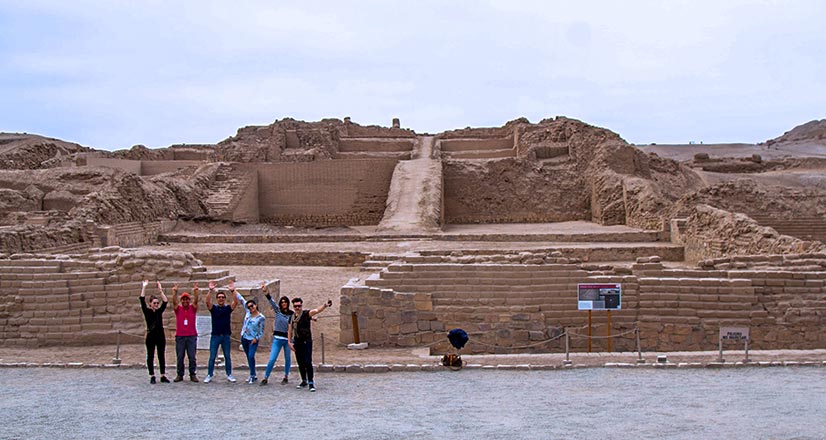
Historical Sanctuary of Pachacamac. Credit: Karina Mendoza / PromPerú.
Today, among the most prominent structures are:
● The Temple of the Sun – Built by the Inkas, stands as the most important building in Pachacamac. It consists of five pyramidal structures with stone bases and the rest made of adobe. The idol of Pachacamac was found here along with offerings of gold and silver.
● The Temple of the Moon – This famous building was an Acllahuasi (residence for virgin women dedicated to the worship of the sun god) and is composed of numerous enclosures with terraces, colcas, water reservoirs, among others.
● The Taurichumpi Building – Taurichumpi was the Inka governor in Pachacamac, and this building was his residence. It has several rooms made of stone and adobe.
Pachacamac Site Museum
This is one of the most modern and well-designed museums in Peru. It is located at the entrance and serves as a prelude to the tour of the archaeological site. Its goal is to showcase the importance and main archaeological findings of the sanctuary. The presence of the Pachacamac idol and ceramic offerings with representations of fish, characters, and plants are highlighted.
The museum is thematically organized, chronologically presenting the historical development of the sanctuary from 200 AD to the Inka era in 1470 AD. Admission is included with the entry to Pachacamac.
Find opening hours and ticket prices here.
How to get there?
Both the sanctuary and the museum are located on the old Carretera Panamericana Sur km 31.5, Lurín District. Most visitors reach Pachacamac through a tourist route that includes transportation services, but public transportation is also possible.
Whether you are an enthusiast of archaeology, history, or simply want to explore a unique place, Pachacamac should undoubtedly be on your list of places to visit in Lima.