
Written by:
peru.travel
Friday, June 12, 2020
In this Page
Among Peru's most visited destinations, one stands out for its great mystery and inexplicable origin. About a century after its discovery, the Nasca Lines, located in the Pampas de Jumana, south of Lima, still have many secrets to reveal. Below, we'll share some details that you probably didn't know about these intriguing geoglyphs that attract thousands of visitors each year.
1. Curious way to observe them
There are three ways to see a big part of the Nasca Lines: from the surrounding hills -which are part of the walking tours-, in some of the observation towers -strategically located- or by flying, in complete safety, in a light aircraft with a pilot in charge.
2. Multiple strokes
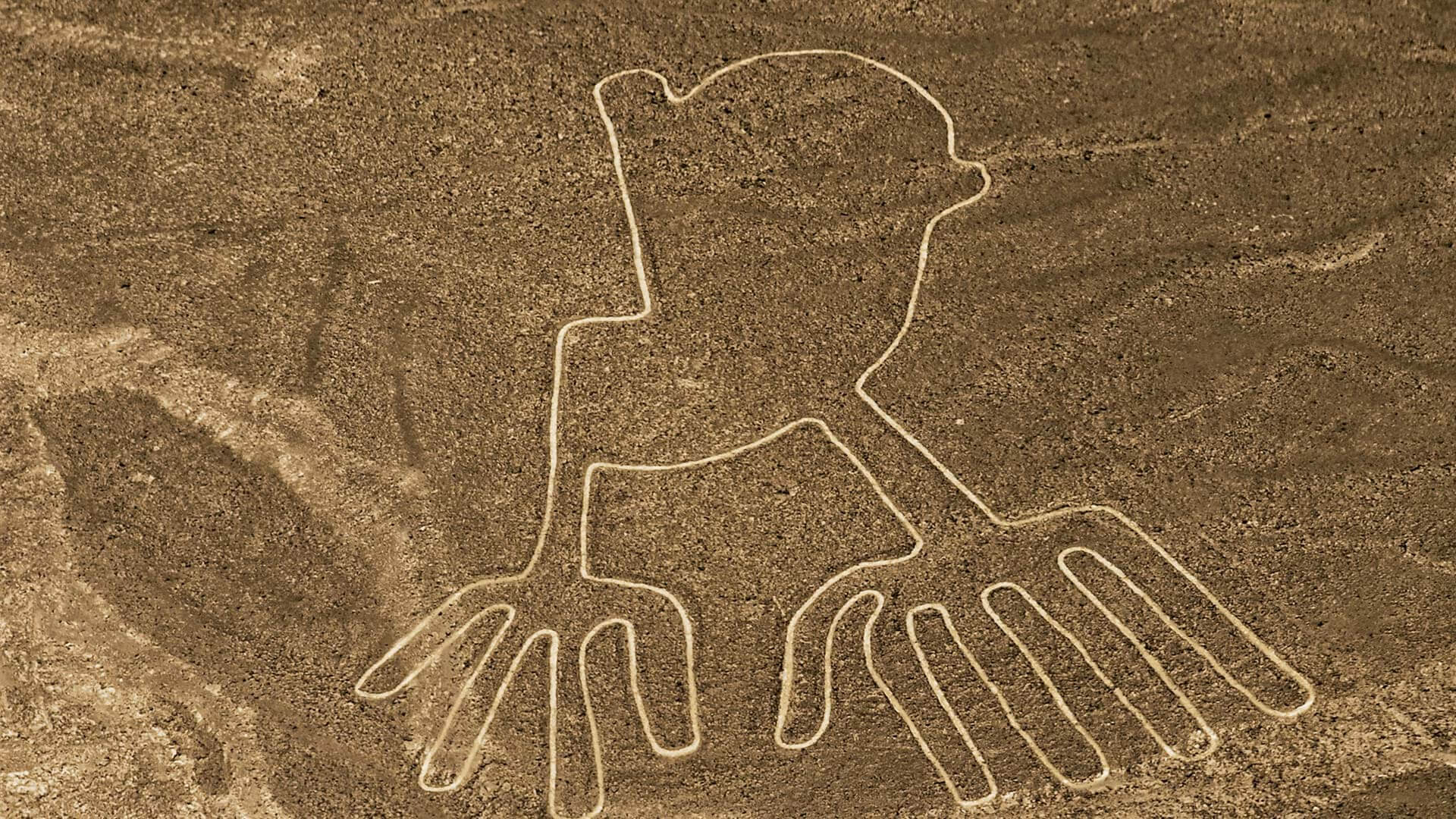
In total there are about 800 designs. Among the best known are animal figures totaling 70 and measuring up to 270 meters in length. Some of the most famous are the hummingbird, the condor, the pelican, the spider, the monkey, and the so-called "Astronaut" (anthropomorphic figure that would actually represent a fisherman).
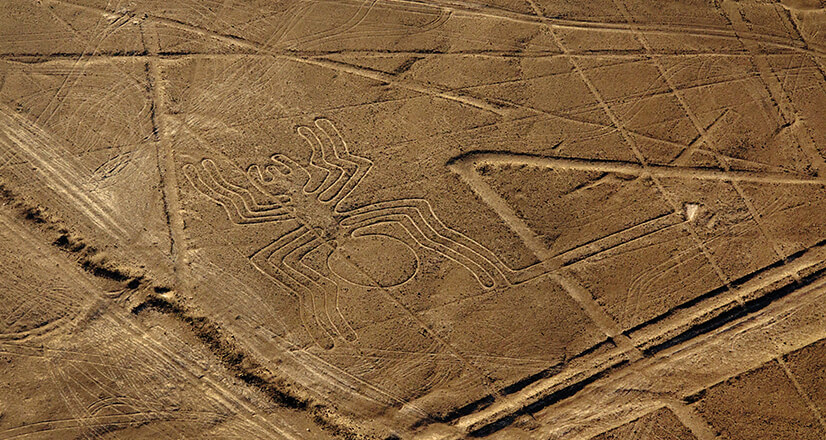
Credit: Walter Wust.
3. Thousands of years old
According to studies, the finding of wooden stakes at some points reveals that the lines were designed between 500 B. C. and 500 A. C.
4. American discoverer
Although the German archaeologist María Reiche was the first to investigate the lines, it was Paul Kosok who discovered them in 1927. The American anthropologist supported the hypothesis that the figures represented a great astronomical calendar.
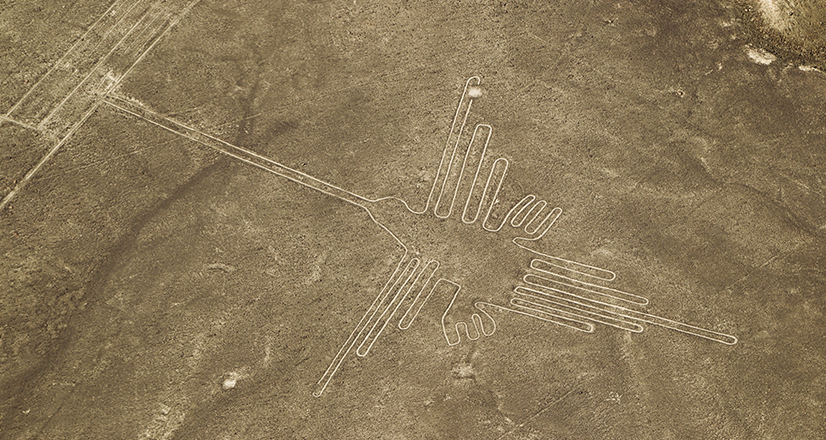
Credit: Enrique Castro-Mendívil / PromPerú.
5. Preparation method
To draw the thinnest lines, the inhabitants removed the darker and redder stones from the surface, exposing a layer formed by an off-white plaster. For the thickest, they made grooves up to 15 cm deep.
6. Transcendence in time
One of the topics that has most captivated researchers and anthropologists has been the conservation process that has kept the lines intact to this day. This is due in part to the great work carried out by archaeologist María Reiche who, as part of her research, dedicated herself to cleaning and caring for the area voluntarily.
Another aspect is the conformation of the land that allows the entry of winds that prevent the accumulation of sand or other elements on flat surfaces. Likewise, the almost total absence of rains also allows conservation.
7. Mysterious meaning
Among the most important theories that exist about the meaning of the lines is that of the Peruvian archaeologist Julio C. Tello, who considered them roads or paths. Historians like the American John Rowe related them to "worship centers", while the researcher Alberto Rossel affirmed that they represented choreographies of sacred dances.
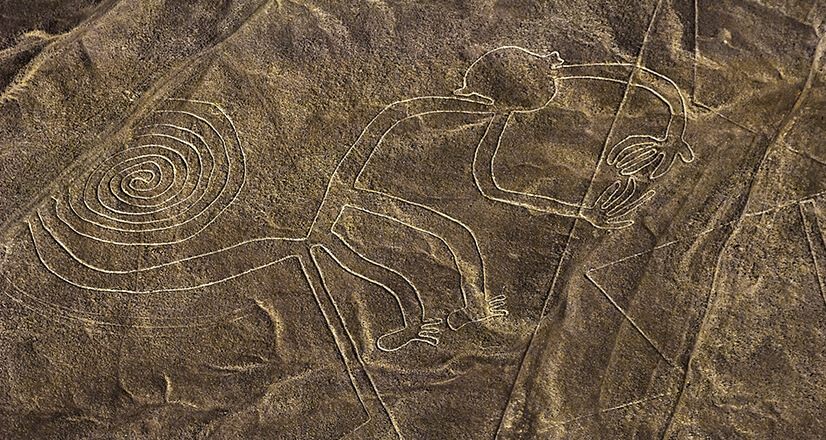
Credit: Heinz Plenge Pardo / PromPerú.
8. Alien presence?
A theory that quickly became popular was about the alien intervention in the creation of the figures postulated by the Swiss scientist Erich Von Däniken, who argued that the area of geoglyphs was the scene of visits by spaceships. The also writer affirmed in his work that the inhabitants conceived aliens as gods.
9. How to get there?
If you are in the city of Lima and want to visit this exotic place, you can do it in three ways: by plane - there are air taxi services and local overflights -, by bus or by car - through the Panamericana Sur with a duration approximately of 5 hours-.
10. Other tourist attractions
You can also visit other places nearby and related to the Nasca Lines, such as the Nasca de Chauchilla cemetery, with its visible mummies, or the lost city of Cahuachi, ceremonial center of this culture.
Follow us on social media
Facebook | Instagram | Twitter | TikTok | YouTube