

Written by:
peru.travel
Thursday, November 16, 2023
In this Page
Peru distinguishes itself as a remarkably diverse country, enriched by a fusion of ancestral cultures. This melting pot of traditions, rooted in the millennia-old history of its peoples, has given rise to an invaluable heritage of art and culture. Specifically, traditional Peruvian dances stand out as an artistic expression that transcends geographical and temporal boundaries.
These cultural expressions have transcended geographic limitations to become a globally significant phenomenon.UNESCO, acknowledging the extraordinary importance of these dances, has bestowed upon them the designation of Intangible Cultural Heritage of Humanity. This recognition serves not only to protect and preserve these cultural manifestations for future generations but also place them on a platform of worldwide recognition and admiration.
In this article, we will share information about some of the Peruvian dances that hold this prestigious title and the cultural richness they embody.
The Hatajo de Negritos and the Pallitas
These dance forms complement each other as they are carried out during Christmas festivities. They both have their origins in the Ica region. They center around the shepherds' visit to the Baby Jesus and the arrival of the Three Wise Men. The Hatajo de Negritos, rooted in the colonial era, was declared Intangible Cultural Heritage of Humanity by UNESCO in 2019.
It is an expression of Afro-Peruvian culture and has been an important part of the region’s cultural identity. This artistic expression celebrates freedom and Afro-Peruvian identity. It is characterized by being danced only by males who tap to the rhythm of a violin and bells while singing.
The Pallitas, on the other hand, is a traditional dance performed exclusively by women who tap and sing to the accompaniment of a guitar. UNESCO also recognized Las Pallitas as Intangible Cultural Heritage of Humanity in 2019.
The danza de las tijeras
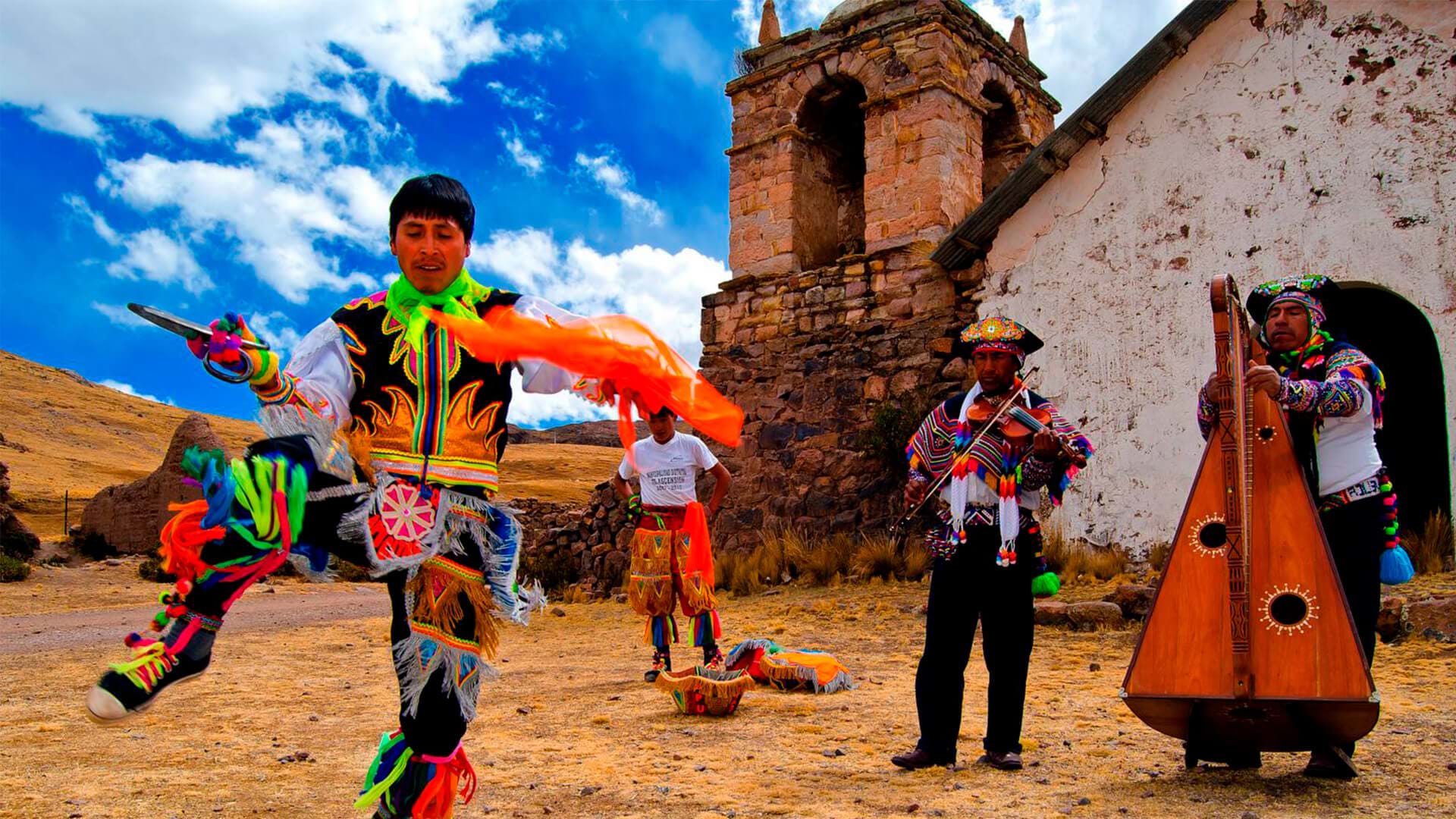
Predominantly practiced in the Peruvian Andes. The most impressive aspect of this dance is that the dancers perform acrobatics to the rhythm of live music while holding two polished metal sheets in each hand, creating the impression that they are scissors.
This traditional dance originates from ancient indigenous beliefs and exemplifies the connection between the physical body and spirituality. UNESCO recognized the cultural significance of the danza de las Tijeras by declaring it a World Heritage Site in 2010."
The huaconada de Mito
A dance that combines religious and cultural elements, it is celebrated in honor of the Baby Jesus during Christmas and New Year festivities in the province of Concepción, Junín region.
The huaconada de Mito is also associated with agricultural rituals aimed at ensuring good harvests and community prosperity.

The dance is part of the Christmas and New Year festivities. Credit: Shutterstock.
Its inclusion in UNESCO's list of Intangible Cultural Heritage of Humanity in 2010 has contributed to its preservation and international recognition.
The danza del Wititi
An ancestral dance dating back to pre-Columbian times, originating in the community of Chivay in the Colca Valley. The Wititi dance symbolizes the courtship and romantic unity among the younger members of the community. Additionally, it is intertwined with nature and agriculture, symbolizing the fertility of the land and the bountiful harvests. UNESCO declared the Danza del Wititi Intangible Cultural Heritage of Humanity in 2015, recognizing its beauty and profound cultural significance.
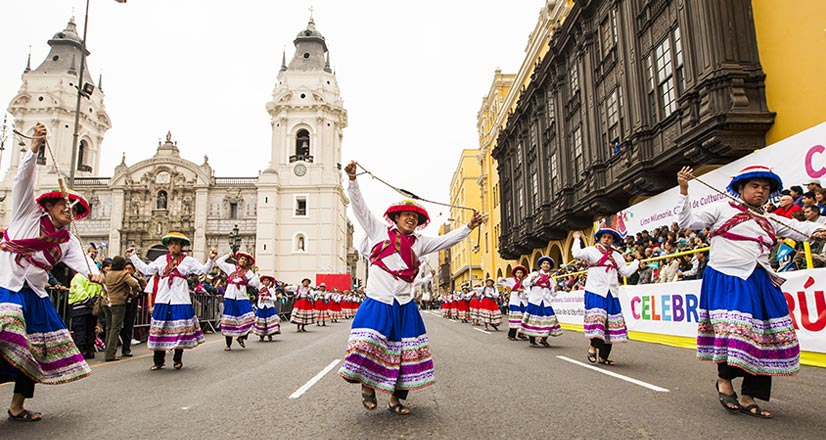
Wititi dancers. Credit: Rafael Cornejo / PromPerú.
These dances showcase the cultural richness and diversity that characterize Peru. Each dance reflects the history, beliefs, and identity of the communities that practice them, offering a glimpse into the soul of a country that proudly celebrates its cultural heritage. Through their choreography, melodies, and costumes, these artistic forms carry us into a realm of tradition and fervor, emphasizing the importance of preserving and valuing cultural heritage as part of humanity's shared legacy.
Follow us on social media
Facebook | Instagram | Twitter | TikTok | YouTube