
Q’eswachaka, the last Inka bridge
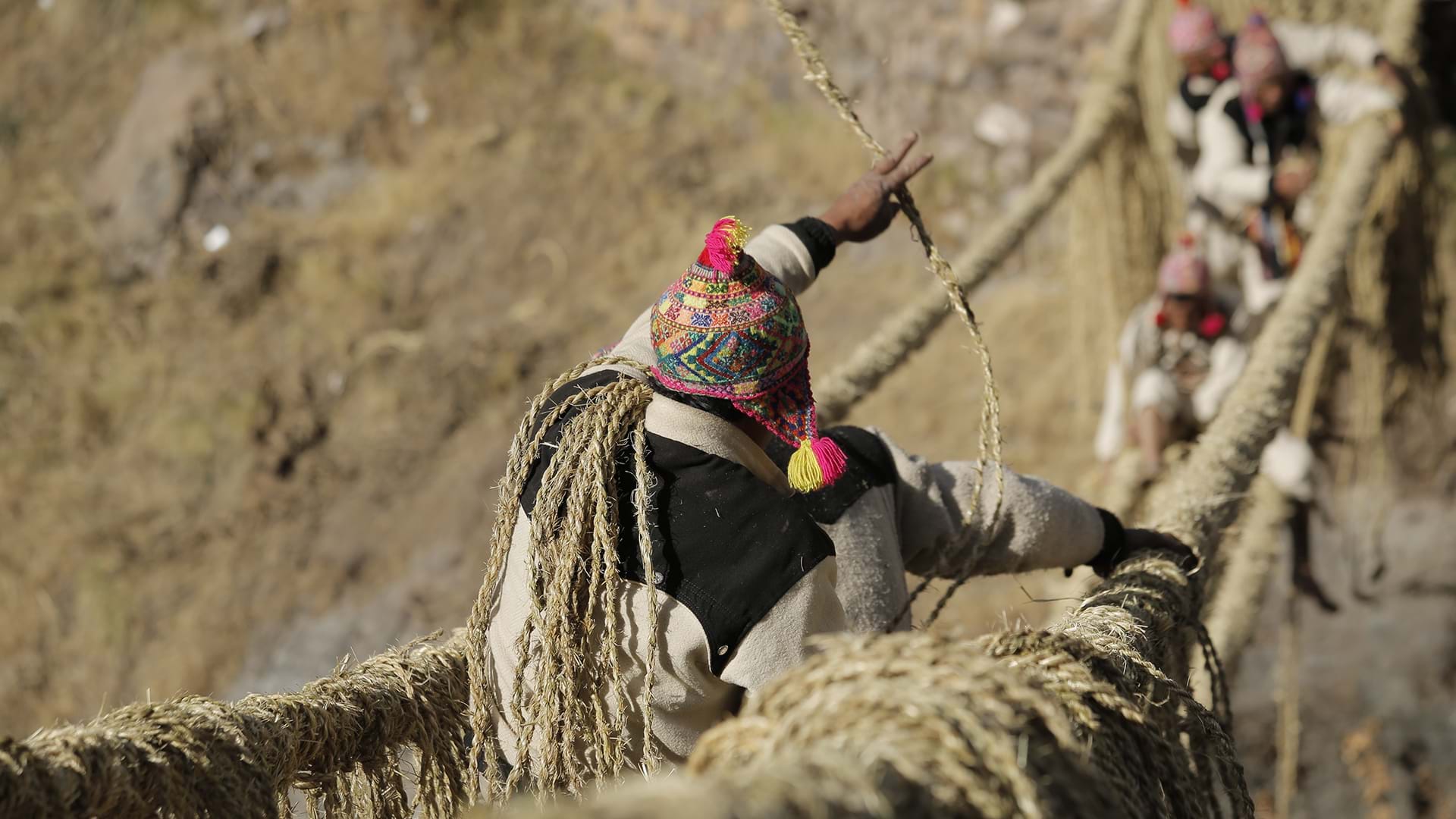
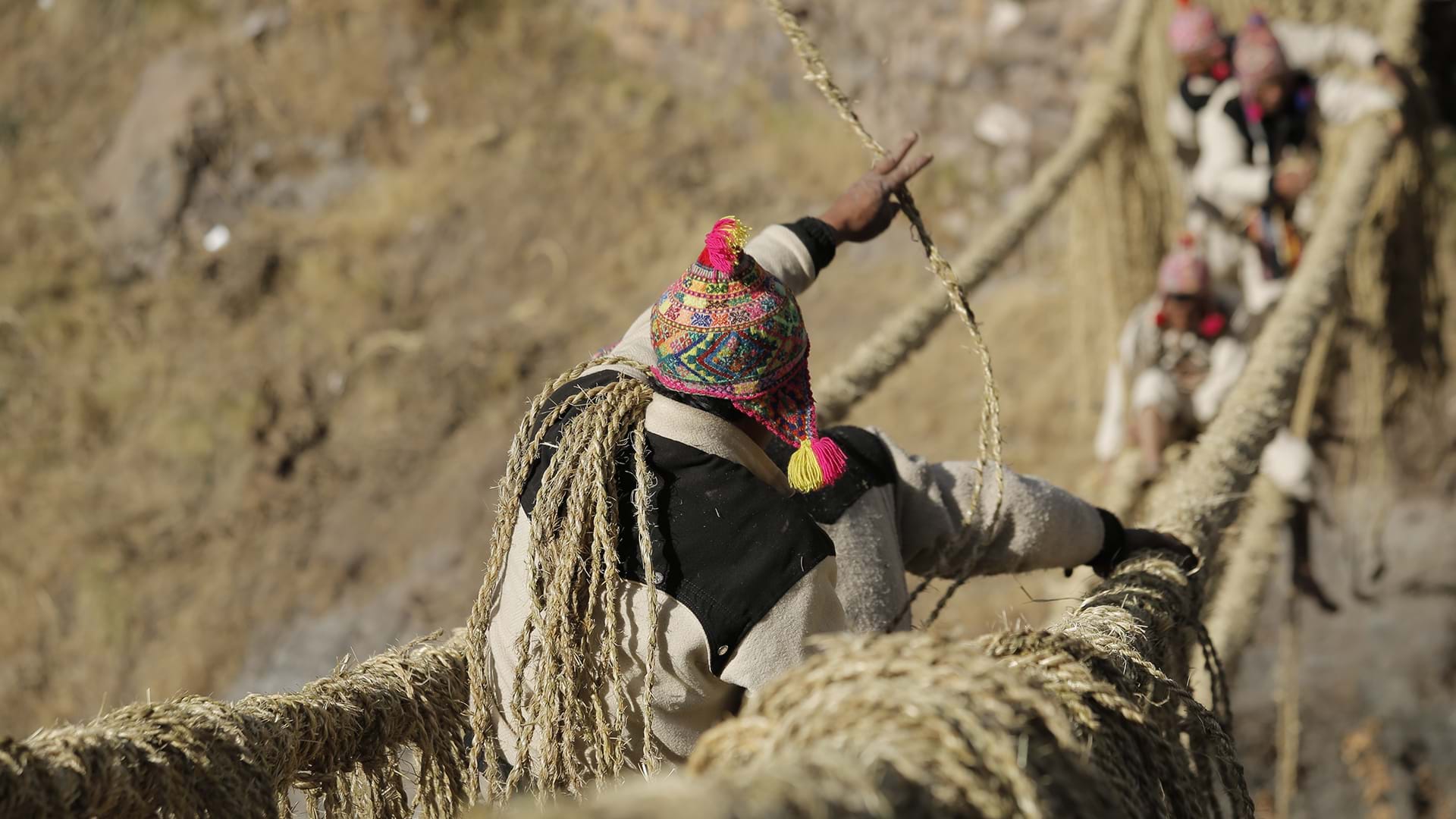
Every year during June, the Apurímac river canyon in Cusco, witnesses a thousand-year-old tradition that reflects the art and technique of the Andean world: the renovation of the last Inka bridge, the Q’eswachaka. A celebration that is transmitted from generation to generation and that remains as a living culture in the truest style of minka or community work.
At this time, the Quechua communities of Huinchiri, Chaupibanda, Choccayhua and Ccollana Quehue are meeting, in a way to strengthen the links between them, to start the activities of this historic ritual declared as an Intangible Cultural Heritage of Humanity by Unesco in 2013.
Credit: PromPerú
An ancestral celebration
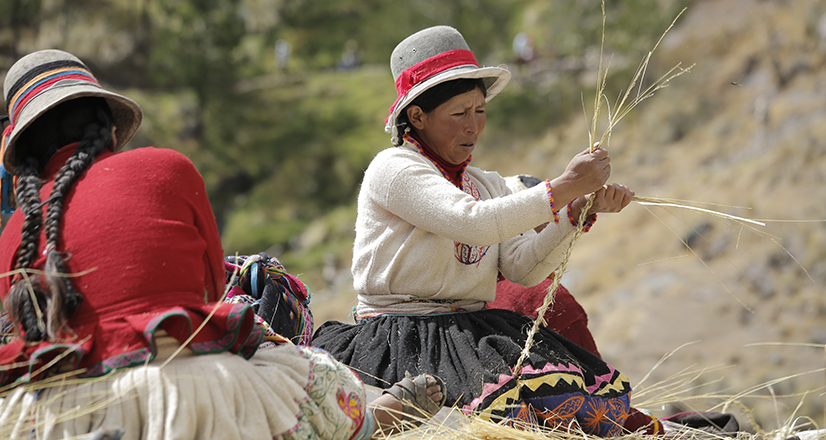
The ceremony begins with the disarmament of the bridge built the previous year by dropping the old bases on the river. Then, the work of collecting the qoya-ichu, straw material that serves for the elaboration of the bases and railings of the bridge. This activity is generally carried out by women and children in the communities. The ritual of payment to the Apu Quinsallallawi is the final closing of a great day of activities.
Credit: PromPerú
Over the next few days, the men of the families join together to tie the ropes to the old stone bases located on both sides of the gorge. The task involves the laying of an extensive carpet, made of branches, to completely cover the floor of the platform. Once the work is completed and with the structure ready, the leaders of each community prepare to open the work in a ceremony always accompanied by good food, including alpaca and cuy (Guinea pig), and traditional dances.
The Qhapaq Ñan, the Inka road network
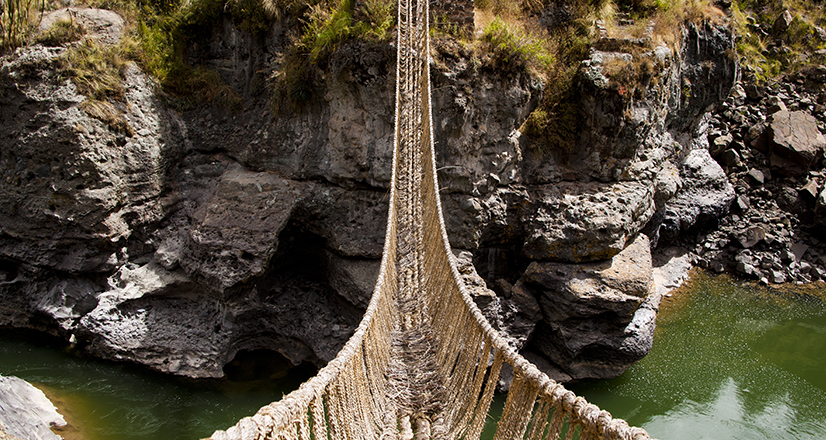
During the time of the Inkas, there was a large road network called Qhapaq Ñan that linked the territories of Tahuantinsuyo. The implementation of this road system inevitably required the construction of bridges to cross the rugged Andean geography. Some had stone structures and others had wooden structures. Suspension bridges were also manufactured with plant fibers. These were especially surprising, as they joined abrupt and boxy slopes. The Q’eswachaka, at 28 meters long, is the greatest legacy of this Inka engineering.
 Credit: PromPerú
Route 1
Ruta 1
Lima - Cusco
1 h 15 min approximately
Cusco - Apurimac River Canyon
2 h 20 min approximately
Recommendations:
- Take advantage of your stay in Cusco for sightseeing in the city.- Plan the trip in advance. So, you can save money and make more use of the time.

General information
Indispensable:
Comfortable walking clothes, slippers, height sickness pill, hat, sunglasses, cash,
Date:
JuneAltitude:
2200 MASLSchedule:
Depends on the operatorPrice:
Depends on the operator