

Written by:
peru.travel
Friday, October 20, 2023
In this Page
The cultural fusion that took place after the Inca and the Spanish empires first met—more than 400 years ago—left an important mark on Peru's identity. This bond transcends into the customs, norms and ways of life of its population, as well as greatly influencing the language. The arrival of the Spanish language to a territory dominated by the Quechua language started a linguistic transformation that is still manifested and present in the everyday speech of all Peruvians.
The official language of the Incas
Considered one of the official languages of Peru—along with Spanish and Aymara—Quechua originated in the central region of the country years before the beginning of the Inca Empire. The migration of this first generation of Quechua speakers to other areas, including Cusco, led to a significant expansion of this language, which later became the main language of the Tahuantinsuyo.
With the arrival of the Spanish, Quechua took on an important role in Christian teachings. In order to facilitate learning, the Western priests spread their doctrine in this language and promoted its use, making it the most widely spoken language in a large part of the colonial territory.
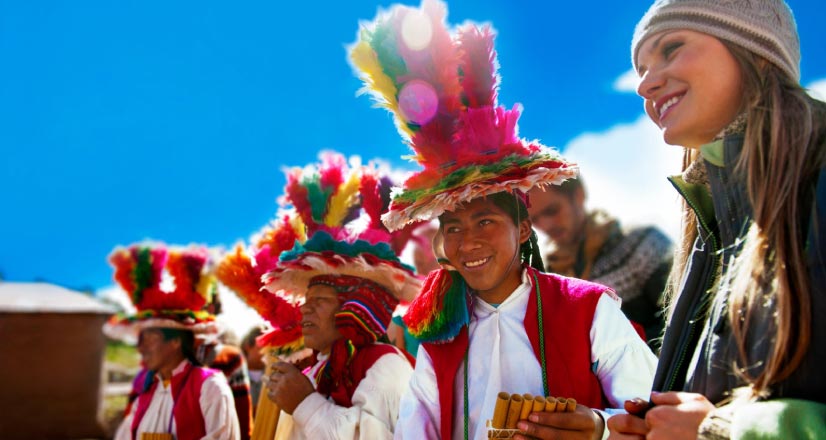
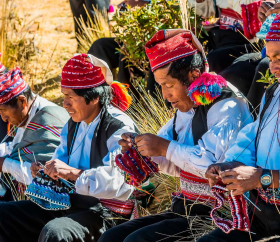
Chullo derives from the Quechua word 'ch'ullu,' which means 'traditional alpaca wool hat.' Credit: Janine Costa / PromPerú.
This inclusion allowed both Spanish and Quechua to coexist over time and merge with the standard language, not only of Peruvians but also of the rest of South Americans. Here are some of these expressions:Cura. Used to refer to a Catholic priest, this word comes from the Quechua word kuraka or kuraq, a term used for the head of a community in the Inca Empire.
Choclo. This comes from the word choccllo and means "an ear of corn". The term is also used in countries such as Argentina, Bolivia, Chile, Ecuador and Paraguay, although it also has other names such as elote, which is widely used in Mexico.
Cancha. This word is widely used in popular slang throughout Latin America to refer to a soccer field—or fields and courts for other sports such as volleyball—or the facility in which it is found. It comes from the Quechua word kancha , which means “open place”.
A second meaning of cancha comes from the Quechua word kamcha, which means popcorn. In Peru this is usually called canchita.
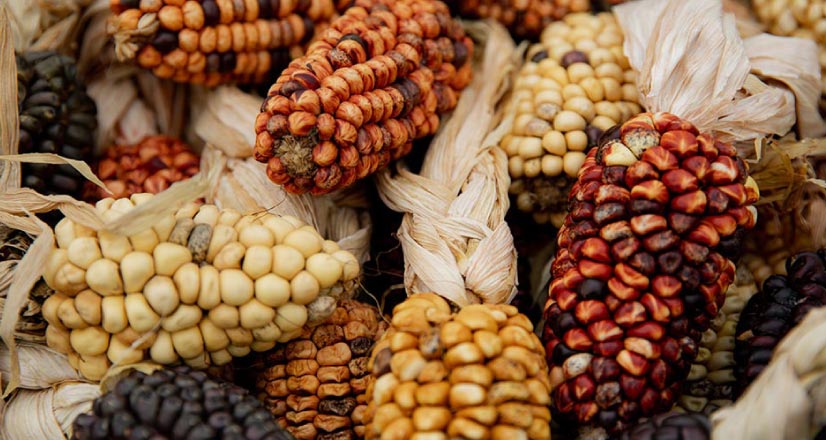
Derived from the word 'choccllo,' this word means 'corn cob.' Credit: Karina Mendoza / PromPerú.
Carpa. This word, which is very popular in South America, comes from the Quechua word karpa which means "tent or large canopy".
Chullo. A word that refers to a woolen hat with earflaps that is typical of the Peruvian highlands. It comes from the Quechua word ch'ullu which means "traditional alpaca woolen hat".
Poncho. This word is widely applied to the distinctive Andean garments that are woven from wool. Its origin can be found in the Quechua word punchu.
Chacra. This word is widely used in South America to refer to a farm or a crop field. It comes from the Quechua word chakra, which means "small plot of arable land".
Palta. The Peruvians use this word of Quechua origin to refer to the creamy green avocado. It is known as aguacate in the rest of the countries of the region.
As you can see, Quechua is present in many of the words used today in Peru and Latin America. Come and learn them!
Follow us on social media
Facebook | Instagram | Twitter | TikTok | YouTube