

Written by:
peru.travel
Friday, December 22, 2023
In this Page
The Christmas season in Peru is eagerly awaited, as the country has a strong religious fervor, honoring the birth of baby Jesus starting at midnight on December 24th.
Different practices from foreign cultures have been embraced, some with slight modifications to better suit everyday life in Peru. Today, let's explore the traditions celebrated in Peru throughout the Christmas season. Can you imagine a place where you can find gifts for the whole family, accessible only at Cusco's Plaza de Armas? Or perhaps asking Mother Earth what the future holds for you? Learn about them in detail here.
Santurantikuy (Cusco)
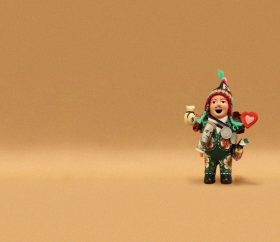
The traditional Santurantikuy fair takes place in Cusco every December 24th, where hundreds of renowned and new artisans exhibit their works, with the central character being Baby Manuelito. On September 22, 2009, this traditional fair was proclaimed Cultural Heritage of Peru.
Artists present Christmas works employing various techniques like ceramics, silverware, tinware, imagery, and more. These crafted pieces complement the Cusco nativity scenes set up in small, natural cribs adorned with native flora.
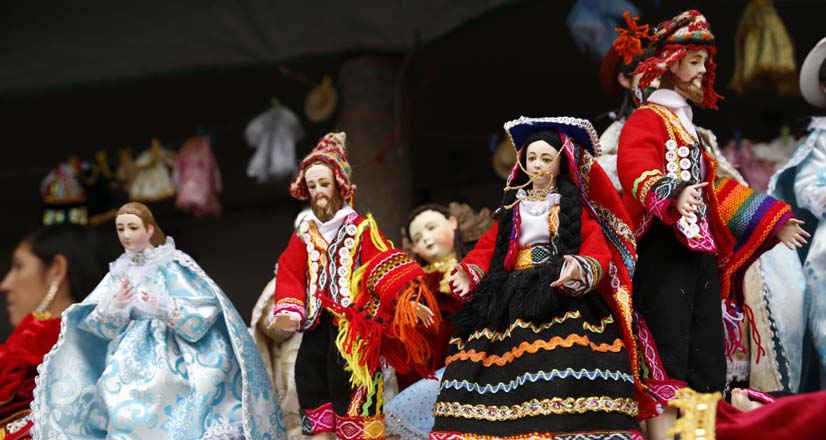
Santurantikuy is a Christmas fair dating back to the 16th century. Credit: Enrique Nordt.
The imagery area, where dresses for Baby Jesus are sold in all sizes, styles, and colors, is very popular. Another noteworthy spot is Pucará, located at the bottom of the Cusco Cathedral, where artisans from Puno exhibit and sell artistic pieces reflecting the distinctive features of this Peruvian region. Adjacent to Pucará are the artisans of San Blas, where the greatest artists of this traditional neighborhood, which has transmitted art through generations, concentrate in various expressions.
Black Christmas
This celebration in El Carmen district, located in the Chincha province of Ica, acquires a distinctive and meaningful Black Christmas. This event is distinguished by its Afro-Peruvian cultural roots, expressed through a live nativity scene. Accompanied by the lively and energetic rhythm of zapateo dance, the arrival of Baby Jesus is celebrated in a way that reflects the rich cultural heritage of this community.
In this small corner of Peru, Black Christmas becomes a tribute to ancestors, where the youngest begin zapateo as a promise to commemorate the birth authentically and meaningfully. The palpable joy of children, the applause of adults, and the musical accompaniment of instruments like the donkey jawbone and the cajón create a unique festive atmosphere that combines Creole tradition with the essence of Afro-Peruvian culture.
On this date, complementary dances of Hatajo de Negritos and Las Pallitas are presented. Both depict biblical scenes, illustrating the shepherds' visit to Baby Jesus and the arrival of the Magi.
On one hand, the men perform the dance of Hatajo de Negritos, marking the rhythm with zapateos accompanied by violin and bells, while singing songs. On the other hand, the women perform the dance of Las Pallitas, tapping and singing to the rhythm of a guitar.
These dances, recognized as symbols of religious dedication and honored as Intangible Cultural Heritage of Humanity by UNESCO, take place in public squares, churches, and homes during the months of December and January.
Midnight Mass
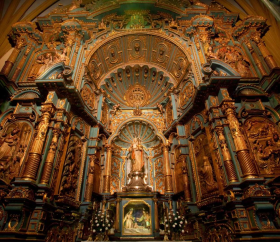
As previously mentioned, Peru experiences a strong religious influence, with Catholicism holding the highest number of adherents. Traditional Midnight Mass is celebrated in Catholic churches. This takes place on the 24th (after finishing Christmas Eve) or the 25th (those unable to attend at midnight, do it before starting their daily routine).
In the course of the ceremony, readings related to the arrival of baby Jesus are proclaimed, alongside the Gospel. The origin of its curious name (the real name of the Mass in Spanish is literally: Rooster's Mass) lies in the Roman tradition, where the crowing of the rooster was associated with the beginning of a new day.
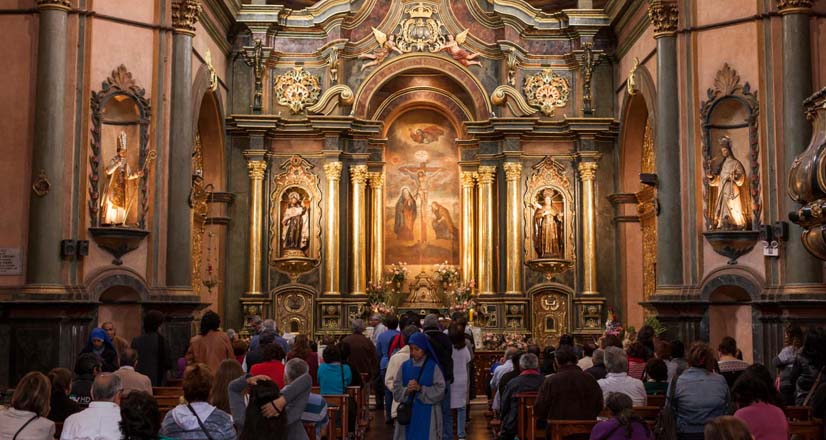
Midnight Mass at Las Nazarenas Church. Credit: Adrián Portugal / PromPerú.
A truly Peruvian Christmas dinner
If you spend Christmas in Peru, the Christmas Eve dinner might consist of traditional stuffed turkey, panettone, and hot chocolate. However, families try to innovate each year by integrating diverse Peruvian dishes into this celebration.
In the Andes, a ostentatious baked bird is less customary in the middle of the table. Instead, it is more frequent to share stuffed guinea pigs, pachamanca, or roasted suckling pig as the main course. Would you dare to change a traditional meal and experience the charms of Peruvian cuisine? Be sure that you will not regret it.
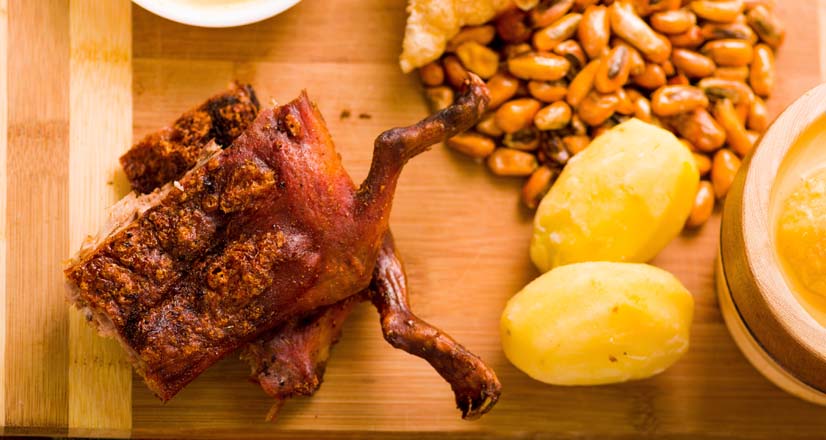
Fried guinea pig as the main dish for Christmas dinner. Credit: Shutterstock.
In summary, Christmas traditions in Peru reflect the country's rich cultural diversity. In this season, Peruvians find the opportune occasion to renew hope, express gratitude, and strengthen the emotional bonds with their dearest loved ones.
Follow us on social media
Facebook | Instagram | Twitter | TikTok | YouTube