

Written by:
peru.travel
Saturday, March 9, 2024
In this Page
The diversity of primates in Peru is a result of its varied ecosystems, ranging from dense Amazonian forests to the high Andean regions and captivating coastlines.
What stands out even more is the presence of 11 endemic species, demonstrating their adaptability to a variety of environments.
Here are some of the most representative species in the country.
Yellow-tailed woolly monkey (Oreonax flavicauda)
This species exclusively inhabits the Peruvian jungle, primarily in the cloud forests of San Martin and Amazonas. Its distinctive fur and the striking yellow tail stand out in the landscape, making it a visual marvel.
It is an endemic primate of Peru, representing the deep connection between local fauna and its habitat, emphasizing the importance of conserving Andean ecosystems to preserve not only primates but also the unique biological richness of these regions.
In 2019, the Central Reserve Bank of Peru introduced a new edition of the S/ 1 coin featuring the image of this primate to raise awareness about its preservation.
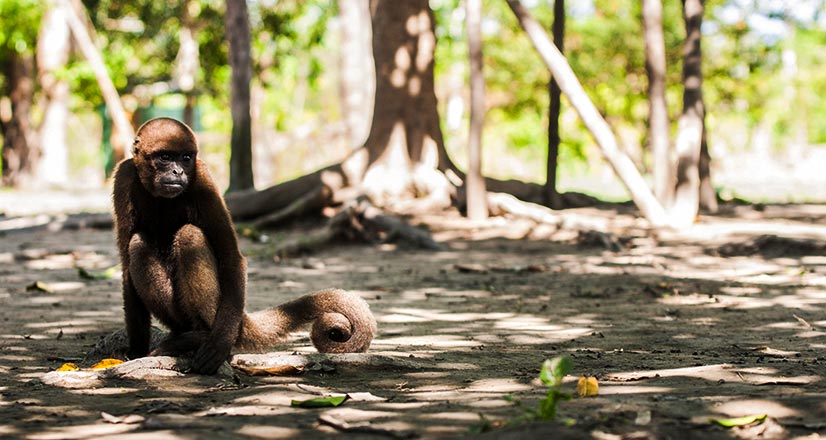
Yellow-tailed woolly monkey in Loreto. Credit: Álvaro García / PromPeru.
Titi monkey (Callicebus oenanthe)
This monkey inhabits the Amazonian region of San Martin. With its small size, dense fur, and fluffy tail, this endemic primate shows exceptional adaptation to the forest environment.
It is of medium size with dense and soft fur, usually black or dark brown. Its tail is fluffy and long, providing balance while moving through tree branches. Its large and expressive eyes reflect its adaptation to arboreal life, and its lifestyle is primarily diurnal.
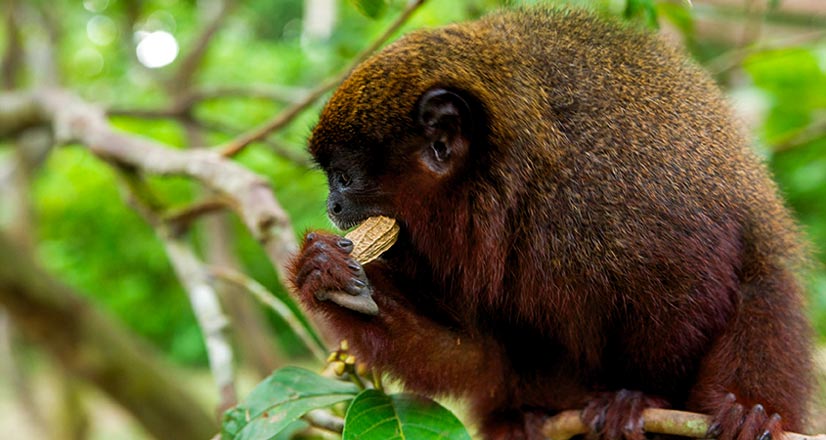
Titi monkey on Monkey Island in Iquitos.. Credit: Carlos Ibarra / PromPeru.
Ecuadorian red howler monkey (Alouatta palliata aequatorialis)
On the sunny coasts of Tumbes, the red howler monkey with its dark fur and distinctive roar, audible over long distances, earns it the nickname "howler monkey." They are also known for their social behavior.
This primate has dense and dark fur, which can vary in shades from dark brown to black. It has a strong throat, contributing to its ability to emit loud howls, one of its distinctive features. Males are often larger than females and have a more developed mane around the face.
Spider monkey (Ateles)
Deep in the lush Amazon rainforest, this primate, commonly known as spider monkey or "maquisapa”, is native to the Peruvian tropical jungles, moving with agility among the trees.
The spider monkey is recognized for its long and slender limbs, especially its long arms, which are longer than its legs. This feature allows it to move agilely among tree branches. Its fur can vary in color, from dark brown to black. Its tail is prehensile, allowing them to grip firmly to branches and swing from one place to another.
Bald uakari monkey (Cacajao calvus)
This monkey inhabits the flooded tropical forests of the Peruvian Amazon. The bald uakari is characterized by its reddish fur that stands out amid the lush vegetation of the area. Its coloration varies from lighter shades to intense reds, depending on age and sex. Unlike other howler monkeys, the bald uakari does not have a prominent mane.
They spend most of their lives in trees, moving agilely in search of food. They are diurnal animals and live in social groups, usually led by a dominant male.
Red howler monkey (Alouatta seniculus)
This monkey primarily inhabits Tambopata, in Madre de Dios. With its reddish fur and resonant howl piercing through the dense jungle, it enriches the regional biodiversity.
It is characterized by its thick and fluffy reddish fur, which can vary from lighter tones to intense reds. They have jaws and teeth adapted for their herbivorous diet, consisting mainly of leaves and fruits. Unlike other primates, their prehensile tail does not serve as a grip but aids in balance as they move through the trees.
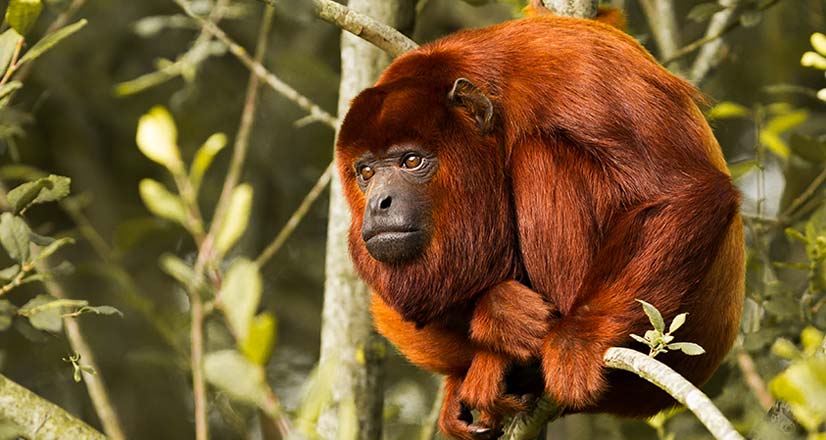
Red howler monkey in the tree. Credit: Shutterstock.
Night monkey (Aotus miconax)
Adapted to nocturnal life in the Andean forests, the night monkey, known as the Andean night monkey, adds a unique dimension to the diversity of primates in Peru. It surprises with its ability to see in the dark and its peculiar behavior.
The night monkey has distinctive physical features adapted to its nocturnal lifestyle. Its large eyes provide excellent vision in low light conditions, allowing them to move and search for food during the night. Their fur is dense and generally dark, helping them camouflage in the darkness of the jungle.
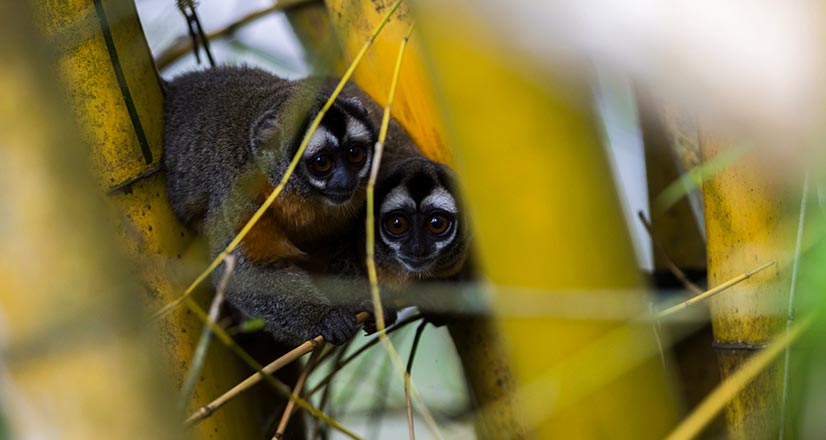
Night monkey in the Yanachaga - Chemillén National Park in Pasco. Credit: Ernesto Benavides / PromPeru.
The diversity of primates in Peru creates unique opportunities for wildlife observation tourism. Nature enthusiasts come from different parts of the world, seeking authentic experiences of encounters with fauna and the possibility of seeing these monkeys and other species in their natural habitat. Do not hesitate any longer and come encounter these amazing species.
Follow us on social media
Facebook | Instagram | Twitter | TikTok | YouTube