
Written by:
peru.travel
Friday, September 25, 2020
In this Page
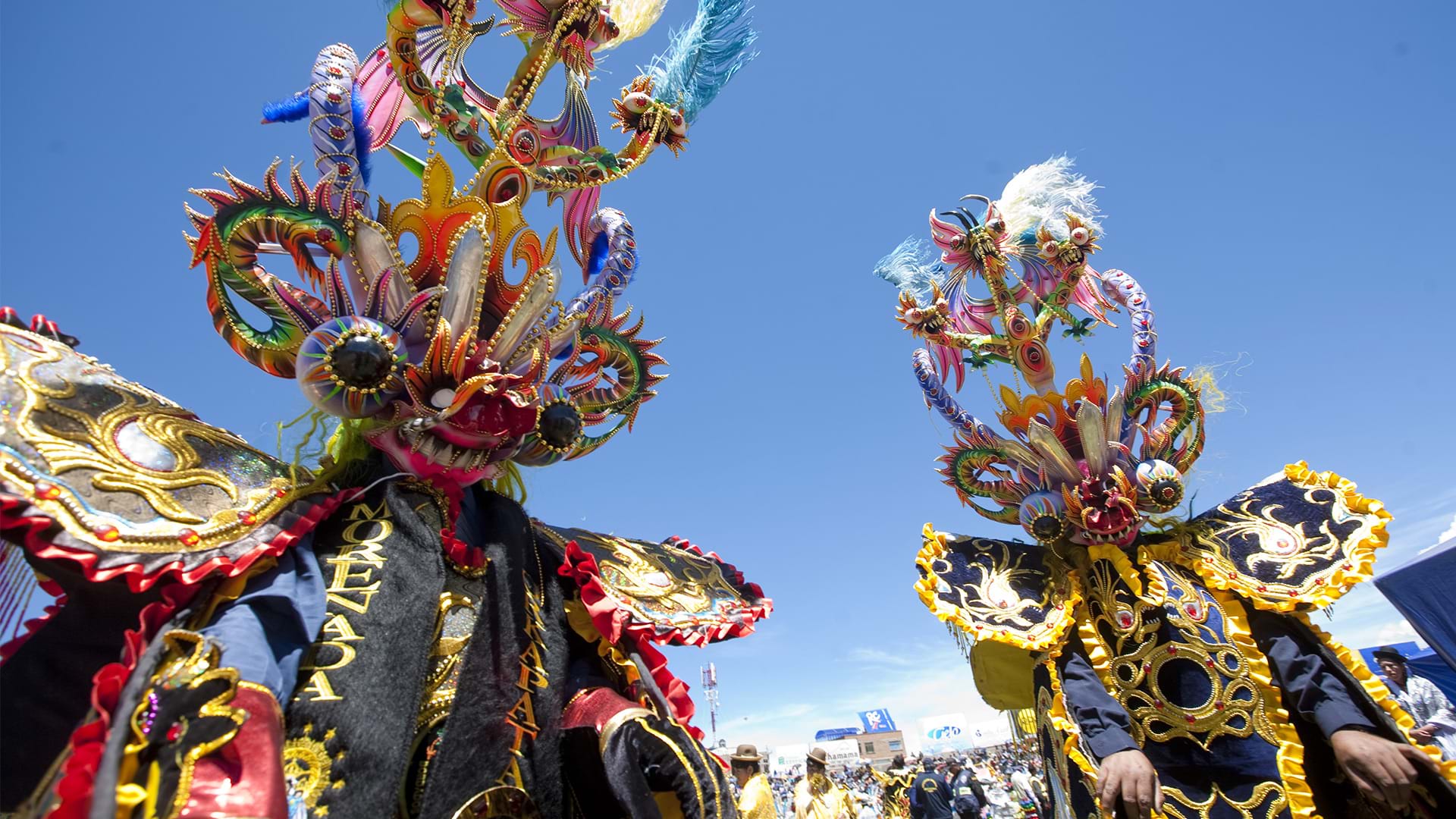
Dances are an example of the cultural heritage of a country, which is manifested in its religious or civic celebrations, and other festivities. Peru dances every time it celebrates and it is in this rite that the mysticism and passion of its inhabitants is distilled with colorful clothing and impressive choreography.
We will present you some of the most representative folk dances of Peru, some of them recognized by Unesco and included in the Representative List of the Intangible Cultural Heritage of Humanity.
The marinera
This dance, an indisputable symbol of Peru, is practiced in many parts of the country. Among all its variants, the best known is the marinera norteña (the northern one), but equally colorful is the marinera limeña (from the capital of Perú) and the other versions that are danced in different places in the territory. Considered Cultural Heritage of the Nation since 1986, the marinera is a courtship dance which begins with the percussion of a snare or a peruvian cajon. The couple bows to each other and maintains a certain distance, which shortens as the flirting progresses.
The man and the lady trace circles with their steps. She avoids the gaze of him until he starts to run or stomp, a figure that symbolizes the woman's acceptance of the suitor. The latter, who wears a straw hat in one hand and a handkerchief in the other, flatters the girl with elegant and subtle dance steps. Almost at the end, the steps are executed with more force, until the man kneels before his beloved woman, as a sign of submission. This marks a pause, in which the dancers remain immobile in a flirtatious gesture, after which the music restarts following the northern maxim of "there is no first without second".
Love, nostalgia, traditions and family are some recurring themes in the lyrics of each song, although many of the productions are entirely instrumental.
The marinera is so deeply into the identity of the Peru that every year hundreds of contests are held to choose the best couple, the one who exudes grace and elegance. The most traditional contest of all takes place in the department of La Libertad. We refer to the "National Marinera Contest" of Trujillo. The event is held at the end of January and brings together thousands of national and foreign visitors. Next, a sample of the marinera.

The marinera has penetrated so deeply into the identity of the country that hundreds of contests are held every year.
Credit: Enrique Castro-Mendívil / PromPeru.
The huayno
It is the best known dance in the Peruvian highlands and its origin dates back to pre-Hispanic times. According to the famous Peruvian writer José María Arguedas, there is no more legitimate expression of Indian and mestizo Peru than the huayno. These days, this dance has several regional variants, but all retain the same spirit.
In Inca times, the huayno would have been a kind of military hymn that was performed with zampoñas, quenas and tinyas (small drums). The arrival of the Spanish, who introduced new instruments and techniques, favored the evolution of the huayno and the creation of regional varieties, with sounds of mandolins, harps, violins, guitars and charangos.
His songs, both in Quechua and Spanish, have a singular expressiveness, expressing joy and mischief, but also feelings of sadness and longing. Although sometimes it is danced individually, it is usually a dance of couples.
La Danza de Tijeras (Dance of Scissors)
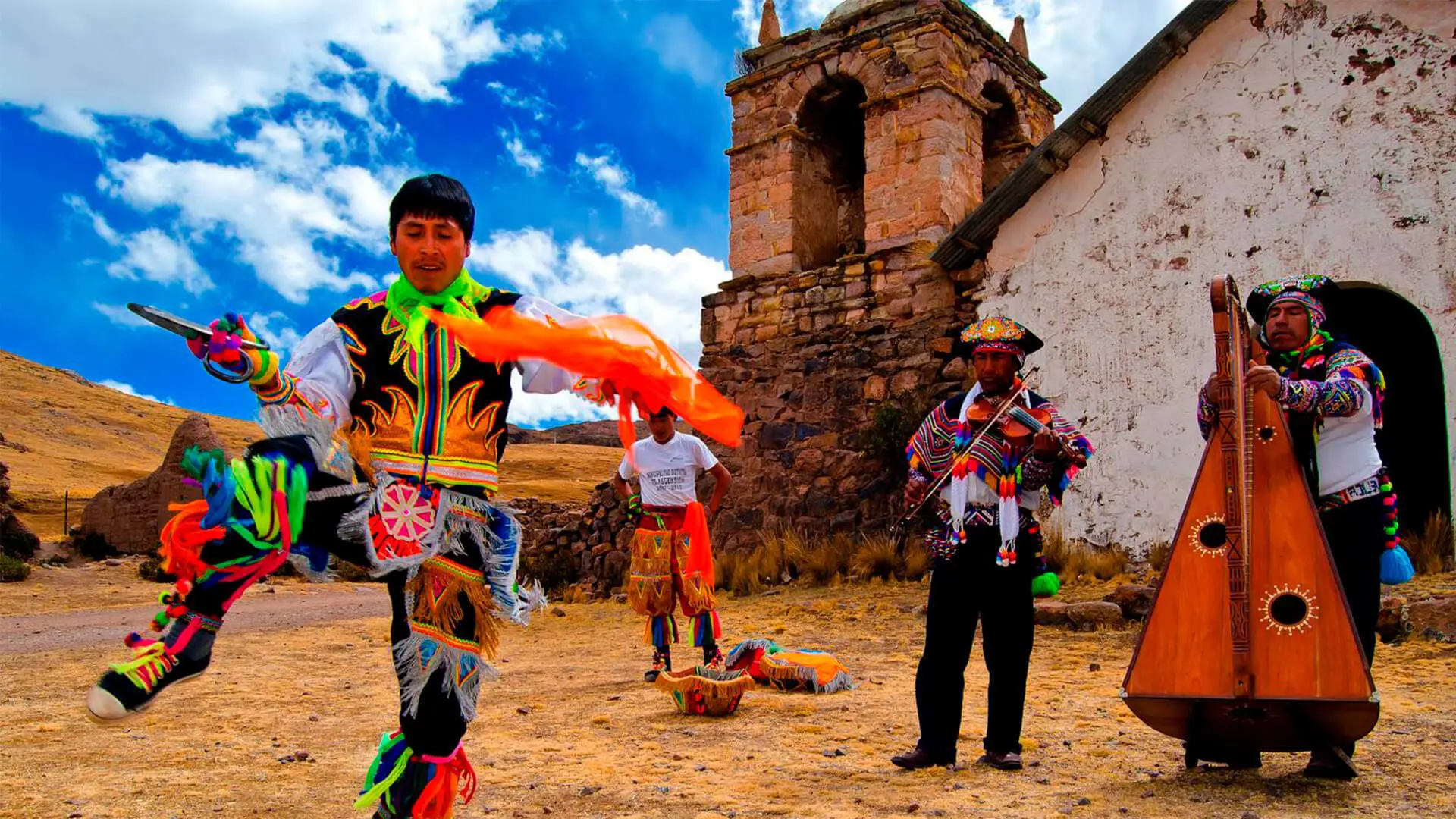
This traditional dance with magical-religious characteristics is practiced in the departments of Ayacucho, Huancavelica, Apurímac and Lima. With agile and spectacular acrobatic steps, the dancers pay tribute to the Apus (Andean gods) who, according to their beliefs, live in the mountains. Dressed in colorful costumes, the dancers perform incredible choreographies that demand great physical resistance.
The Danza de Tijeras owes its name to the two metal blades, similar to those of the scissors, that the dancers make sound between their hands while they dance. The accompaniment is given by a violinist and a harpist. It is usually carried out at religious and patron saint festivals, which can last up to seven days. It is said that the dancer fulfills the role of mediator between Mother Earth and the inhabitants.
The Tondero
This beautiful dance of insinuating movements is very popular in the north of Peru. Like the marinera, the tondero represents the courtship and the love of a couple. The instruments that accompany it are the guitar and the peruvian cajon. Unlike the other Creole genres with Spanish influence, the tondero was born from the combination between the countryside traditions and the Yunga region customs, and retains a more rebellious and bandit spirit.
The town of Morropón, in Piura, is considered the capital of this dance.
The dance follows some parameters, but in general it is quite free. The lady and the man start looking at each other. Then he approaches, initiating the courtship and she avoids him with subtle movements. The woman picks up her long skirt and leans it against her hips, while holding a handkerchief with her other hand. Later, she pulls her skirt back and starts stomping, a movement known as 'fuga' or 'embiste'. Each stomp is finished off with a fast lap.
This beautiful dance of insinuating movements is very popular in the north of Peru.
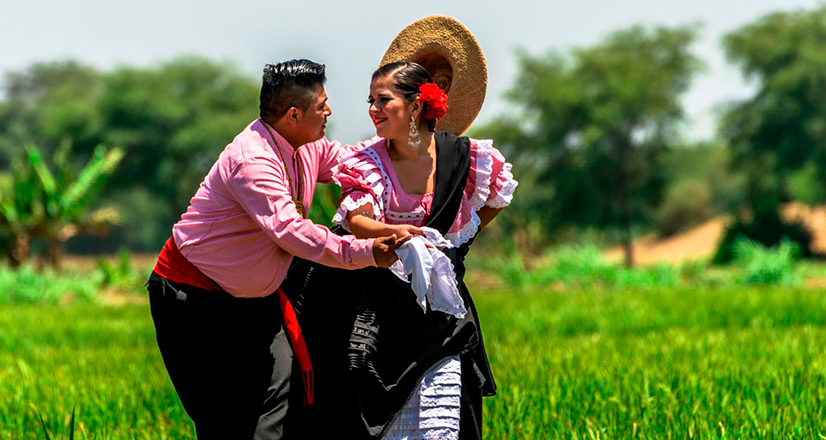
This beautiful dance of insinuating movements is very popular in the north of Peru. Credit: Juan Puelles / PromPeru.
Sources: Andina / La Hora / El Tiempo / En Perú
Follow us on social media
Facebook | Instagram | Twitter | TikTok | YouTube