

Written by:
peru.travel
Friday, June 12, 2020
In this Page
Dating back 3 million years, the world's highest navigable lake forms the natural border between Peru and Bolivia and contains unparalleled cultural, flora and fauna biodiversity.
At more than 3,000 meters above sea level, Lake Titicaca always appears calm, surrounded by imposing mountains and vast vegetation, making it a unique landscape with a magical image that is hard to forget.
Lake Titicaca is a high-mountain lake with rich biodiversity, blue skies, and dreamy sunsets, and is home to ancient Andean cultures steeped in ancient customs. Below, we invite you to learn more about this lake, also known as the Sea of the Andes.
Millions of years old
Over 3 million years in age, it spans approximately 8,600 km² (source: Titicaca National Reserve), with more than half of its area located in Peruvian territory. It has an average depth ranging from 140 to 180 meters, and its climate varies between 5°C and 13°C.
Natural wonder
In 1978, Peru declared Lake Titicaca a National Reserve to preserve its important natural resources, its unique biodiversity, and its traditions, which are still maintained today by its communities.
Credit: Instagram / Perú
The beginning of the world
According to legend, it was in this place where the Andean world began, when the Viracocha god emerged from the lake and created the sun (Inti), the moon (Mama Killa), the stars and the first people. Knowing this, the Incas held the belief that upon death their souls would return to their origin, which was what Lake Titicaca meant to them.
The founders
According to the same legend, the Sun god sent his children Manco Cápac and Mama Ocllo - who emerged from the depths of the lake - to civilize and educate the people of the Earth with the purpose of founding an empire to honor the Inti god.
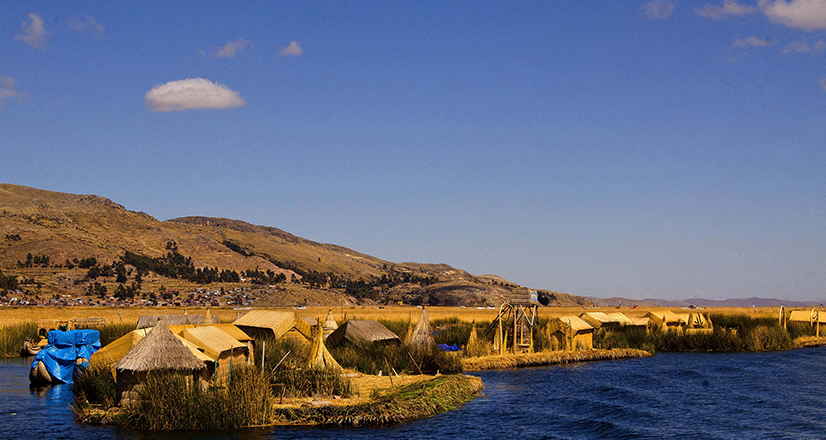
Uros Islands in Lake Titicaca. Credit: Juan Puelles / PromPeru.
The Islands of Titicaca
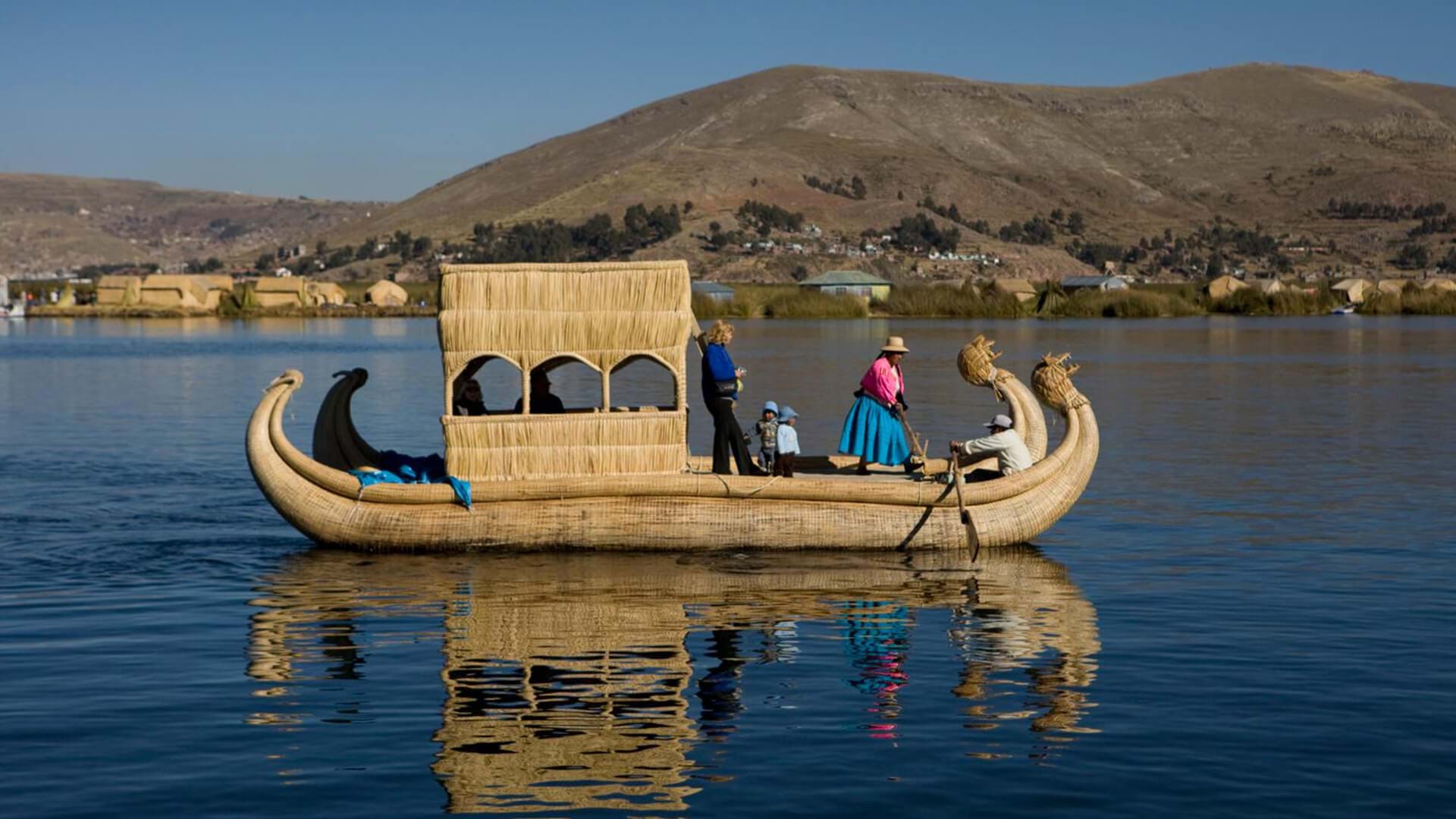
Among the activities you can enjoy on the lake are visits to the floating Uros Islands and the natural islands of Taquile and Amantaní, where you can experience local agricultural culture and pre-Inca traditions. The Uros people settled here when the Incas expanded into their territory. They use totora reeds to feed their livestock, build their homes and boats, as fuel, raw material for their crafts, and even for medicinal purposes.
Tradition that is maintained.
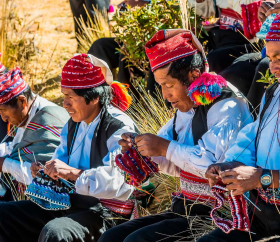
Considered by Skyscanner as one of the most beautiful islands in the world, Taquile offers visitors a dazzling panoramic view of the lake, as well as lessons from its residents on the beautiful weaving process, a textile art declared a Masterpiece of the Oral and Intangible Heritage of Humanity by UNESCO in 2005.
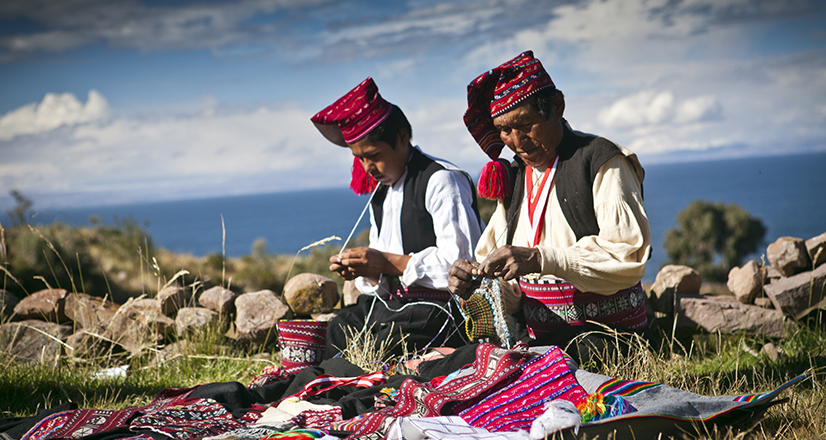
Artisan weavers from Taquile Island, in Lake Titicaca. Credit: Renzo Giraldo / PromPeru.
The largest Island of Titicaca
Known as the Island of Love for its romantic and bucolic landscape filled with leafy trees and beautiful flowers, Amantaní is still a destination to be discovered. Many couples come here looking to consolidate their love and spend a honeymoon at the island's exclusive hotel.
Wonderful biodiversity
Lake Titicaca, a natural wonder, is home to diverse species of flora and fauna. Among the birds, you can find flamingos and gulls. Various types of fish such as suche (Trichomycterus rivulatus), carachi (Orestias agassizii) and pejerrey (Odontesthes bonariensis) are also characteristic of this area. Dozens of native species have also been recorded, such as Andean flamingos, Andean geese, Titicaca gazelles, and other endangered species.
Credit Instagram / Peru
How to get there?
From Lima, you have two main options: by plane — a flight to the city of Juliaca takes around 1 hour and 40 minutes — or by bus, which takes about 22 hours. If you're coming from Cusco, you can take a train, a journey of roughly 10 hours. The trip is considered an unforgettable experience thanks to its stunning scenic beauty.
Follow us on social media
Facebook | Instagram | Twitter | TikTok | YouTube