

Written by:
peru.travel
Friday, March 6, 2026
In this Page
Get to know the iconic Andean camelids
Peru is waiting for you with open arms, offering breathtaking natural wonders across every region. If you find yourself heading into the Highlands—climbing above 3,500 meters—you will meet the fluffy, charismatic locals that make this corner of South America so enchanting.
We are talking about llamas, alpacas, and vicuñas. It is easy to fall in love with these Andean camelids; visitors are constantly snapping selfies and even giving them names. However, when it comes time to post those photos, many find it hard to tell exactly who is who.
Do not worry. We have put together everything you need to identify these adorable icons of the Peruvian Andes.
Llamas
Standing as the tallest of the species, llamas are easily recognized by their long, banana-shaped ears. Their coat is thinner and less uniform than their cousins’, which means their wool—while traditionally used by local communities to brave the Andean cold—is typically more affordable in souvenir shops. But llamas are more than just a friendly face; they are the strongmen of the Andes, capable of carrying up to a quarter of their own body weight. This incredible strength made them indispensable to the Inka Empire, where they served as the primary means of transporting goods across a vast and rugged territory.
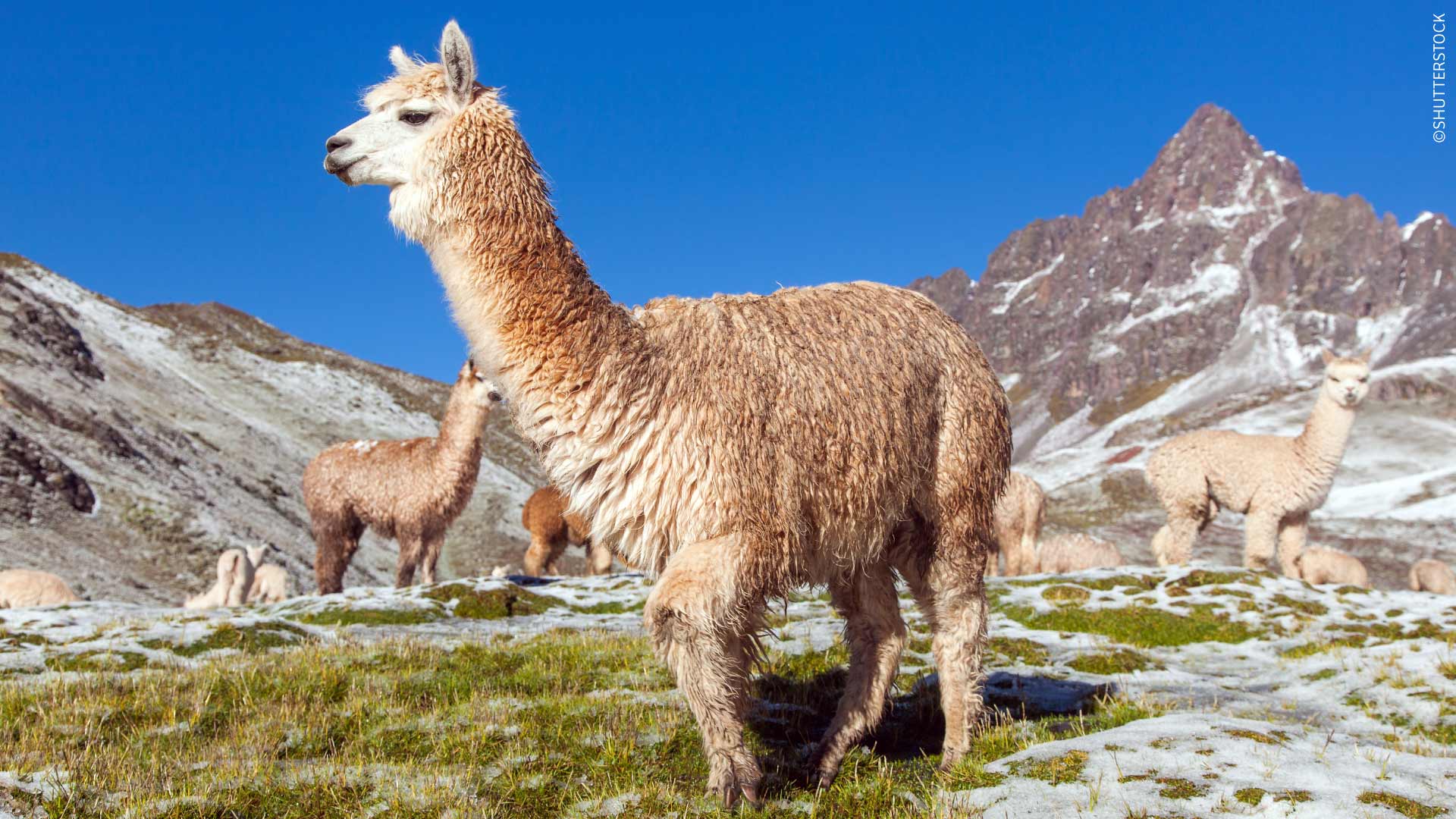
A herd of llamas in the Peruvian Andes. / ©SHUTTERSTOCK
Alpacas
Standing at roughly half the size of a llama, alpacas are easily identified by their symmetrical, pear-shaped ears and a remarkably fine, uniform coat. You will often spot them grazing in large herds across the Andean highlands, adding a sense of peace to the rugged landscape. Their fiber is world-renowned for its exceptional quality—prized for being even softer than cashmere and highly sought after by luxury fashion houses across the globe.
Alpaca fiber naturally occurs in 22 beautiful shades, allowing for the creation of exceptionally elegant scarves, coats, and blankets. While an authentic alpaca garment is a true investment, it is—without a doubt—the most exquisite keepsake you can bring home from the land of the Inkas.
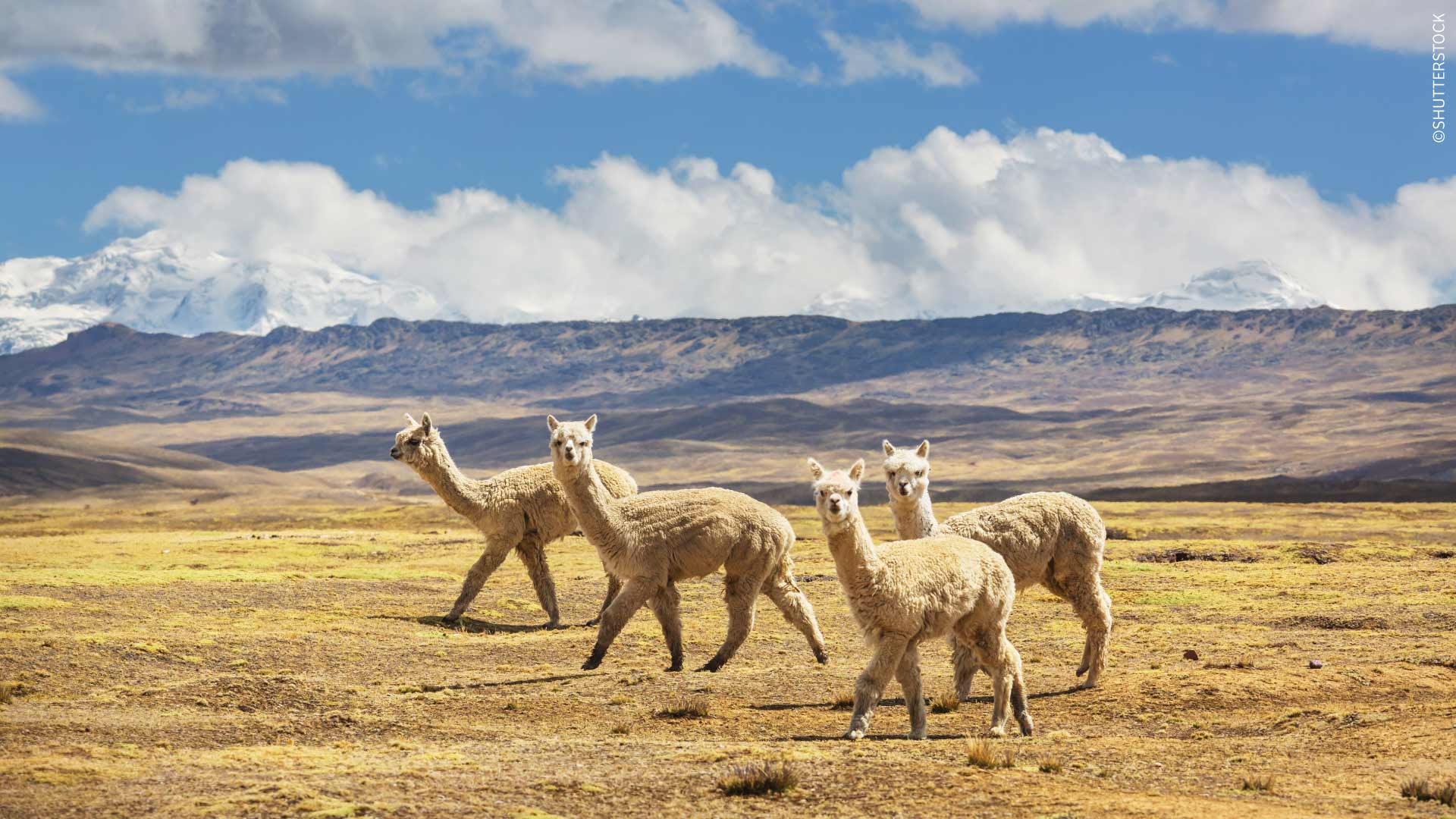
A herd of alpacas in the Peruvian Andes. / ©SHUTTERSTOCK
You might be interested in: 4 Peruvian places where you can find alpacas
Vicuñas
Take a look at the National Coat of Arms of Peru. In the upper-left quadrant, set against a vibrant blue backdrop, you will find a graceful brown-and-white figure. This is the vicuña, a national symbol of the country’s rich animal heritage. Unlike their more domestic cousins, the llama and alpaca, vicuñas are independent, wild spirits. It is quite a sight to spot them grazing freely on a sun-drenched hillside, perfectly at home in the heart of nature.
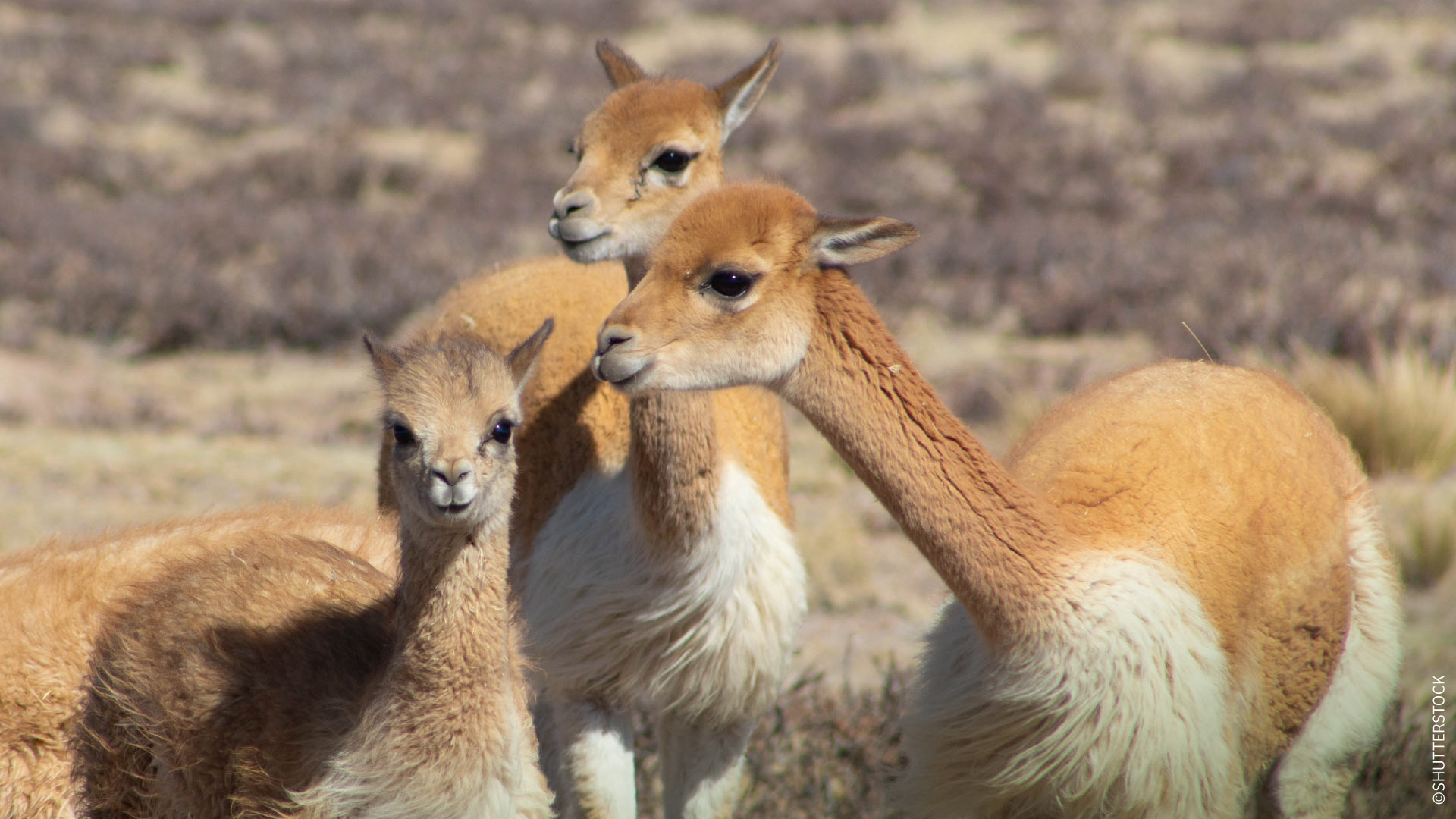
A herd of vicuñas on the road to Chivay, Arequipa. / ©SHUTTERSTOCK
Bonus track: The guanaco
Another wild Andean camelid—much like the vicuña—is the guanaco. You can spot them by their distinct coloring: a rich brown back, a bright white underbelly, and a characteristic gray face. Their ears are short and straight, and like their cousins, they are a protected species. While their coat is beautiful, it does not quite match the legendary quality of alpaca or vicuña fiber, making guanaco wool a more accessible and affordable option.
Now that you are an expert on Peru’s most iconic residents, it is time to put your skills to the test! See if you can spot the difference for yourself by exploring our photo gallery at peru.travel.
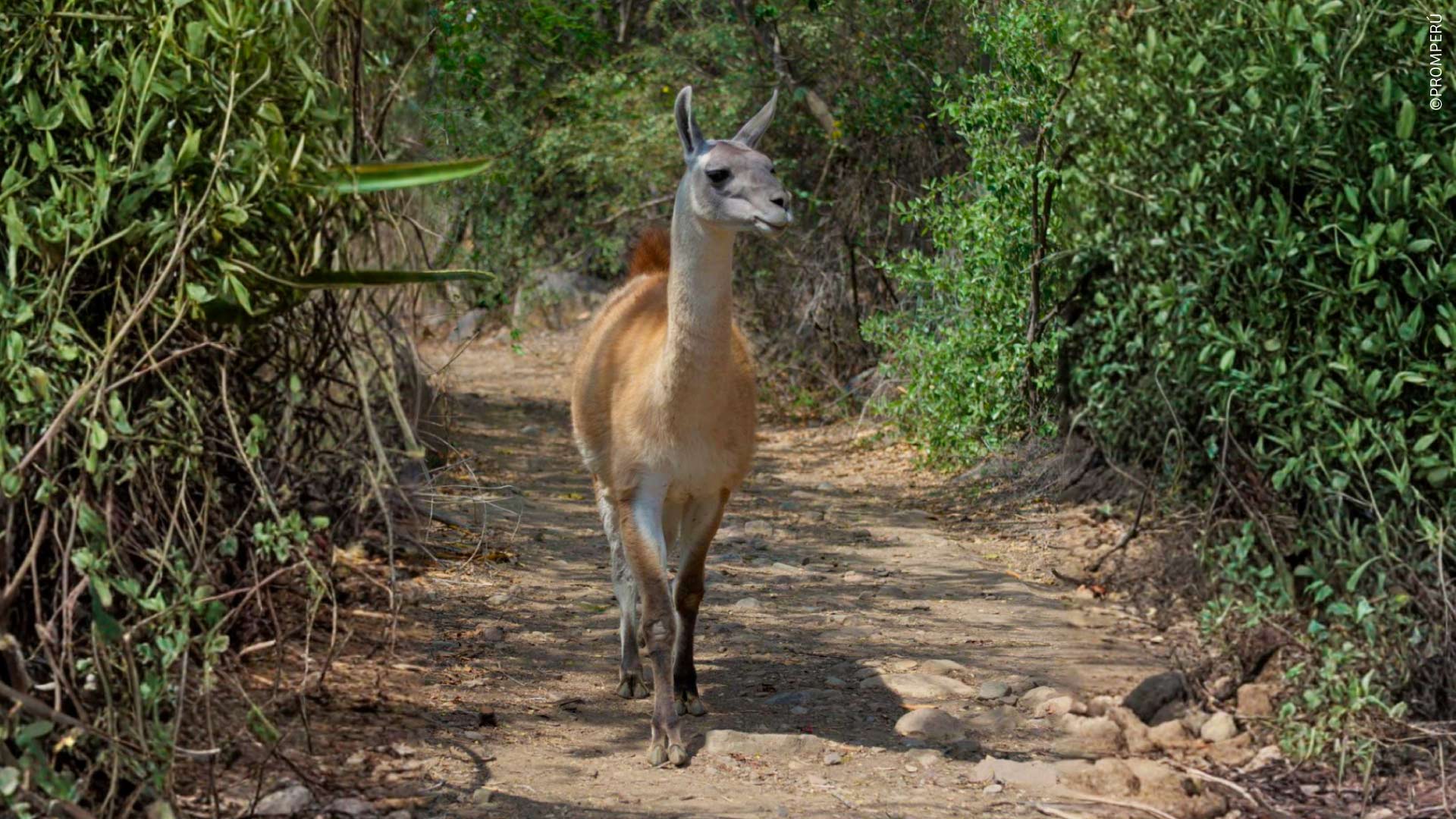
The guanaco: An Andean camelid in Peru. / ©PROMPERÚ
Where to see llamas, alpacas, and vicuñas in Peru?
Peru is one of the world’s premier destinations for observing South American camelids in their natural habitat. Llamas, alpacas, and vicuñas are more than just part of the Andean landscape—they are interwoven with the country’s cultural identity, and seeing them up close is a magical experience for travelers of all ages. Because each species has its own unique character and ecosystem, visiting them becomes a journey through Peru’s diverse geography, rich history, and living traditions.
One of the most popular places to encounter these charismatic creatures is Cusco and its surrounding areas. You do not even have to travel far; right in the heart of the Historic Center, you will find llamas and alpacas at various artisan workshops, such as those on Loreto Street. A perfect starting point is the Main Square. From there, you can take a short walk to the famous Hatun Rumiyoc Street, home to the iconic Twelve-Angled Stone—a spot where you are almost guaranteed to see these Andean locals. If you head toward Plateros Street, you are also very likely to cross paths with them.
Meanwhile, in the legendary Sacred Valley, specialized stops like Awanakancha and Cochahuasi offer a deeper dive. Here, you can observe the subtle differences between alpacas, llamas, and vicuñas firsthand, while enjoying live demonstrations of age-old traditional weaving techniques. On the journey to Machupicchu, the experience reaches its peak. Llamas often roam freely among the ancient terraces of the citadel, creating a scene so iconic it has become one of the most photographed moments in all of Peru.
For those seeking to see them in their true natural habitat, the ultimate destination is the Pampa Galeras National Reserve in the Ayacucho region. This sanctuary is home to one of the most significant vicuña populations in Peru. Here, you can witness vital conservation efforts and experience the traditional chaccu—an ancestral ceremony of sustainable shearing.
In the Puno region, surrounding the majestic Lake Titicaca, it is common to find vast herds of alpacas and llamas grazing in the bofedales (high-altitude wetlands). Locations such as Fundo Chinchero, the towns of Acora and Juli, and the provinces of Lampa, Azángaro, Ayaviri, and Carabaya offer a rare glimpse into the traditional herding practices of these animals. Meanwhile, in Arequipa, the Salinas and Aguada Blanca National Reserve provides a dramatic backdrop of volcanic landscapes where sightings of wild vicuñas are frequent.
Whether you are trekking through Machupicchu, exploring vast natural reserves, or visiting local interpretation centers, encountering camelids in Peru is a fascinating way to connect with the country’s living culture and its most iconic landscapes.
Follow us on social media
Facebook | Instagram | X | TikTok | YouTube