

Written by:
peru.travel
Friday, March 24, 2023
In this Page
The history of Peru was also written through various ornamental or everyday objects by the different cultures that inhabited the country. Currently, these stories can be observed through pieces that, for the most part, are elaborated according to the techniques inherited by the master artisans. Before your next trip to the country, get closer to these local expressions, from their customs and worldview.
Mate burilado
Different researchers indicate that the term mate comes from the Quechua word "mati", which is the fruit of the gourd. After drying and hardening, this material can be used as a cup, plate or bottle, or even as a musical instrument or fishing tool. In Peru, mate burilado dates back to the pre-ceramic period, the practice of which, after the arrival of the Spaniards, spread to various regions. On the coast, there are production centers in Piura and Lambayeque. The most common techniques used to decorate mates during the pre-Hispanic period were burilado, pyrography and painting.
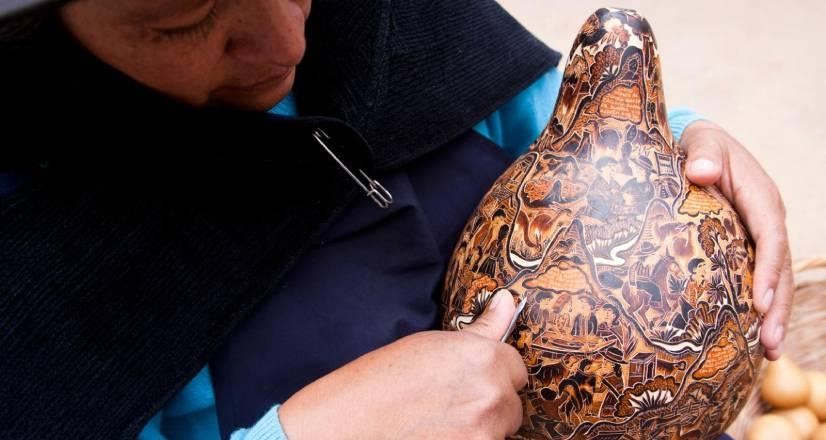
Different researchers indicate that the term mate comes from the Quechua word "mati", which is the fruit of the gourd.
Credit: PromPerú.
Pucara Ceramics
Pucara is a town located in the region of Puno, where the culture of the same name emerged in 100 a. Ch. n. At present, the diverse artistic manifestations that are developed in this destination are part of this culture. Pucara is considered one of the largest pottery centers in southern Peru. Among the most representative pieces is the torito de Pucará (Pucara Bull), associated with the abundance and fertility of the land. This style also includes churches, village chapels, as well as representations of musicians, dancers, among others.
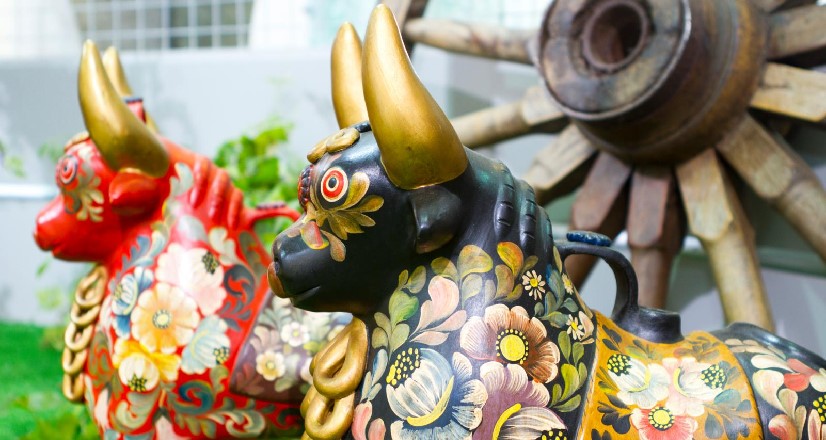
Pucara is a town located in the region of Puno, where the culture of the same name emerged in 100 a. Ch. n.
Credit: Renzo Tasso / PromPerú
Imagery
This is the activity that links the technique of sculpture with the magical-religious practices that take place in Peru. For this purpose, materials such as flour or corn paste, plaster, among others, are used. One of these examples, which can be seen in the city of Cusco, is the representation of the baby Jesus, figures of angels or wise men; in the country, this practice is usually linked to Catholicism.
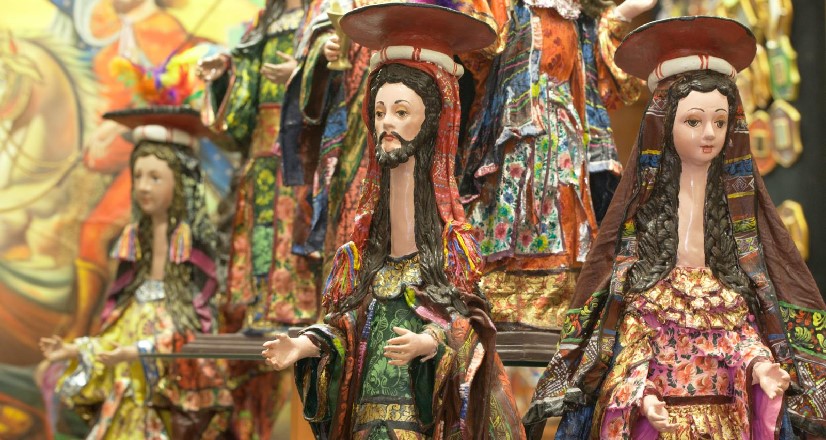
This is the activity that links the technique of sculpture with the magical-religious practices that take place in Peru.
Credit: Renzo Giraldo / PromPerú.
Rainforest Handicrafts
In the Peruvian Amazon, artistic pieces are made that are characterized by their beauty and mystery. The Shipibo-Conibo native community, near the city of Pucallpa, makes items for daily use. Most of these pieces are decorated with motifs linked to the local worldview.
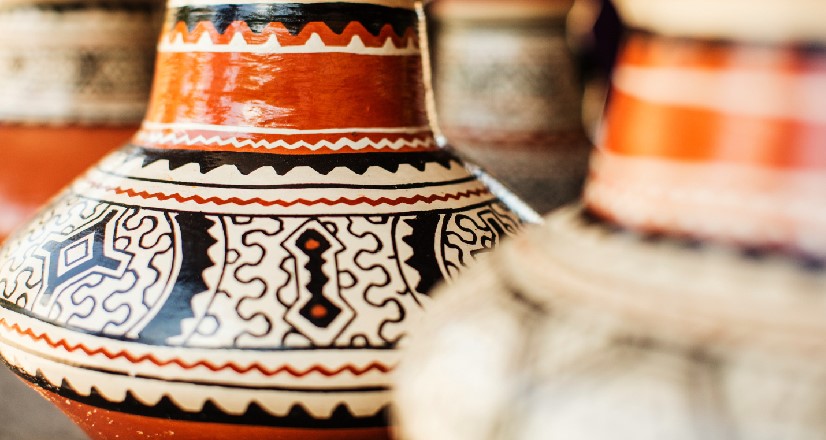
In the Peruvian Amazon, artistic pieces are made that are characterized by their beauty and mystery.
Credit: Daniel Silva.
Source:
- Peruvian handicrafts, Ministry of Foreign Trade and Tourism.
- Artesanías del Perú, historia, tradición e innovación (Peruvian handicrafs, history, tradition and innovation) (2019), Sirley Ríos Acuña
Follow us on social media
Facebook | Instagram | Twitter | TikTok | YouTube