
Carnival of Cajamarca
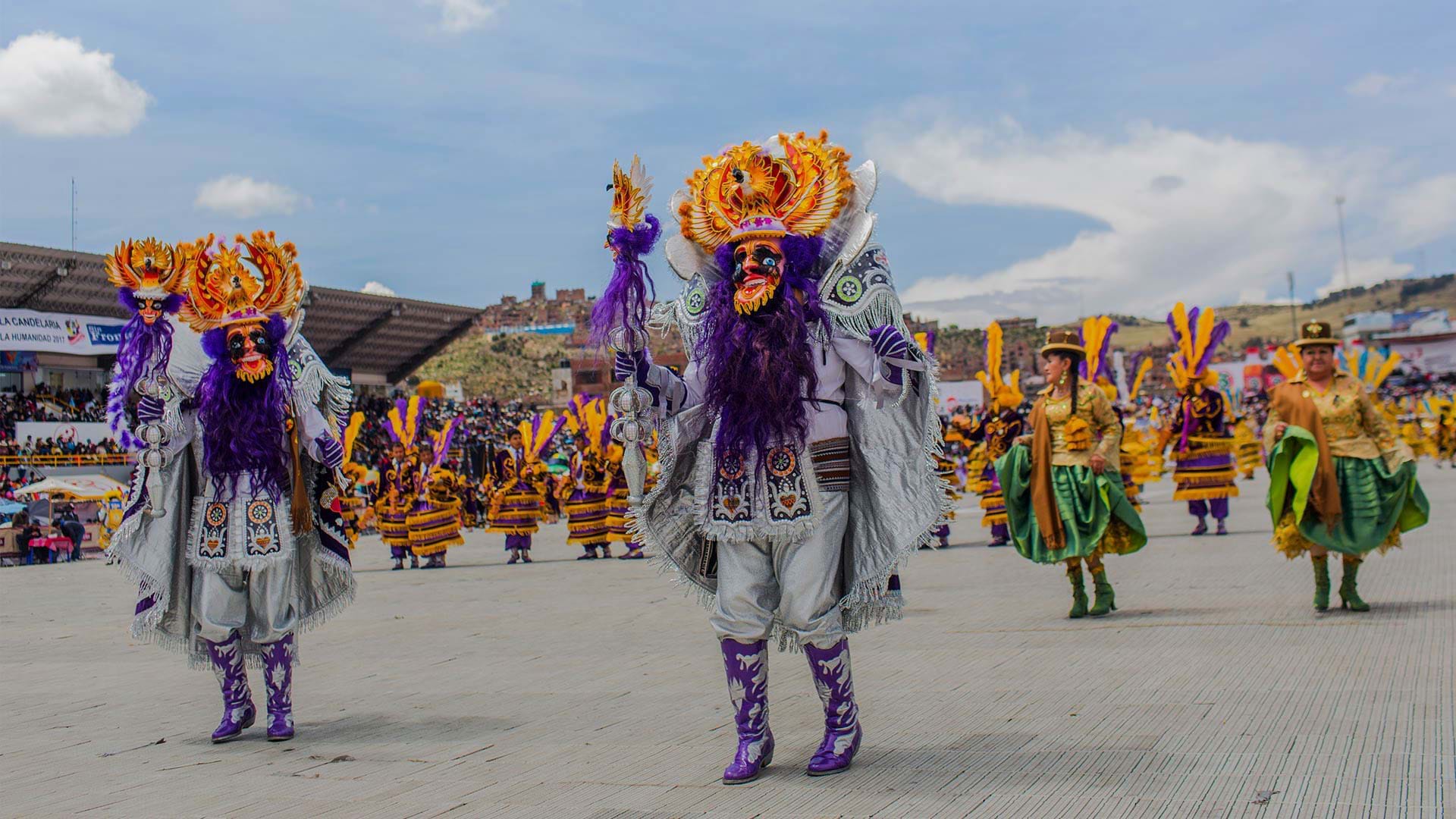
This carnival has emerged as a unique and vibrant event, turning this city into the "Peruvian Carnival Capital". Patrols and troupes from different neighborhoods dance through the main streets of the city and around the perimeter of the Plaza de Armas, marking the beginning of a celebration that fuses Spanish and Andean customs with an overflowing festive spirit.
Troupes and patrols
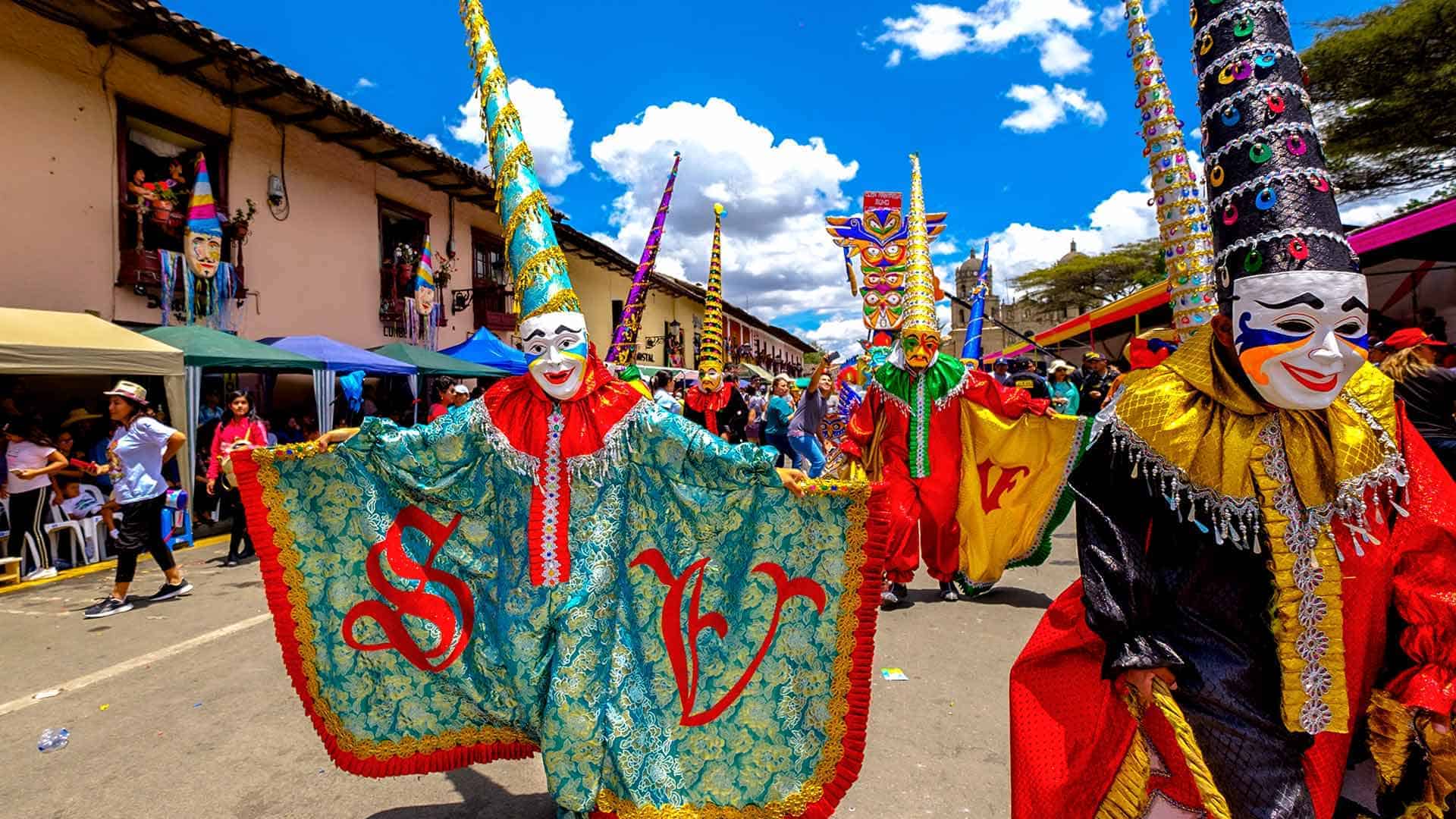
Adorned in radiant costumes that mirror the cultural richness of Cajamarca, both take center stage as the protagonists of the carnival. These groups, mostly composed of enthusiastic young people, flood the streets with a burst of color, energy, and creativity. Clad in colorful attire, the troupes not only showcase graceful and skillful dance moves but also sing verses that resonate with the joyful and satirical spirit of the festival.
Beyond choreography and flashy costumes, these artistic expressions establish a direct bond between Cajamarca's past and present, conveying the richness of its cultural heritage through dances and verses.
Traditional neighborhoods
Cajamarca's neighborhoods, such as Cumbemayo, San Sebastián, San Pedro, and San José, become lively stages for the celebration.
It is in these neighborhoods that the essence of the carnival becomes palpable, and residents enthusiastically participate in the artistic expression of "yunza," "umsha," or "cortamonte," which involves dancing around a tree adorned with gifts, anticipating the moment when it will be felled by machetes to claim these presents.
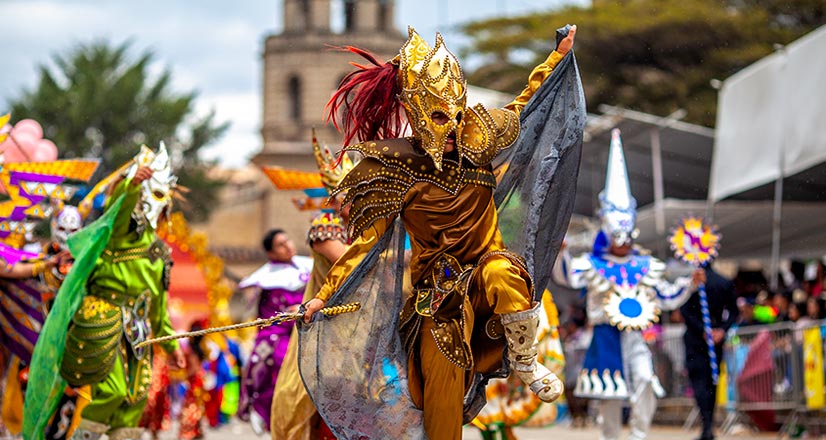
Dancer in the Carnival of Cajamarca. Credit: Shutterstock.
King Momo and the parade of joy
El Ño Carnavalón, also known as King Momo, emerges as the central figure inaugurating the central festivities of the Carnival of Cajamarca. His triumphant entrance, marked by a majestic parade, signals the beginning of a celebration full of color and joy. This emblematic character embodies the festive spirit that characterizes the carnival, infecting everyone present with its vibrant energy and ability to unite the community in shared celebration.
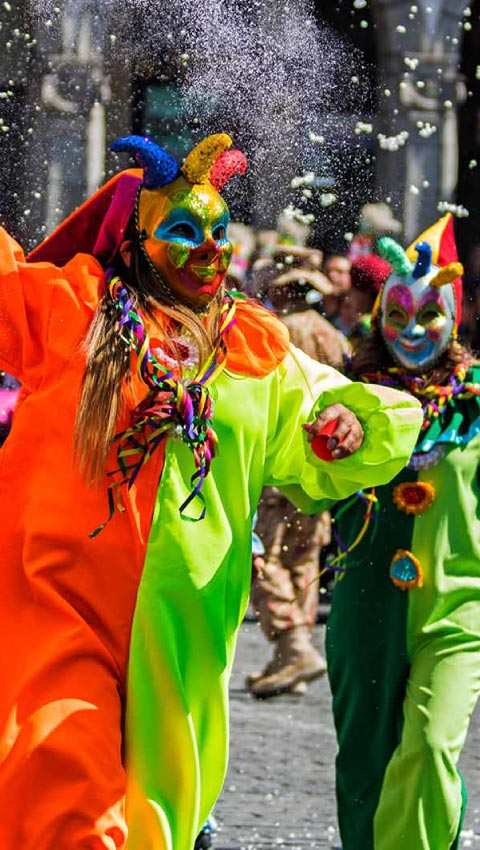
Additionally, the picturesque presence of the "clon" stands out. This character, resembling a harlequin, becomes a theatrical element that adds a touch of humor and extravagance to the celebration. Adorned in wide and colorful clothes, a mask made of plaster or plastic, and a huge cone-shaped hat, the "clon" not only attracts attention but also represents the creativity and exuberance that characterize the Carnival of Cajamarca.
The festivity reaches its climax with the "death" and "wake" of El Ño Carnavalón. Clad in mourning, participants accompany his coffin through the streets of the city of Cajamarca, blending sadness with the jubilation that fills the population.
The "burial" of El Ño Carnavalón, on Ash Wednesday, takes place in the esplanade of the Qhapaq Ñan complex. His "will," full of wit and sarcasm, elicits laughter from those present before the emblematic character is burned in an act full of jubilation.
Gastronomy
Gastronomy, another essential pillar of the Cajamarca carnival, delights locals and visitors with emblematic flavors. Sancochado, prepared with beef or lamb, potatoes, and aromatic herbs, stands out among the festive dishes. The "frito," composed of fried pork offal seasoned with saffron, mixed with diced boiled potatoes and served with aromatic herbs like green onions and mint, adds a touch of tradition to the festive table.
The Carnival of Cajamarca stands as an event that goes beyond mere celebration; it is a melting pot of traditions, artistic expressions, and flavors that capture the vibrant and diverse essence of this historic city. With every sung verse, with every color adorning the streets, and with every flavor savored, the Carnival of Cajamarca endures as a unique and unforgettable experience.
 Credit: Miguel Mejía / PromPerú
Recommendations:
- Visit local cheese dairies to taste the most exquisite and famous fresh and aged cheeses.
- Explore tourist attractions such as the Ventanillas de Otuzco, the Baños del Inca, and the archaeological complex of Cumbemayo, among others.