

Written by:
peru.travel
Friday, January 16, 2026
In this Page
Traveling through Peru means taking in breathtaking scenery and enjoying a cuisine celebrated around the world; but it also means discovering ancestral practices that remain alive thanks to communities that turn tradition into identity.
One of the most authentic and memorable experiences for travelers is traditional spinning—an art form that connects you directly, without intermediaries, to history, nature, and the rhythm of life of our ancestors.
In Peru, spinning is knowledge passed down from generation to generation, where every strand and every movement carries meaning and purpose. Taking part in this experience allows visitors not just to observe, but to truly engage in the process—from touching the natural fiber to guiding the spindle as it twists and transforms it into thread.
Cusco: The heart of Andean ancestral spinning
Just minutes from Chinchero, in the Sacred Valley of the Inkas, lies Umasbamba—a rural community that opens its doors to travelers seeking authentic, meaningful, and deeply immersive experiences. One of its most special offerings is the traditional weaving workshop, guided by true guardians of Andean textile knowledge. The experience begins with washing the wool, while learning to recognize the softness and quality of natural fibers by touch.
Next comes spindle spinning, an ancestral practice that captivates with its precision and grace. Through smooth, steady movements, the artisans show how raw wool is transformed into thread, all while sharing stories about the role of weaving in the community’s daily life and ceremonial traditions.
The journey continues with the use of natural dyes, drawn from elements such as cochineal, q’olle, and walnut. Each color has its own origin and meaning, offering visitors a direct connection to nature and to the Andean worldview, where everything is alive and has a purpose.
Travelers learn to identify different fibers, feel their textures, and understand how natural colors—derived from plants and minerals—are part of a worldview deeply rooted in Pachamama. This experience takes place in rural settings, surrounded by mountains, agricultural terraces, and a warm hospitality that makes you want to stay a little longer.
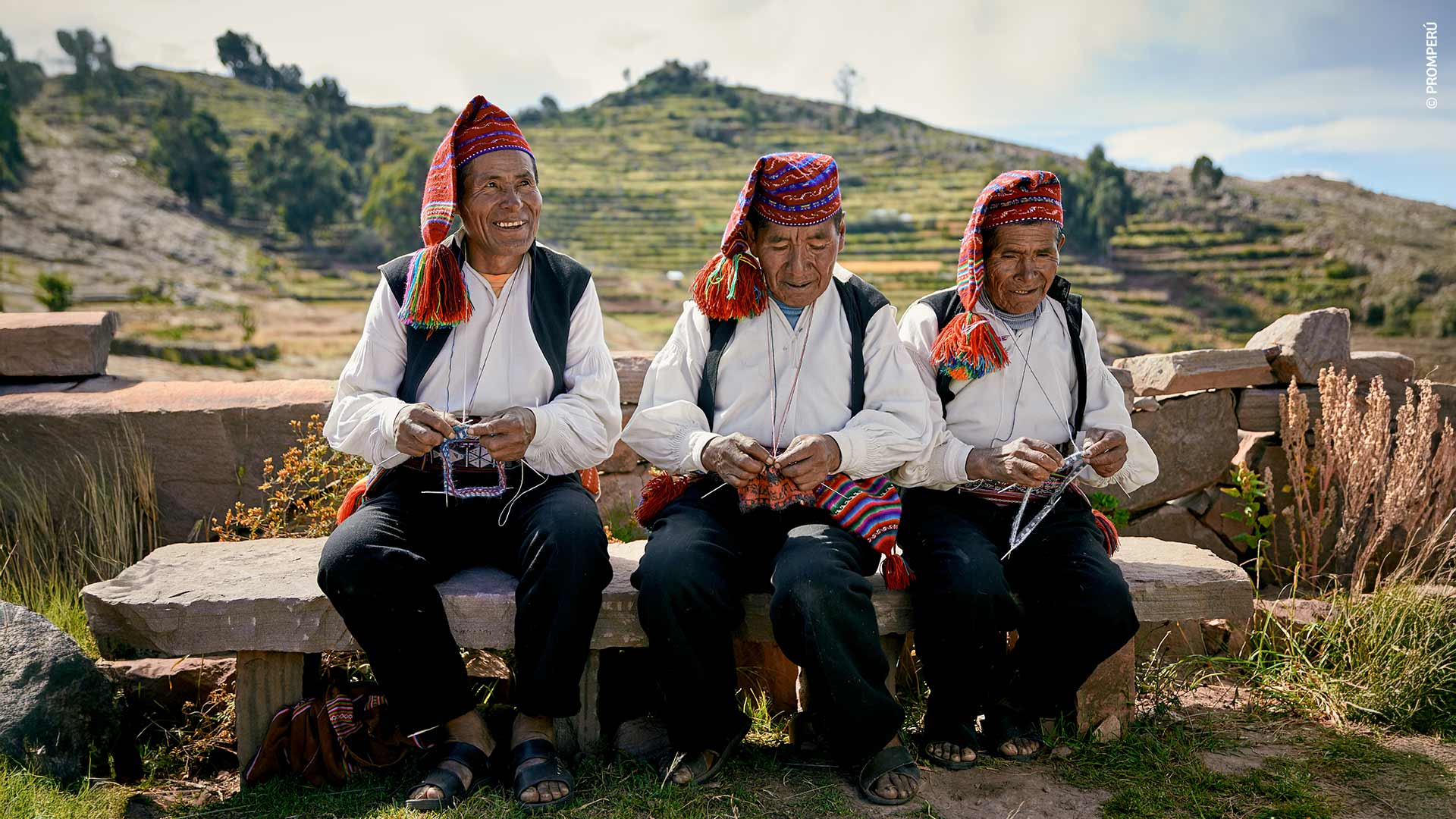
Taquile master weavers- © PROMPERÚ
Puno: Spinning stories on the shores of Lake Titicaca
The spinning experience on Taquile Island invites visitors to immerse themselves in a living culture passed down from generation to generation along the shores of the world’s highest navigable lake. Here, learning happens as part of everyday life in a community renowned worldwide for the excellence of its textiles, recognized by UNESCO as Intangible Cultural Heritage of Humanity.
Walking through Taquile means seeing textile art woven into daily life. Men skillfully knit their chullos, powerful symbols of identity and marital status, while women devote themselves to spinning and natural dyeing, using ancestral techniques and colors drawn from nature—plants, insects, and minerals. Visitors are welcomed into the process, listening to the stories behind each garment and gaining a deeper understanding of the b bond between weaving, the land, and the community.
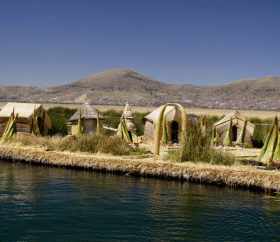
You may also be interested in: Experience authentic Peru: Community-based tourism in the floating islands of the Uros and Luquina Chico
This experience offers a genuine contrast to other islands on the lake, such as the floating islands of the Uros, providing a more intimate and unhurried encounter with Andean traditions. On Taquile, time seems to slow down, and every woven thread becomes a bridge between the traveler and a cultural legacy that continues to thrive in one of Peru’s most distinctive settings.
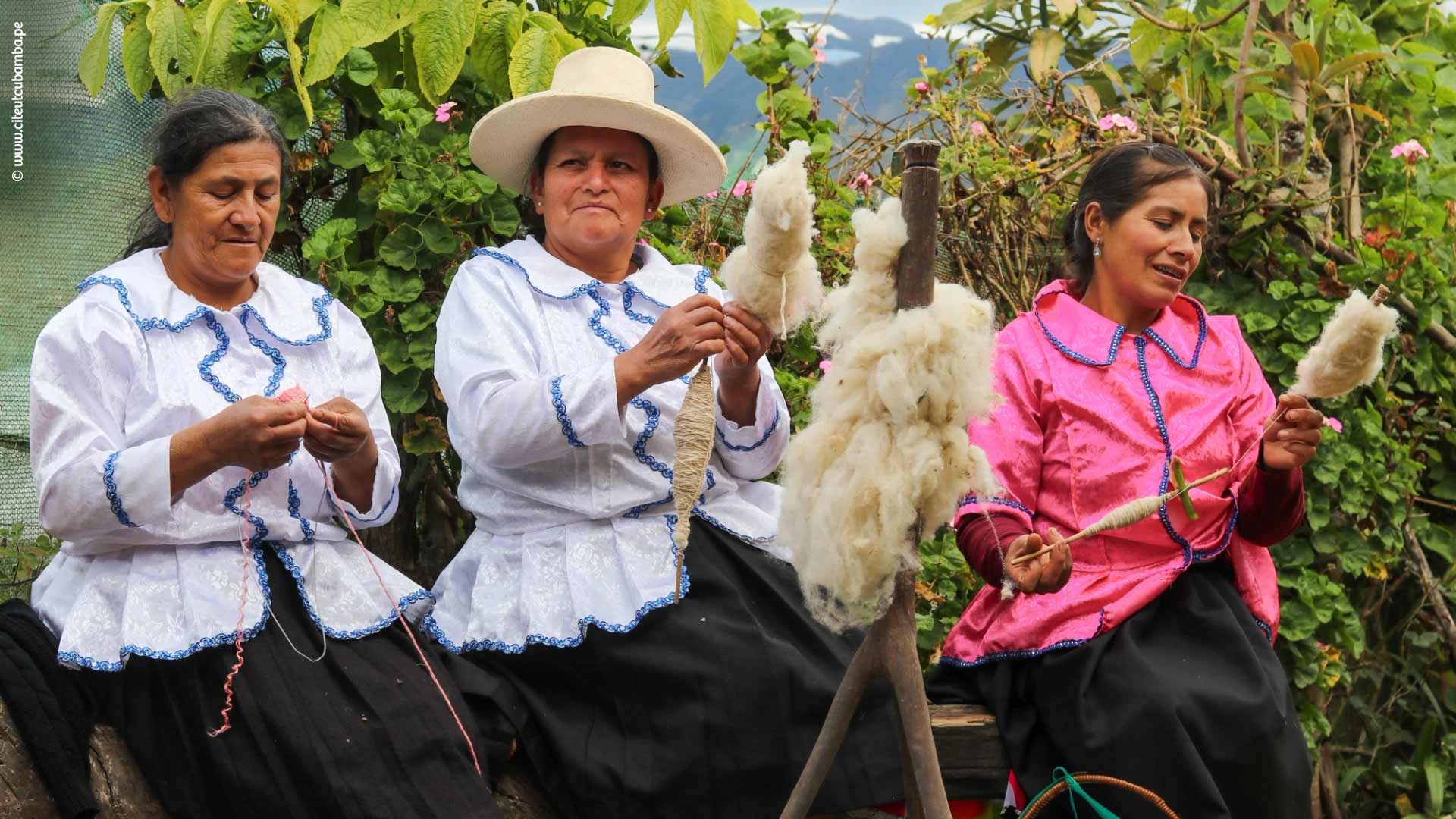
Tishana Minga de Cohechan Textile Artisans’ Association – © http://www.citeutcubamba.pe
Amazonas: Thread as a cultural expression
If you dream of a journey that awakens the senses and connects you with the most authentic essence of Peru, the Tishana Minga Artisanal Tourism Route invites you to go beyond the conventional. Along this route, ancestral craftsmanship, lush nature, and local cuisine come together to create a rich, immersive experience in the Peruvian Amazonian Andes.
The route leads to the community of Cohechán, located just an hour and a half from the city of Chachapoyas. Upon arrival, travelers step into an artisanal workshop where local women and men guide them through every stage of the textile process—from selecting sheep’s wool and identifying natural pigments, to the delicate art of spinning and winding the yarn into balls or pushcana, and weaving on a backstrap loom. Every movement and every technique reflects a deep connection to nature and to Amazonian identity.
Likewise, visitors can enjoy the natural beauty of the nearby Huaylla Belén Valley, located just 40 minutes from Cohechán. Upon arrival, travelers are embraced by a serene landscape—mountains blanketed in lush vegetation and an atmosphere of deep calm that invites them to disconnect from routine and open themselves to a meaningful cultural encounter.
Taking part in traditional spinning in Peru means bringing home more than a handcrafted piece—it is a cultural encounter, a hands-on learning experience, and a lesson in time, patience, and ancestral knowledge. In this way, the experience becomes a deep and meaningful memory, where every spun thread represents a bond with the soul of the country.
Follow us on social media
Facebook | Instagram | Twitter | TikTok | YouTube