

Written by:
peru.travel
Tuesday, April 28, 2026
In this Page
Across Peru’s vast landscape of faith, the Virgen de la Candelaria Festival in Puno stands out with unmatched fervor. It is a celebration where history and deep-seated devotion weave together, reaching across the highlands and far beyond.
Every February, thousands of travelers from around the globe gather to immerse themselves in this spectacle. For days on end, the streets come alive with vibrant dances and rituals, creating a one-of-a-kind experience where the sacred and the cultural truly become one.
The origins
This deep devotion traces back to 1392 in Tenerife, Spain, the largest of the Canary Islands. As a vital stopover for voyages to the Americas, this land helped plant the seeds for the Virgen de la Candelaria’s legacy in colonial Peru. The tradition first took root in the town of Huancane, specifically in Arcani, north of Puno.
As her following grew, the image was moved to the Church of San Juan Bautista. Over time, it evolved into the official Sanctuary of the Virgen de la Candelaria, eventually surpassing even the patron saint, San Juan Bautista, in popularity and veneration. The devotion reached a fever pitch in 1781, when the Virgin was credited with protecting Puno while it was under siege by the rebel forces of Tupac Catari. According to legend, when the image—originally brought from Cadiz or Seville on February 2, 1583—was carried in procession, the rebels mistook the crowds for a massive Spanish reinforcement and retreated. From that moment on, the Virgen de la Candelaria was solidified as the Patroness of Puno.
Her name
While there are many representations of the Virgin Mary, the name "Candelaria" stems from a very specific moment in her life. The title is a tribute to the lit candle she holds in her right hand, alongside a basket containing two turtledoves—a symbol of the purification of motherhood in the Jewish tradition. In her left arm, she cradles the infant Jesus, presenting him at the Temple in Jerusalem.
You might also like: Lose yourself in the Andean magic and mysticism of Amantani.
According to Canary Island tradition, the Virgin first appeared in 1392 atop a rocky peak. In that divine vision, she carried doves in her hands, the Christ child in her right arm, and a ceremonial candle in her left.
How the Festival is celebrated?
This is not just a celebration; it is a masterclass in cultural richness. The dances of Puno represent one of the most vibrant displays of folklore in all of Latin America. As one of Peru’s grandest events and a cornerstone of South American tradition, the Virgen de la Candelaria Festival was declared a Cultural Patrimony of Peru in 2003 and earned a spot on UNESCO’s Representative List of the Intangible Cultural Heritage of Humanity in 2014.
These dances, which trace back to pre-Hispanic roots, became deeply intertwined with the evangelization efforts of the 16th and 17th centuries. This created a fascinating fusion where local religious expressions merged with sacred Christian imagery—a process of syncretism sparked by the striking similarities between traditional Andean huacas (sacred objects or sites) and the Catholic saints.
The dances
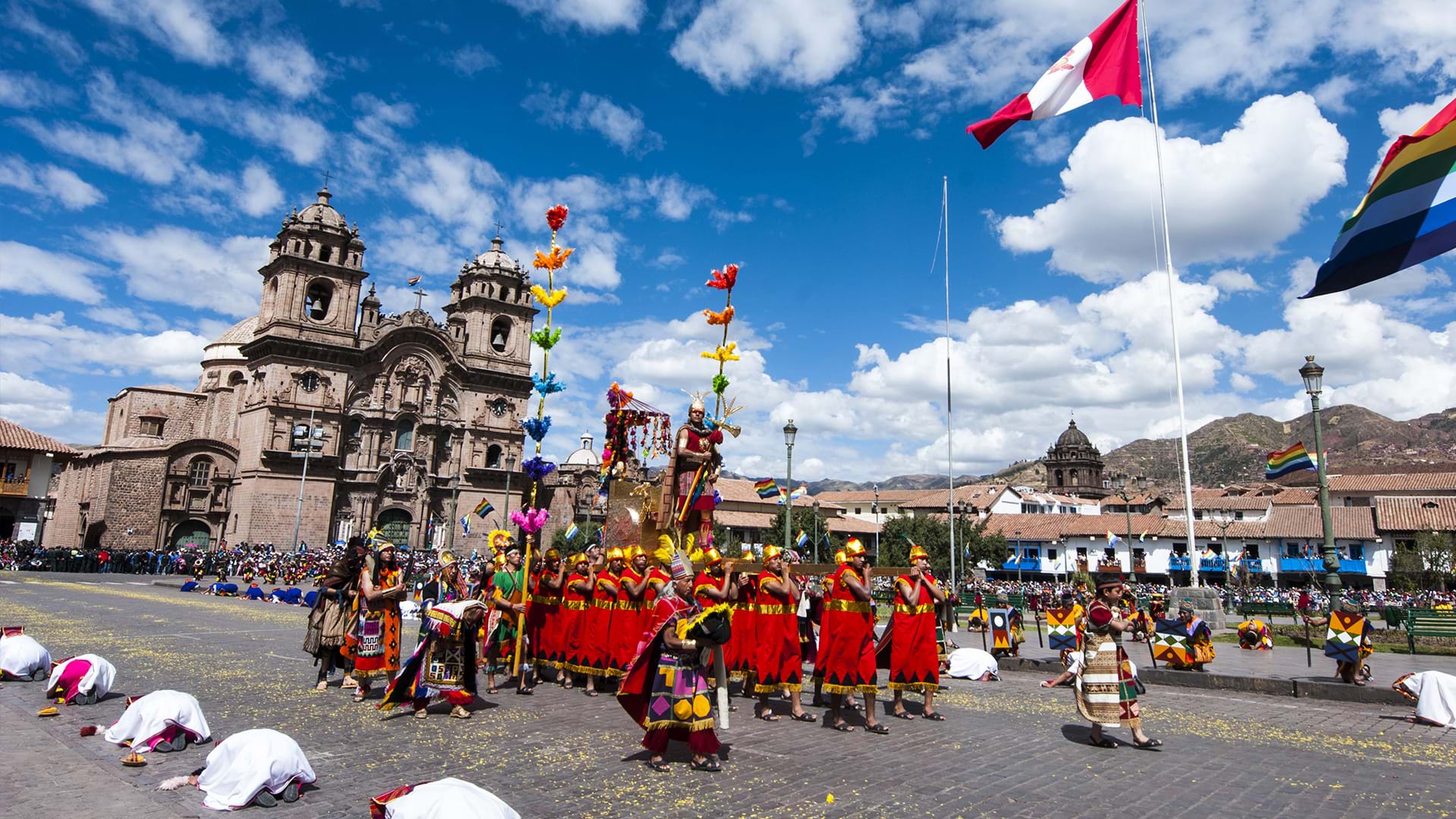
Puno transforms into a vibrant stage, drawing crowds of dancers, musicians, and travelers fueled by a mix of deep faith and the infectious joy that floods the Andean streets. Each indigenous dance, distinct in its style and heritage, offers a truly immersive experience.
During the festival, every performance tells a story—ranging from the simple rhythms of daily rural life to epic biblical battles between angels and demons. Bringing this massive production to life is a labor of love; thousands of participants spend months in meticulous preparation. This dedication culminates in perfectly synchronized choreography, breathtaking gymnastic feats, and intricately handcrafted costumes—all offered in heartfelt tribute to "Mamita Candelaria."
Beyond the Candelaria
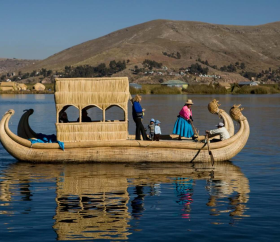
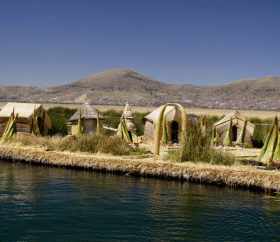
If there is a perfect moment to discover Puno, it is during the Candelaria Festival, when the city transforms into an explosion of music, color, and devotion. Begin your journey at Lake Titicaca, the highest navigable lake in the world, where the Floating Islands of the Uros welcome you with their unique hospitality.
The inhabitants here build their islands, homes, and boats from totora reeds, sharing their ancient traditions with every visitor. From there, continue to the natural islands of Taquile and Amantani—places of pure tranquility, vibrant textiles, and vistas that seem to touch the sky. Here, time stands still, offering a total connection with nature and culture.
Upon returning to the city, immerse yourself in the heart of the Candelaria Festival. Visit the Basilica Menor of the Puno Cathedral, where the central mass in honor of the Virgin is held, followed by the breathtaking parade of traditional dances. Over 130,000 dancers and 12,000 musicians fill the streets with embroidered costumes, shimmering masks, and high-energy performances. Be sure not to miss the Diablada puneña, the true symbol of this celebration, or the Morenada, with its infectious rhythms and choreography that tell the story and identity of the Altiplano.
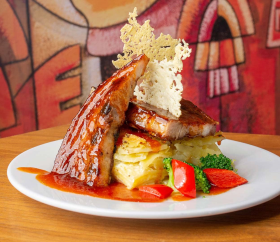
Make the most of your stay by exploring the Carlos Dreyer Municipal Museum, which houses pre-Inka, colonial, and republican treasures. For a truly spectacular perspective, head up to the Condor Viewpoint (Kuntur Wasi); from there, you will find a panoramic view of the lake and the city vibrating to the rhythm of the festival. And, of course, no visit is complete without savoring the local flavors of Puno: treat yourself to fresh Titicaca trout, a creamy quinua atamalada, or a hearty, comforting Andean chairo.
In summary, the celebration of the Virgen de la Candelaria Festival in Puno is far more than a profound expression of faith; it is a living testament to a cultural heritage that seamlessly blends the ancient with the contemporary. Devotion to the Virgin transcends borders, bringing together people of all backgrounds and nationalities under the mantle of a protective mother, in a celebration that has endured through the centuries.
Follow us on social media
Facebook | Instagram | X | TikTok | YouTube