

Written by:
peru.travel
Monday, May 25, 2026
In this Page
Discover this Inka fortress or ceremonial center that impresses with its perfection.
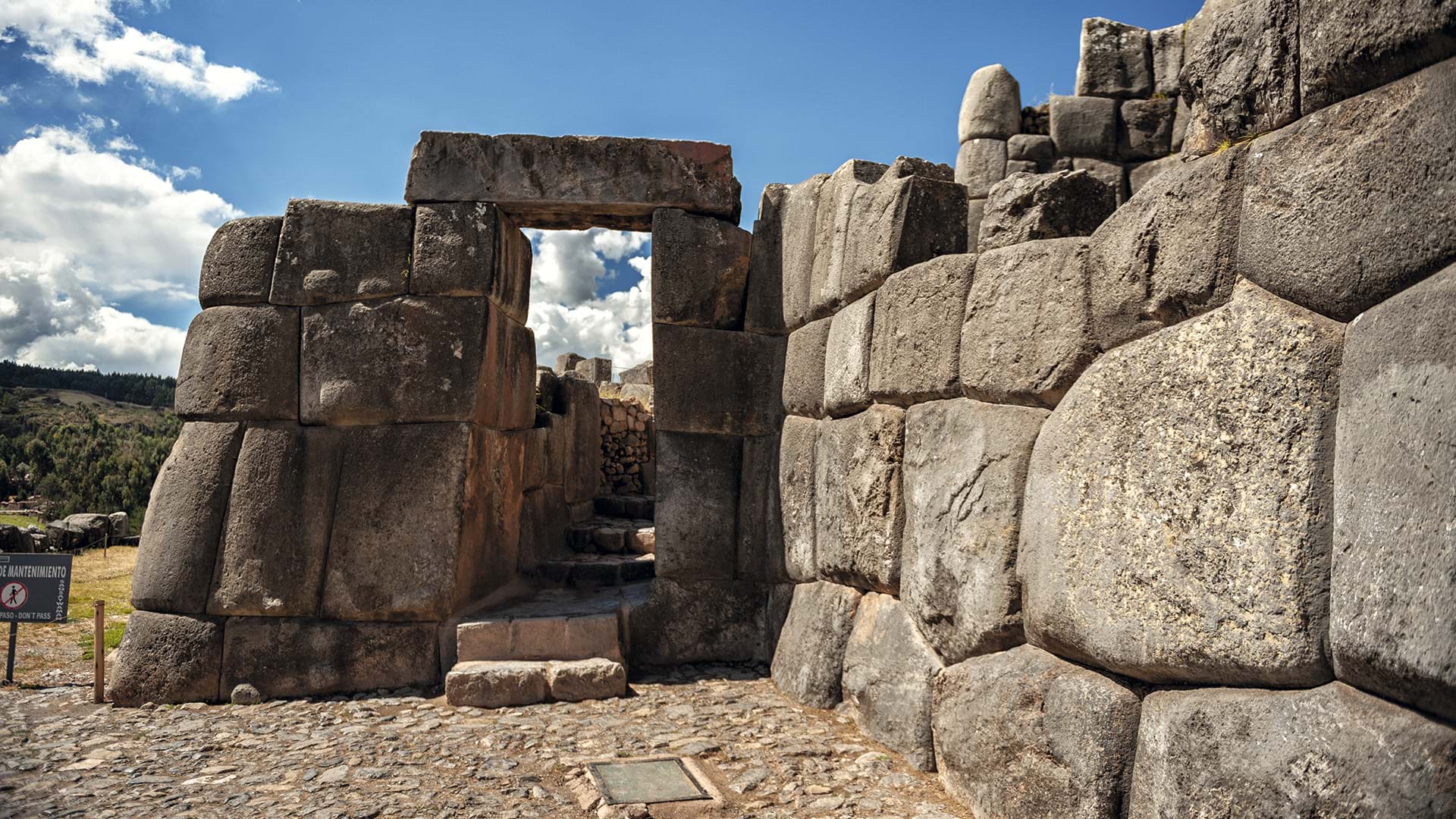
Ollantaytambo was a strategic military, religious, and agricultural center that still amazes visitors with its finely carved stone terraces and imposing structures rising over four meters in height. It was here that Manco Inka confronted the Spanish troops led by Hernando Pizarro and secured victory. Located 82.2 km northwest of the city of Cusco, in the province of Urubamba, and 43 km from Machupicchu, this archaeological site has preserved its houses, streets, and water channels from the Tahuantinsuyo era.
It is a place that captivates with its magic and mystery. It is believed to have served as a refuge for Inka royalty and nobility. The fortress was built using massive stones transported from a quarry located 9 kilometers away, near the Urubamba River. To move these stones, the Inkas had to divert an entire water channel around the area, in a remarkable feat of engineering and ingenuity.
History
According to researchers, this complex traces its origins to the Aymara culture, and its name is believed to come from the word Ullanwtawi, meaning “to look down” or “viewpoint.” Later, as the Quechua language became dominant in the area, the name evolved to Ullantay. With the construction of a tambo (a resting or lodging place) on the site’s plateau, it became known as Ullantay Tampu, eventually evolving into the name we know today, Ollantaytambo.
The construction of Ollantaytambo, like that of the sanctuary of Machupicchu, dates back to the period of greatest expansion of the Inka Empire, which coincided with the reign of Pachacutec. After the arrival of the Spanish, the fortress served as a refuge for Manco Inka, who led the resistance against the conquerors. In 1536, Spanish troops commanded by Hernando Pizarro confronted Manco Inka’s army in Ollantaytambo. After a fierce battle and strong resistance, the Spanish were forced to retreat.
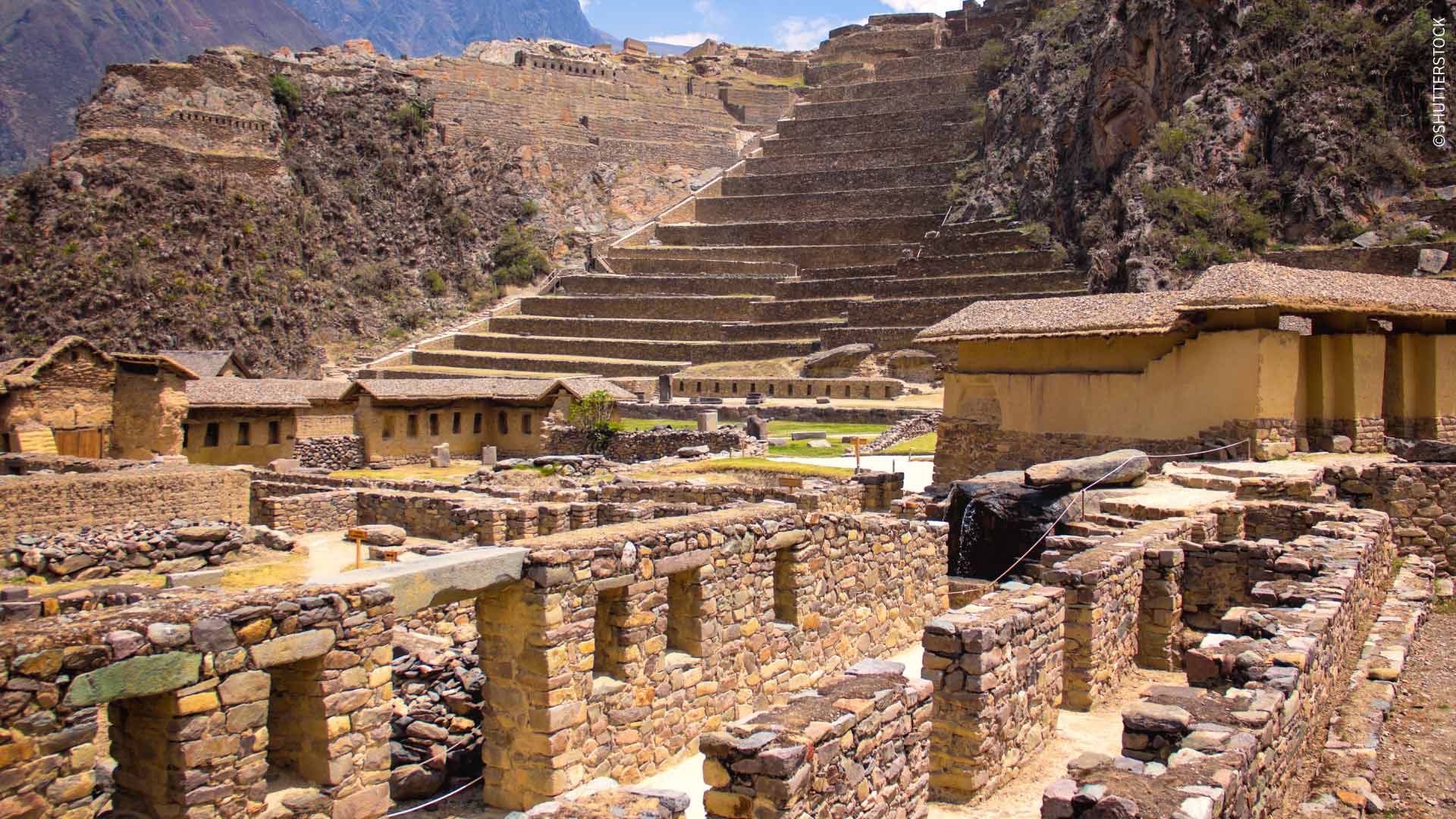
View of the temple architecture in Ollantaytambo, Cusco, Peru. / © SHUTTERSTOCK
A masterpiece of engineering and architecture
The temple of Ollantaytambo is an impressive architectural complex. It is located at an altitude of 2,851 meters and is about 3,500 years old. It is thought that its construction was oriented toward the city of Cusco, as its builders aimed to defend themselves from the Inkas. They also chose this location because of the underground water channels discovered at great depth.
The builders of Ollantaytambo designed an aqueduct system that is still fully functional today. Each fountain was carved in stone with its own unique features and designs. The most well-known, and considered the most beautiful, is the Fountain of the Ñusta, made from a single stone and decorated in the shape of a portal.
You may also be interested in: Discover 6 places you should visit before reaching Machupicchu
Within the fortress, there are six enormous rectangular stone blocks that belong to the Temple of the Sun. They are located in one of the highest areas of the site and appear to be part of an unfinished construction. The largest monolith is more than four meters high and two meters wide. The structure features a plaza centered around a large block with flawless edges, which are precisely aligned with the cardinal points. The streets are laid out in straight lines through which water once flowed via the canals.
One of the most striking details about Ollantaytambo is that the stones found within the complex are perfectly polished, feature flawless cuts, and remain intact, suggesting that its builders were able to lift and transport them without causing any damage. This represents a remarkable feat, especially considering that the fortress was built on a very steep slope. Undoubtedly, Ollantaytambo is one of the great wonders of Inka architecture, still raising questions and uncertainties that remain largely unanswered today.
How to get there?
From Cusco, it can be reached by public transport or car, which takes approximately 1 hour and 45 minutes to 2 hours. Visiting hours are from 7 AM to 5 PM, and entry is allowed with the tourist ticket.
Follow us on social media
Facebook | Instagram | Twitter | TikTok | YouTube