

Written by:
peru.travel
Tuesday, April 14, 2026
In this Page
Discover the secrets hidden within this enigmatic Andean temple.
A pre-Inka architectural jewel, this ceremonial center—over three thousand years old—is the most significant legacy of the Chavin culture in the Ancash region. In its time, it was a great oracle that drew pilgrims from throughout the Andes, who came to worship and present their offerings to the gods.
Exploring the temple reveals the masterful stonework that defined the Chavin people, as seen in their unique sculptures. It is even said that, many years later, Chavin de Huantar served as the inspiration for the Incas when building the sanctuary of Machupicchu in Cusco.
Another awe-inspiring feature of this destination is its complex network of underground paths and galleries. These passages are illuminated solely by sunbeams entering through strategically placed ducts—a feat of engineering excellence that remains impressive to this day.
Tenon heads
These stone sculptures depict human heads with bulging eyes, serpentine features, and prominent fangs. Originally, they were embedded high upon the exterior walls of the New Temple. Many researchers believe these lithic masterpieces served as guardians of the ceremonial center. Today, only one remains in its original position; the remaining fifty are preserved within small repositories throughout the complex.
The Lanzón monolith
One of the most iconic pieces in Chavin de Huantar is this stone sculpture, which portrays an anthropomorphic being featuring feline fangs, clawed hands and feet, and hair transformed into serpents. Standing four and a half meters tall, the monolith is anchored within the deepest of the 14 underground galleries of the Old Temple. Due to its location, archaeologists such as Poland's Krzysztof Makowski consider it the most significant religious icon of the Chavin culture.
The Raimondi stela
Discovered by the Italian researcher Antonio Raimondi in the mid-19th century, this polished granite sculpture depicts the Staff God—an anthropomorphic being with feline jaws and claws on its hands and feet. The deity is shown holding a sacred staff or scepter in each hand, while an elaborate zoomorphic headdress rises above its head. Today, this masterpiece is housed in the National Museum of Archaeology, Anthropology, and History of Peru.
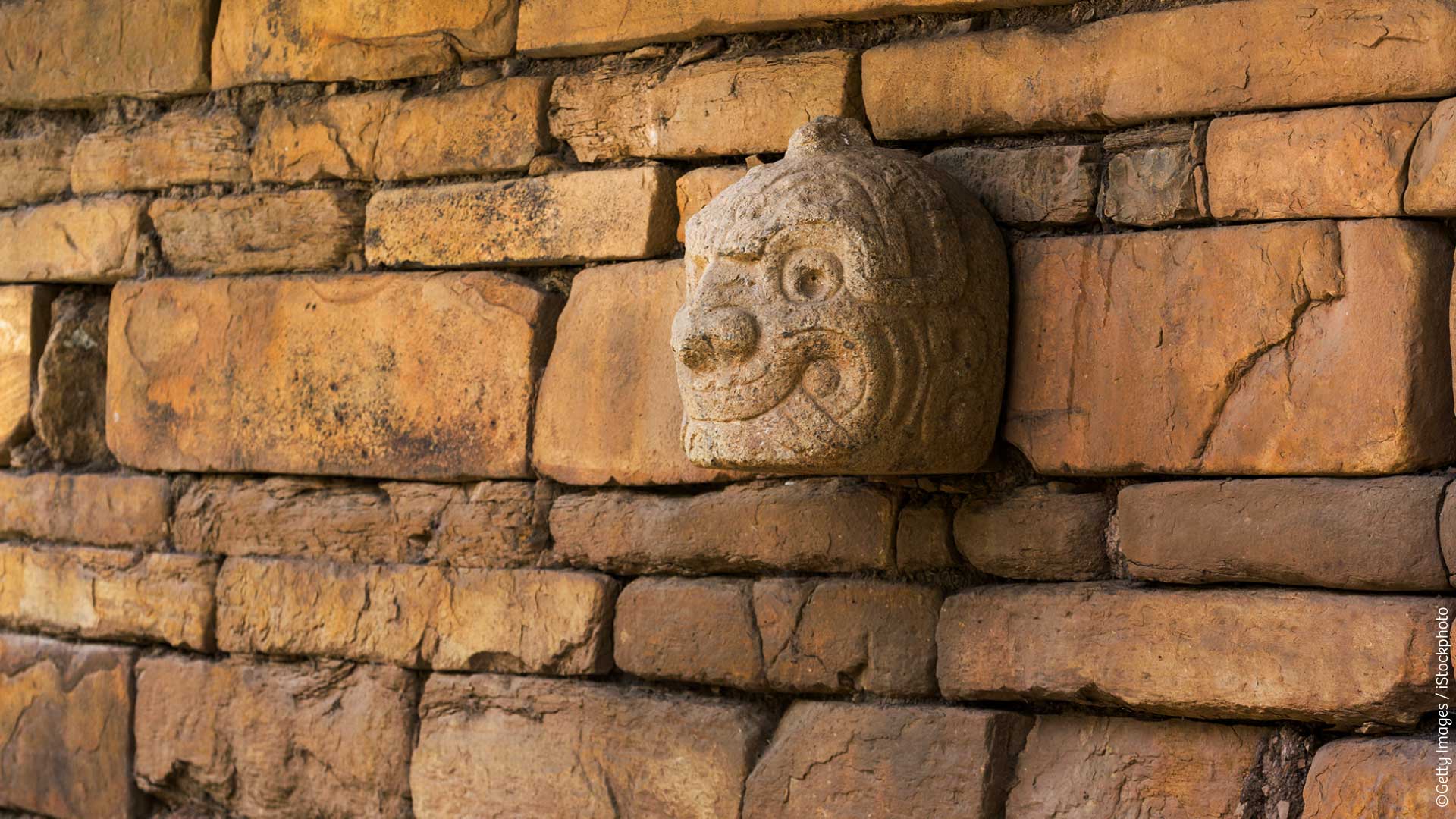
Tenon heads: sculpted monoliths
Getting to Chavin
To reach the complex, travel approximately 500 km from Lima via the North Pan-American Highway. At kilometer 196 (near Pativilca), take the turn-off to begin the ascent along winding mountain roads to the town of Catac. From there, another detour leads directly to the town of Chavin.
The best time to visit is during the months of April and May. For those looking to stay nearby, the towns of Chavin, Huari, and Chacas offer the most developed hotel infrastructure. Another popular option is to explore Chavin de Huantar during the day and stay overnight in the city of Huaraz, which is just a two-hour drive away.
Fact
The Tello Obelisk. Studied by and named after the renowned archaeologist Julio C. Tello, this piece stands as one of the most intricate sculptures ever discovered in pre-Hispanic Peru. This two-and-a-half-meter-tall granite masterpiece depicts two mythical lizards with fish-like tails. Their bodies feature abdomens designed to resemble immense mouths filled with interlocking fangs. Today, the Tello Obelisk is preserved at the National Museum of Archaeology, Anthropology, and History of Peru in Lima.
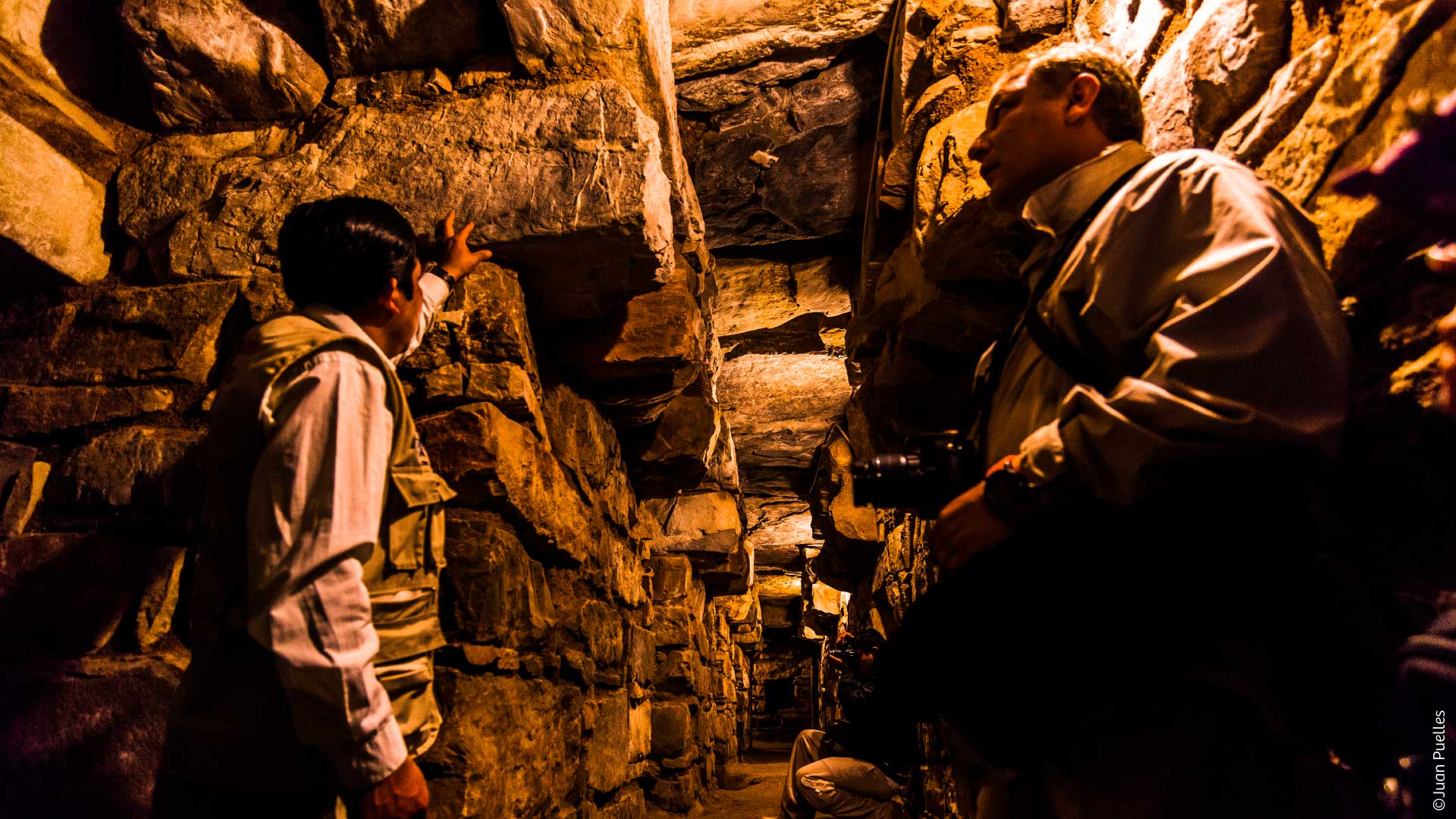
Underground tunnels within the main temple of Chavin de Huantar. / ©Juan Puelles
Recognized as a UNESCO World Heritage Site in 1985, Chavin de Huantar welcomes visitors from Tuesday to Sunday, between 9:00 AM and 4:00 PM. Tickets can be purchased directly at the monument’s main entrance. Please note that areas currently under archaeological research remain closed to the public due to ongoing excavations.
During these same hours and days, you can also explore the Chavin National Museum. Admission tickets for the museum are available for purchase at its own entrance.
Admission fees
Chavin de Huantar Archaeological Monument
General admission: PEN 15
Higher education students: PEN 5
Minors: PEN 2
Special Rate: 50 % discount for seniors (adults 60+), voluntary military service members, teachers, and persons with disabilities.
Tuesdays: Free entry for residents of Chavin de Huantar.
Chavin National Museum
General admission: PEN 10
Higher education students: PEN 5
Minors: PEN 2
Special Rate: 50 % discount for seniors (60+), voluntary military service members, teachers, and persons with disabilities.
Tuesdays: Free entry for residents of Chavin de Huantar.
Síguenos a través de nuestras redes sociales
Facebook | Instagram | Twitter | TikTok | YouTube