

Written by:
peru.travel
Friday, November 17, 2023
In this Page
Located in the rugged region of the Vilcabamba mountain range, in the heart of the Cusco department, lies an Inca city considered the "twin sister" of the famous Machupicchu. Referred to as Choquequirao, this site holds deep symbolism and natural splendor, surrounded by the majesty of the snow-capped peaks of Qoriwayrachina and Padreyoc, considered protective apus in Inka culture.
Unlike Machu Picchu, Choquequirao was not concealed over the course of history. During colonial times, it was already mentioned as one of the four ancient settlements in Vilcabamba, the region chosen by the Inkas. Mentions to its wealth in gold and silver attracted the attention of adventurers and colonizers, marking the beginning of its recognition.
Hiram Bingham, the American explorer who later discovered Machupicchu, carried out excavations in Choquequirao with the aim of finding archaeological treasures. Nevertheless, the archaeological site kept its secrets closely guarded, and it was not until 2004 that a remarkable discovery changed the understanding of this location.
The llamas of the Sun
Within this archaeological site, a set of 23 figures distinguishes itself prominently. These figures represent Andean camelids: llamas (Lama glama), and embellish the walls of 15 terraces. What makes these representations exceptional is that it is the first time mural decorations have been found in an Inka site, highlighting the ritual significance of llamas in Inka culture.
The llama figures are made with white stones creating a stark contrast against the gray backdrop of the terrace walls. They represent a herd of llamas of different sizes and postures. What is most intriguing is that every one of these figures is oriented northward, towards the heights of the snowy Qoriwayrachina, the main protective Apu of the sanctuary and the sacred water source supplying the many fountains and channels of Choquequirao.
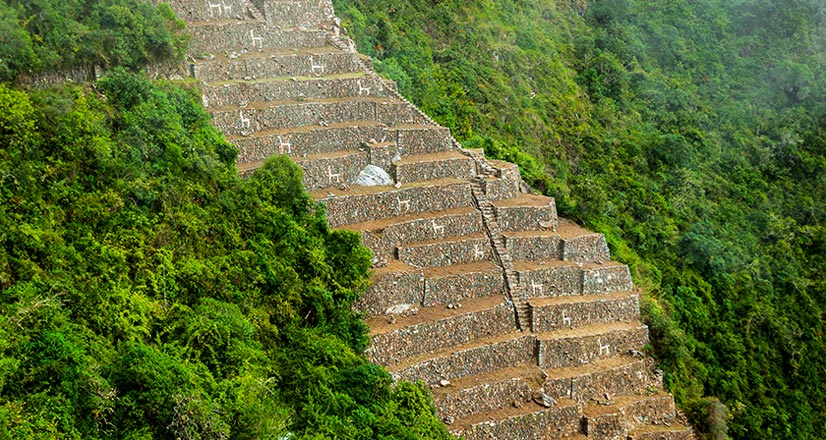
It is possible to see 23 figures of Andean camelids. Credit: Shutterstock
An enigma that captivates the world
What enhances the appeal of these figures is their distinctive artistic approach. Unlike other representations, these llamas are detailed in three dimensions, giving them a lifelike appearance when observed from the top of a nearby hill. Details such as shorter hind legs, the location of hooves, tails, ears, and heads can be appreciated, all designed in a naturalistic manner to convey a sense of movement.
These mural figures stand as a genuine wonder of Inka art, a masterpiece combining engineering and creativity. They symbolize the zenith of Inka culture, showcasing an artistic and technical ability that is unparalleled.
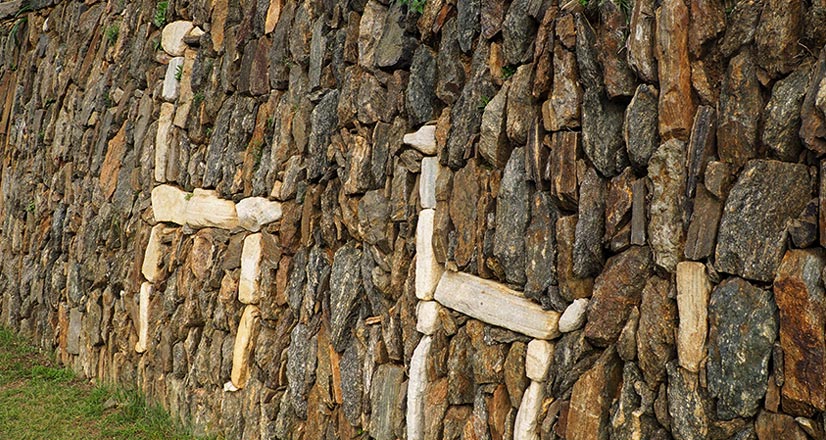
The flame figures are detailed in three dimensions. Credit: Shutterstock
Studies conducted at Choquequirao, intensified in the 21st century, unveiled even more mysteries. In contrast to the previous belief that Choquequirao existed simultaneously with Machupicchu and employed Chachapoyas labor, it has been determined that the site has several construction phases. The main phase predates Machupicchu but corresponds to the height of the Inka empire.
The charm of Choquequirao
Choquequirao is a living testament to the creativity and skill of Inka culture. The llama figures reflect the close connection that the Incas nurtured with nature and the sacred surroundings of their existence. Observing these representations is like taking a glimpse into an ancient world that continues to captivate the contemporary world.
Therefore, if you seek a unique experience during your visit to Peru, exploring Choquequirao is an absolute must. The llama figures await you, along with a journey to the Inka history that will leave you in awe. Come and discover the mystery of "The Llamas of the Sun" in Choquequirao, an archaeological treasure that will impress you with its beauty and splendor. Peru awaits you!
Follow us on social media
Facebook | Instagram | Twitter | TikTok | YouTube