

Written by:
peru.travel
Thursday, December 11, 2025
In this Page
In the vast landscape of religious faith in Peru, the Virgin of the Candelaria Festival stands out with fervor, weaving its history and significance into a devotion that extends throughout the highland region and beyond.
Every February, during this celebration, thousands of spectators from various parts of the world gather to immerse themselves in the richness of the celebrations and dances that unfold over hours and days, forming a unique experience that merges the sacred and the cultural.
The origin
This devotion dates back to the year 1392 in Tenerife, Spain, the largest island in the Canary Archipelago. This land, a stopover on journeys to America, planted the seed of the image of the Virgin of the Candelaria in the Peruvian colonial territory. Devotion in Peru began in the town of Huancané, in Arcani, north of Puno. The image gained followers until it was transferred to the church of San Juan de Puno, becoming the Sanctuary of the Virgin of the Candelaria, surpassing in veneration the patron saint San Juan.
The intensity of devotion intensified in 1781 when the Virgin of the Candelaria was attributed to the protection of the town of Puno, besieged by the rebel forces of Túpac Catari. The image, brought in procession from Cadiz or Seville, Spain, on February 2, 1583, caused the warriors to retreat by confusing them with forces supporting the Spanish army. Since then, the Virgin of the Candelaria has been erected as the patron saint of Puno.
Her name
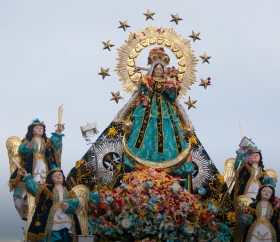
As we know, there are multiple representations of the Virgin Mary, but this specific name "Candelaria" originates from a particular passage in her life. The Virgin of the Candelaria carries this name because of the lit candle she holds in her right hand, along with a basket with two turtledoves, a symbol of the purification of motherhood according to Jewish tradition. Additionally, she carries the infant Jesus with her left arm, presenting him in the Temple of Jerusalem.
According to Canarian tradition, the Virgin appeared in 1392 at the top of a rock holding doves in her hands, a child in her right arm, and a candle in her left.
The celebration
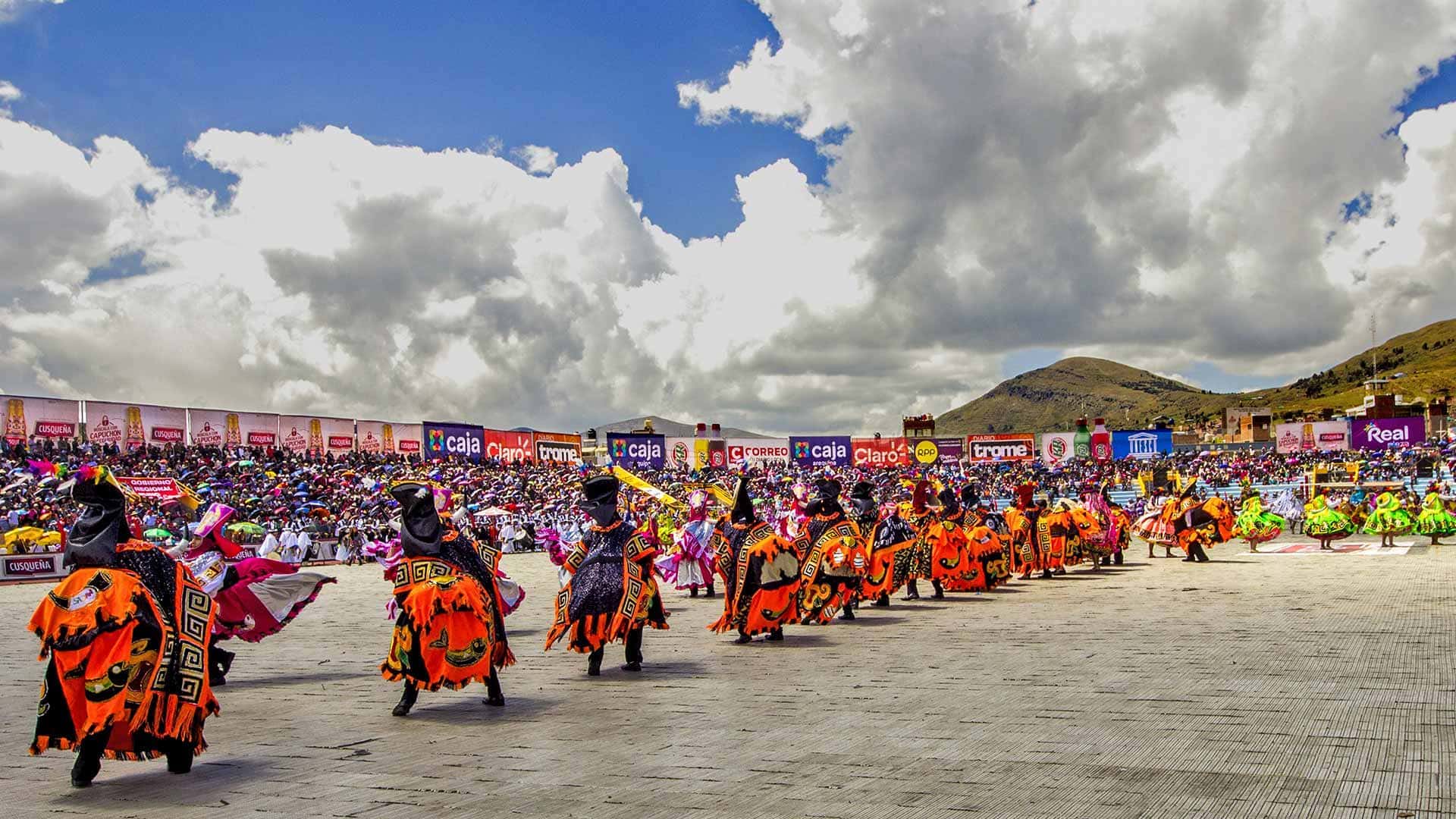
This celebration is full of cultural richness, as Puno's dances are a unique manifestation in Latin America. The Virgin of the Candelaria Festival is the largest in the country and one of the most important in America, recognized as Cultural Heritage of Peru in 2003 and Intangible Cultural Heritage of Humanity by UNESCO in 2014.
The dances, with pre-Hispanic roots, intertwined with evangelization during the 16th and 17th centuries, merging local religious expressions with Christian sacred images. This syncretism took place due to the similarity between the characteristics of saints and mobile shrines.
@visitperu The Festival of the Virgin of Candelaria in Puno: a spectacle of joy, faith and culture that transcends borders. #VisitPeru #VirginOfCandelaria #PeruvianTradition ♬ sonido original - Perú
The dances
The city of Puno attracts a multitude of dancers, musicians, and spectators motivated by faith and the joy that floods the streets of the Peruvian highlands. The indigenous dances, each with its marked style and diversity, offer a unique experience.
Each dance during the celebration of the Virgin of the Candelaria Festival seeks to represent various themes, from rural everyday events to biblical battles between angels and demons. The preparation of this colossal performance, starring thousands of participants, is a meticulous process that translates into coordinated steps, elaborate costumes, and gymnastic pirouettes in honor of the Mamita Candelaria.
In summary, the celebration of the Virgin of the Candelaria Festival in Puno not only represents a profound manifestation of faith but also a testimony to the cultural richness that blends the ancestral with the contemporary. Devotion to this virgin transcends borders, bringing together people of various beliefs and nationalities under the protective mantle of the mother, in a celebration that endures through the centuries.
Follow us on social media
Facebook | Instagram | Twitter | TikTok | YouTube