
Nasca and Palpa Lines and Geoglyphs
Year 1994. The Nasca and Palpa Lines and Geoglyphs ceased to be only Peruvian. Now they belong to all of humanity. Did a conquest or land purchase facilitate this transition? What was happening back in the 1990s? There is no need for alarm: during UNESCO's 18th World Heritage Committee Meeting on December 17th, held in Phuket, Thailand, the organizing committee declared the Nasca and Palpa Lines and Geoglyphs as a Cultural Heritage of Humanity.
A wave of jubilation swept across Peruvian lands as the zoomorphic, anthropomorphic figures and imposing lines with swept fields, of a magnitude as immense as their beauty and geometric precision, gained the global recognition they rightfully deserved, as they are unique across the entire planet.
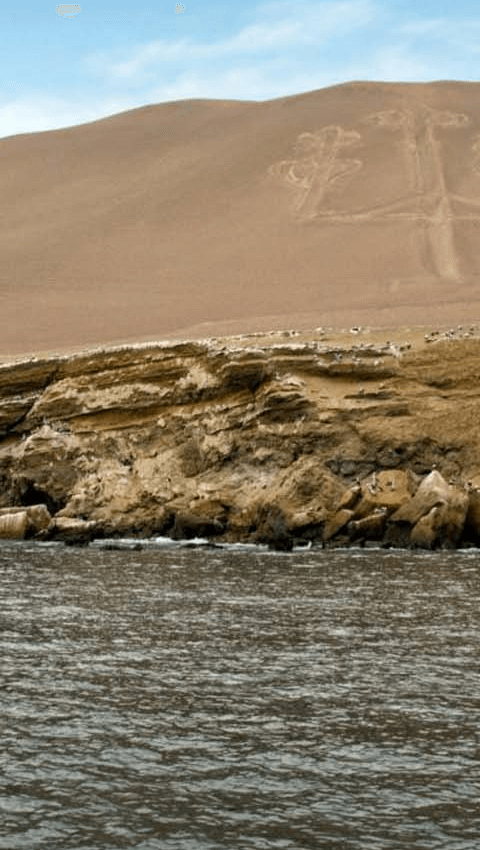
These drawings made across the vast desert territory of the provinces of Nasca and Palpa, located in the Ica region (south of Lima, the capital of Peru), are constantly visited by tourists, archaeologists, students, and enthusiasts from all over the world due to the mysterious history they hold within. Even now, not a single scholar of the Nasca and Palpa Lines has definitively unveiled the identities of their creators, as their origin seems to transcend human craftsmanship.
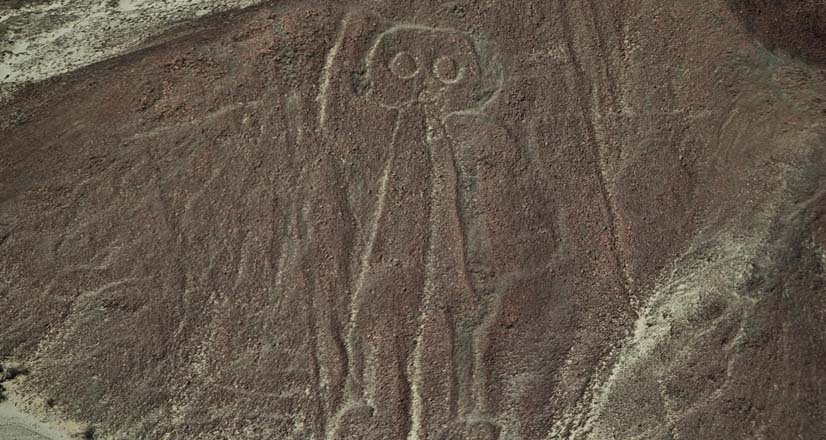
Owl man or Astronaut, Nasca Lines geoglyph. Credit: Enrique Castro-Mendívil / PromPerú.
Speculations even entertain the notion of extraterrestrial involvement, deepening the intrigue of those captivated by extraterrestrial hypotheses. The truth is that the antiquity of these lines dates back from 500 BC to AD 500, a period when it is presumed they were made by the ancestors of the pre-Hispanic cultures of Nasca and Palpa. During this time, these ancient societies captured the essence of their mysticism and spirituality through these ground bound artistic marvels.
Currently, the Nasca and Palpa Lines and Geoglyphs can be appreciated in three different ways. The most common is taking a flight in a small plane that will travel over the desert, allowing you to fully appreciate these images. The figures of the monkey, the spider, and the hummingbird are some of the most striking. Another alternative to view the lines is by walking through the dunes of the Nasca desert and, from the highest hills, you can see the lines or geoglyphs. There are also observation towers strategically placed in the area where you can observe the landscape and the drawings in the sand.
 Credit: Heinz Plenge Pardo / PromPerú
How to get to Nasca?
Ruta 1
Lima - Ica (Nasca)
Approximately 6 hours and 20 minutes.
Recommendations:
- Explore the surrounding areas.
- Try the delicious local gastronomy.

General information
Essentials:
Comfortable clothing for walking, sneakers, cash, water, hat, sunglasses, sunscreen.Date:
December 17thTime:
Depends on the activity.Price:
Depends on the activity.