
In this Page
Choose your most comfortable pair of walking shoes, tighten them, and tie the laces well, because in Madre de Dios you will become one with your footwear. Located in southeastern Peru, this region preserves nature in its purest form through magical destinations such as Manu National Park. Trees intertwine with one another while troops of monkeys race through them, and as you take in this unique spectacle, the melodic calls of macaws nesting in the area can be heard in the background.
Your first stop will most likely be the city of Cusco, which serves as the main gateway to the region, while the journey continues through Puerto Maldonado, the capital of Madre de Dios. There, you will find a wide range of accommodation options, making it easier to find the ideal place for your needs. Once settled in the city, take the opportunity to learn a bit about its history.
Be sure to visit Malecon Miguel Grau Park, located less than two kilometers from the Puerto Maldonado’s Main Square, as well as the Exhibition Hall of Archaeology, Paleontology, and Typical Costumes of the Amazon at the Ministry of Culture, situated just minutes from the city center.
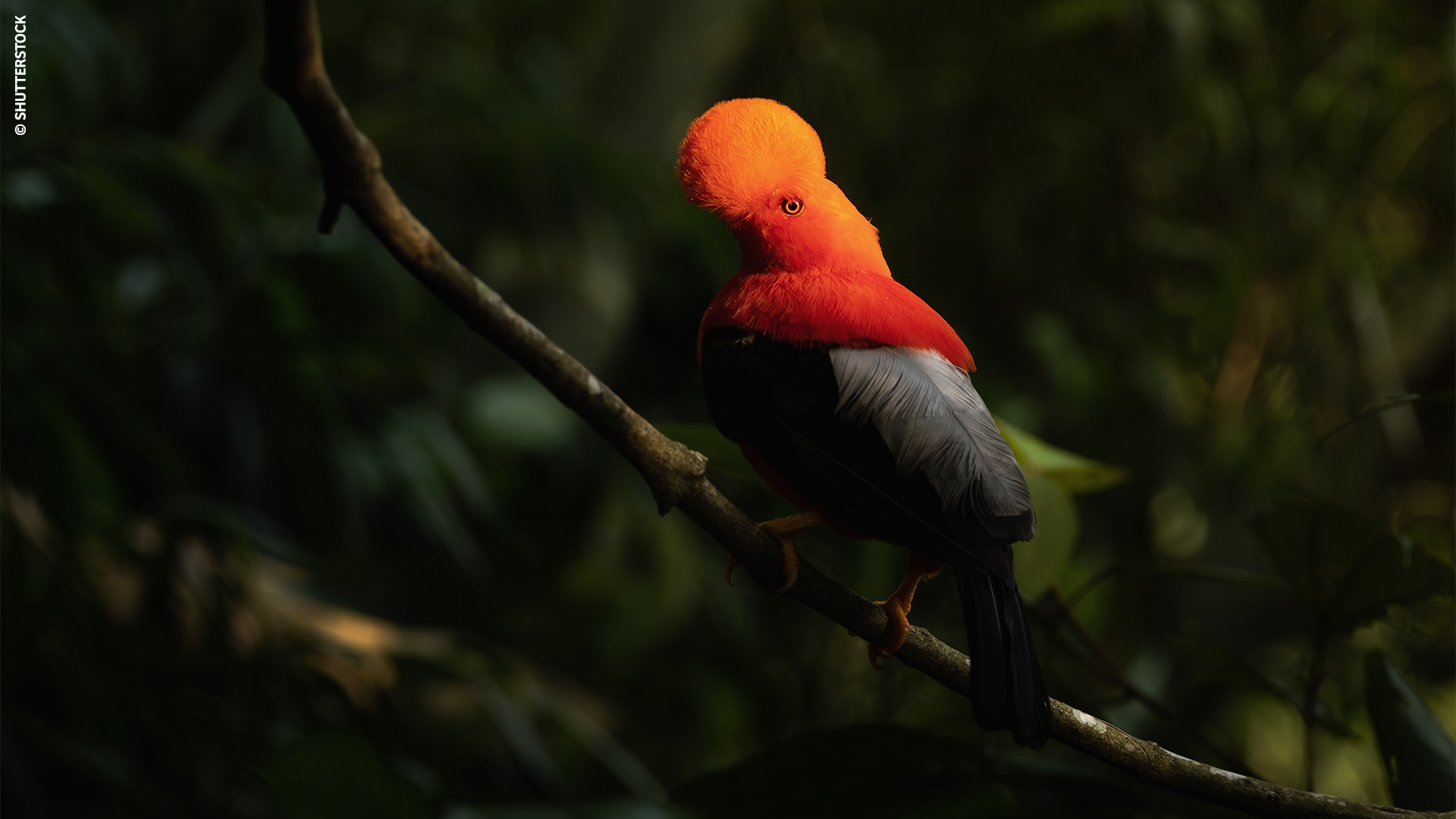
Cock-of-the-rock, the Peruvian national bird. / © SHUTTERSTOCK
Where biodiversity comes to life.
Everything mentioned so far may already have impressed you. But honestly, you still have not seen the very best of Madre de Dios: three enormous sanctuaries filled with nature and wonder await you. The third-largest region in Peru is home to Manu National Park, recognized by UNESCO as the core area of the Biosphere Reserve in 1977 and declared a Natural World Heritage Site in 1987.
This natural area is not only a spectacle for the eyes. It is also considered a major hub of flora and fauna, many of them unique to the region. For example, its territory is home to the famous cock-of-the-rock, Peru’s national bird. The area is also inhabited by communities of farmers and native peoples who still practice ancestral traditions and techniques.
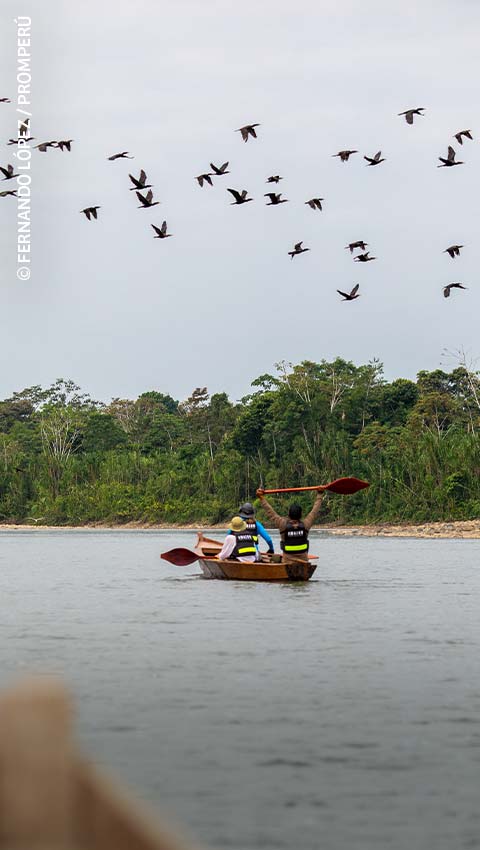
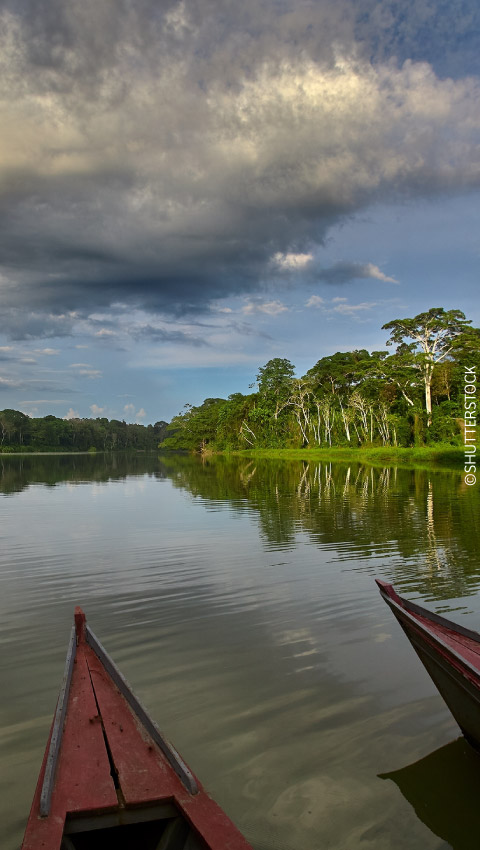
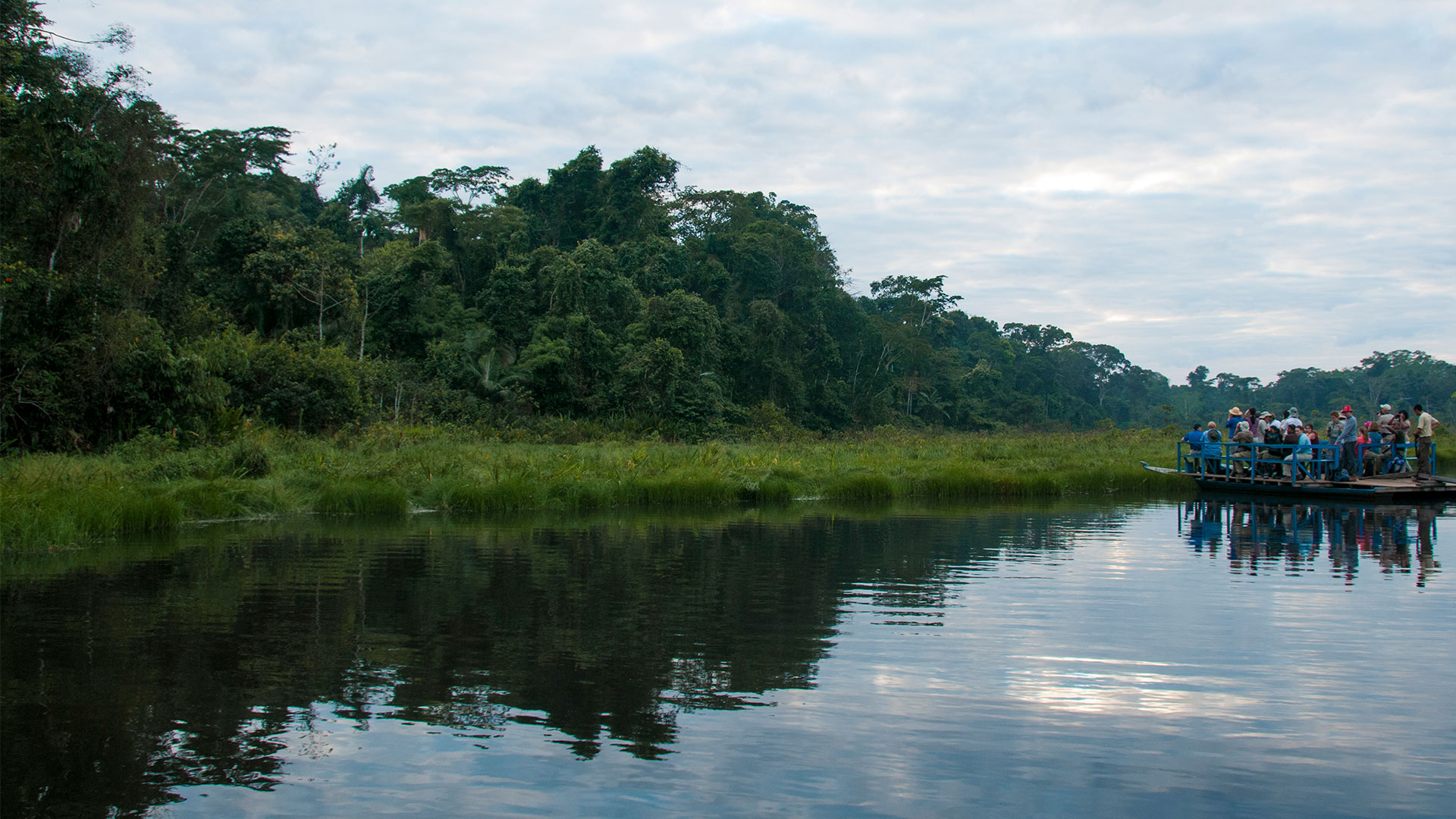
You can also visit Tambopata National Reserve and Bahuaja Sonene National Park. The first is described as a paradise-like destination, where nature connects with you in every step you take. This protected reserve is globally recognized as one of the most biodiverse areas in the world. At the same time, it is not only an essential journey for biology enthusiasts, but also for adventure seekers: travel to Lakes Sandoval and Tres Chimbadas, where you can go on a rowboat ride and visit macaw clay licks such as Chuncho, 8 Gallinas and Colorado in their purest state.
You may also be interested in: Experience boating adventures on the lakes of Madre de Dios.
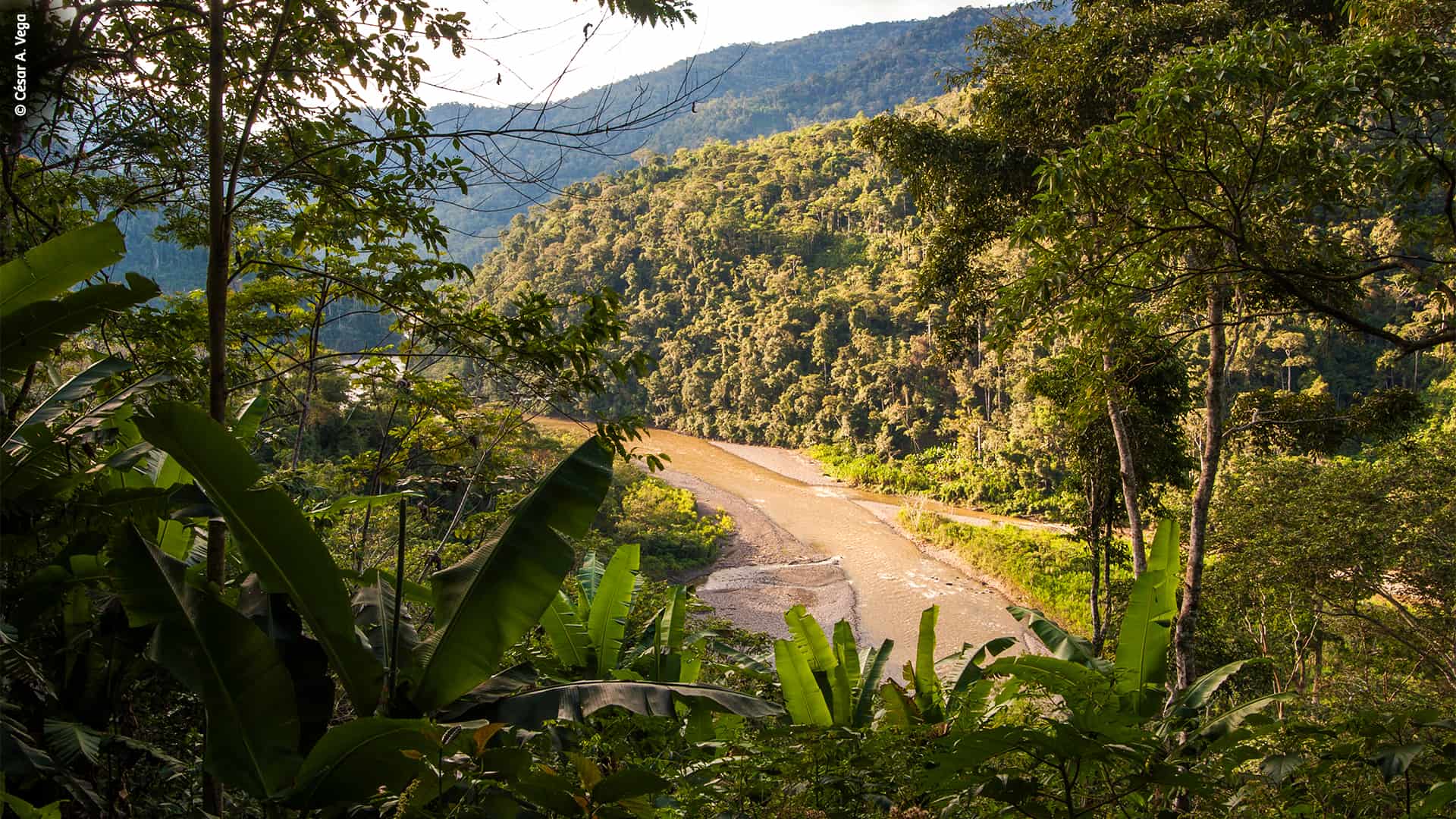
Landscape of Bahuaja Sonene National Park. / © César A. Vega
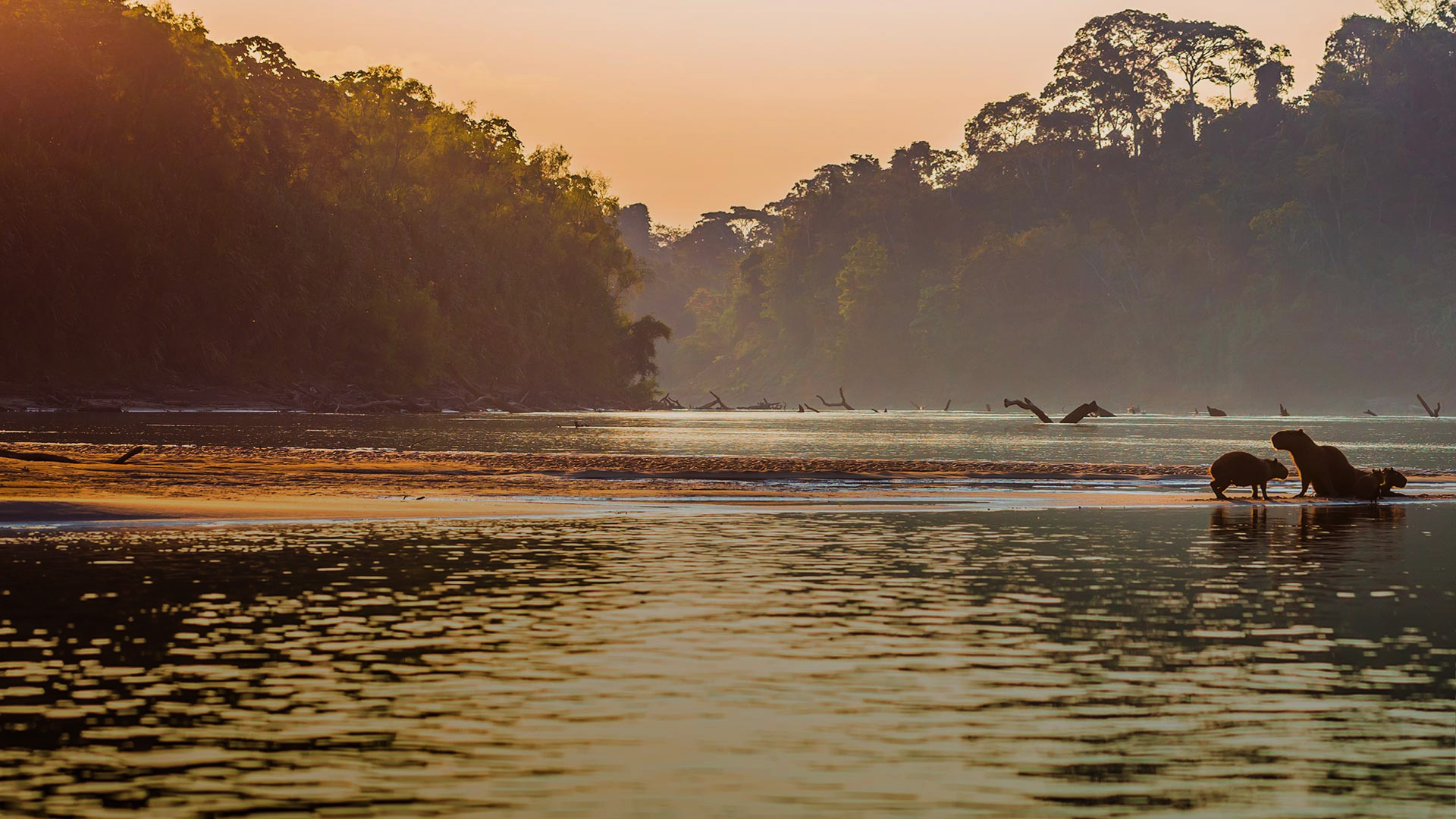
The lesser-explored Bahuaja Sonene National Park is home to extraordinary biodiversity: hundreds of mammals, reptiles, and fish species, nearly a thousand bird species, and more than 20,000 species of flora can be found here. It is also home to remarkable animals such as the marsh deer and the maned wolf, along with fascinating landscapes like palm savannas and the Bolivian Yungas. In addition, visitors can connect with the living cultures of the Ese Eja and Harakbut peoples.
In Madre de Dios, flavors are born from the forest and its rivers: dishes such as pescado en paca, the region’s signature dish; patarashca, a fish dish seasoned with sweet chili peppers and served wrapped in banana leaves; and tacacho con cecina, made with roasted or fried plantains shaped into balls and served with pork cooked in lard, are all part of everyday cuisine. The use of native ingredients such as green plantains, cassava, and aromatic chili peppers creates intense and authentic flavors that are difficult to find in other destinations.
The culinary experience is completed by beverages and fruits native to the rainforest. Natural drinks made from copoazu, camu camu, and aguajina offer refreshing flavors, while handcrafted ice creams prepared with Amazonian fruits stand out for their vibrant colors and taste. In this way, exploring local markets becomes a sensory adventure: stalls filled with freshly harvested products, fish brought from the river at dawn, and aromas that tell stories of tradition and cultural blending.
Meanwhile, if you visit Madre de Dios during its anniversary — held every December 26 — the journey takes on an even more special dimension. Festivities fill the streets of Puerto Maldonado, the capital city, with civic-military parades, traditional dance performances, and open-air concerts that bring together communities from different parts of the region. Gastronomic fairs are also organized, where local restaurants and cooks feature the very best of Amazonian cuisine, turning the celebration into a display of flavor and creativity.
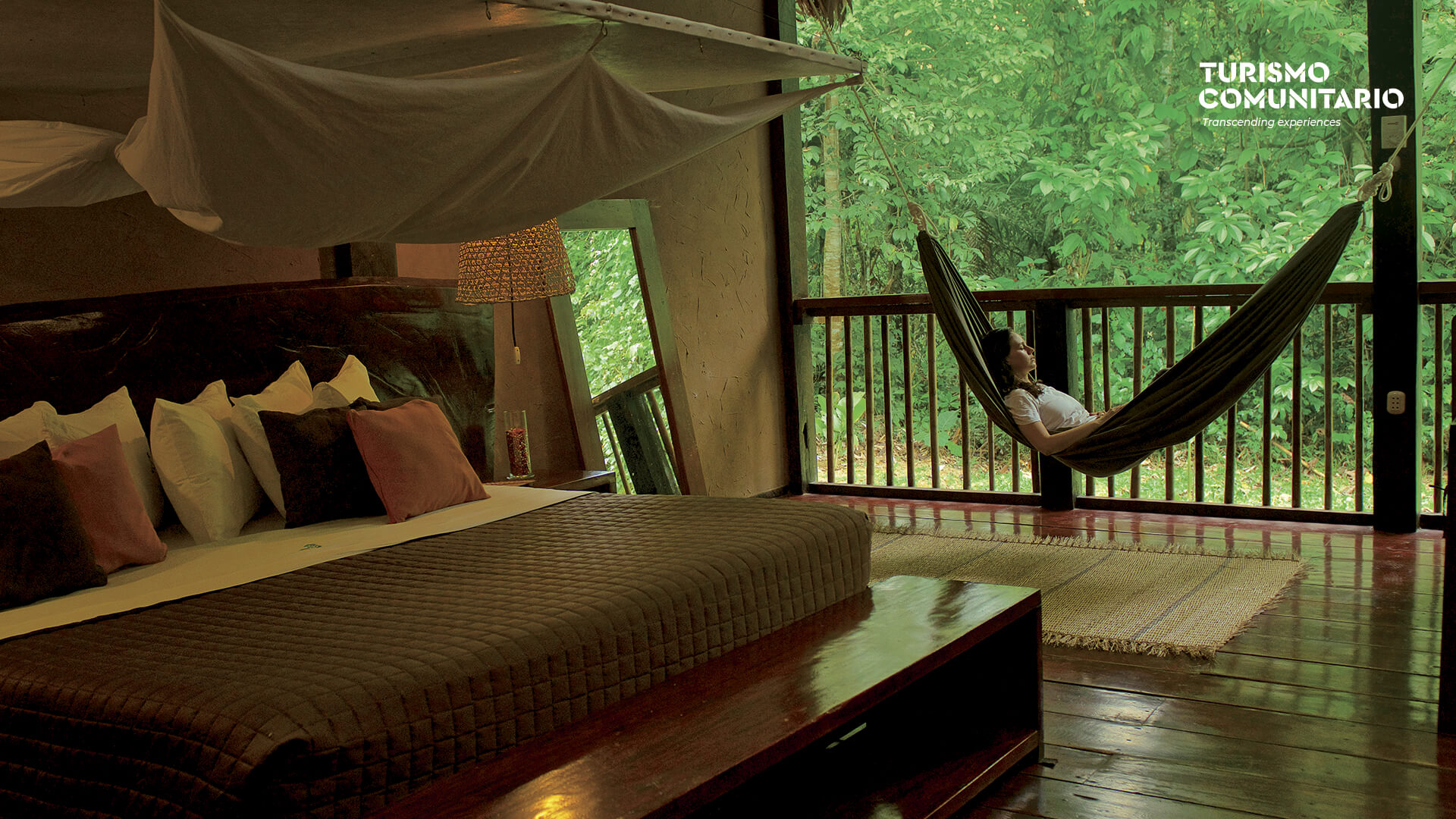
Beyond the cultural activities, the anniversary is also the perfect excuse to combine celebration and nature. From Puerto Maldonado, you can organize excursions to the Tambopata National Reserve, navigate along the river at sunset, or stay at an ecolodge deep in the rainforest to observe wildlife.
Madre de Dios thus offers a complete experience: living culture, authentic cuisine, and Amazonian adventure all in one destination. For those seeking something different and deeply connected with nature, this region is an open invitation to discover one of the most fascinating sides of Peru.
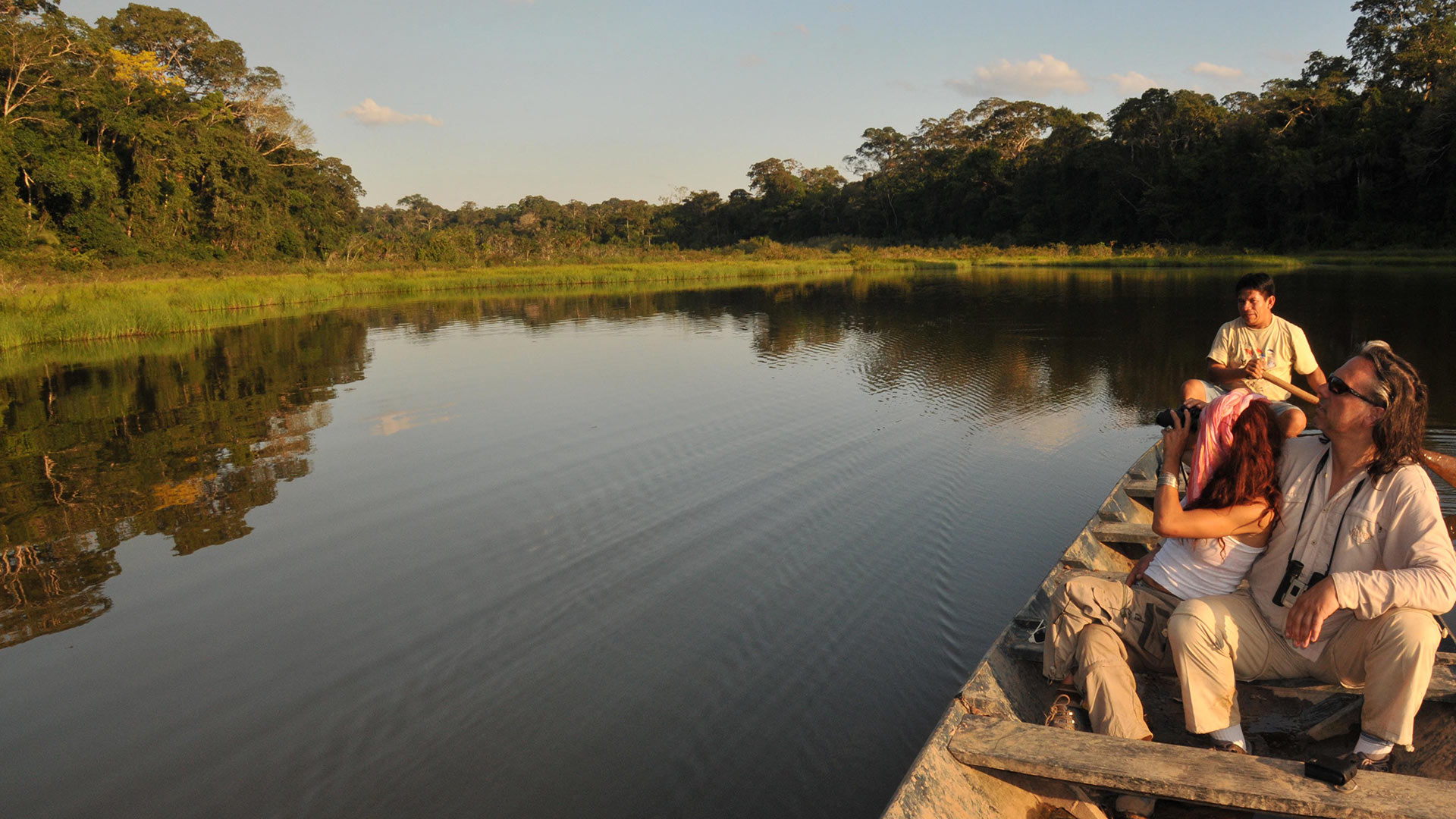
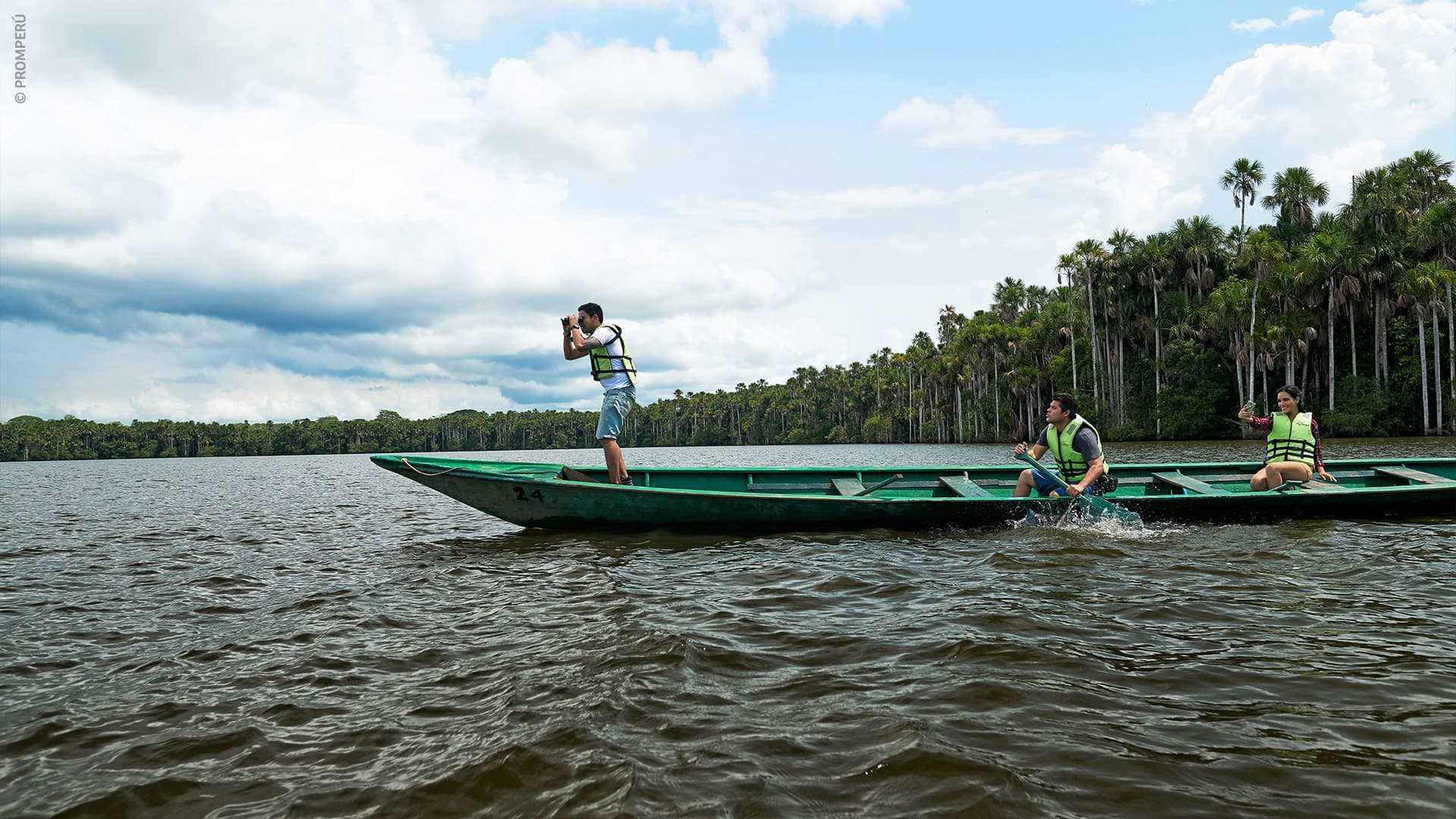 Tourists at Lake Sandoval
How to get to Madre de Dios?
Route 1
Route 2
Lima - Madre de Dios
Approximately 1 hour and 40 minutes
Lima - Madre de Dios
Approximately 36 hours