

Written by:
peru.travel
Tuesday, January 23, 2024
In this Page
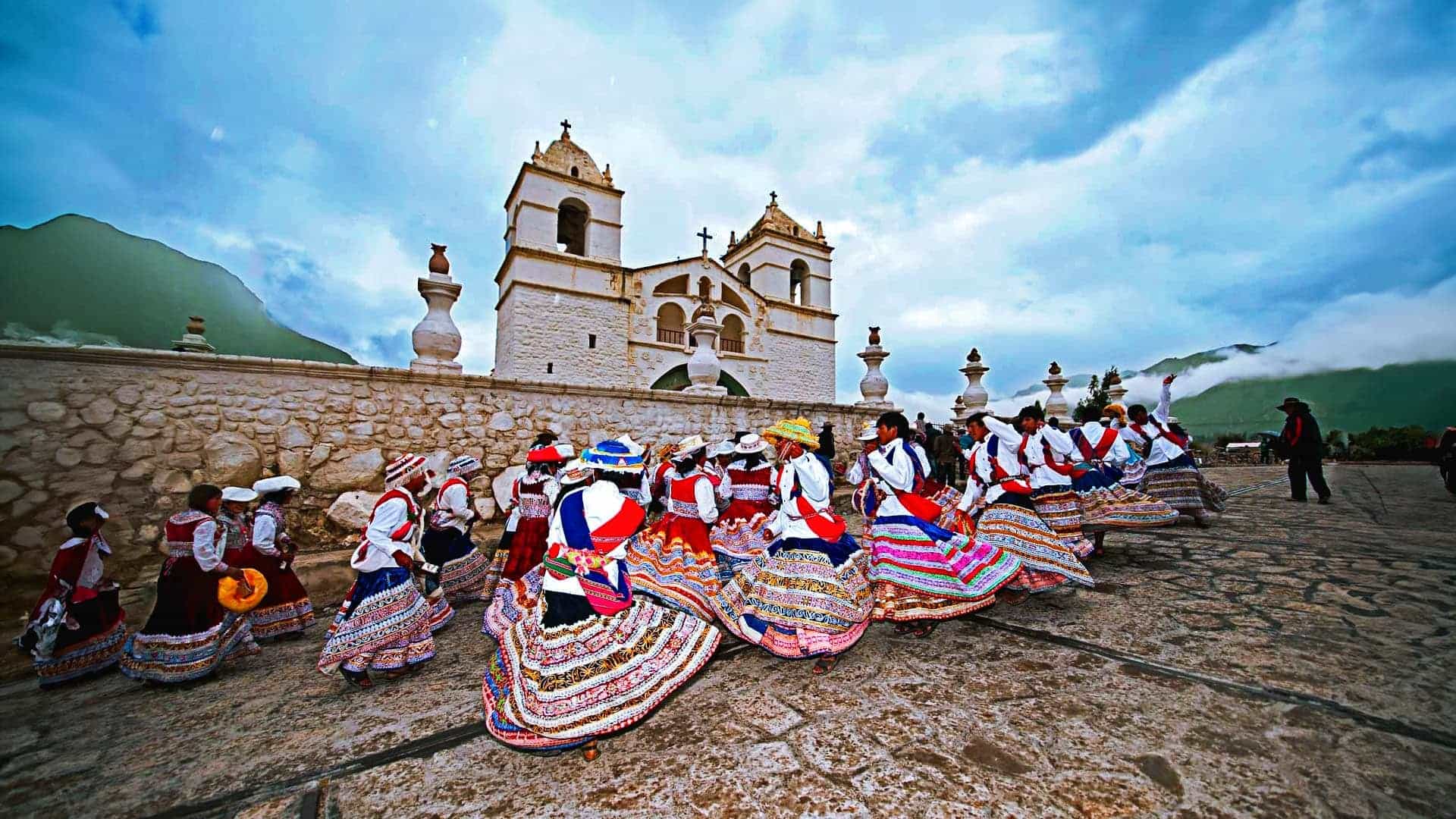
Peruvians are always ready to celebrate the greatness of their culture through different dances. In towns and regions across the country, the main festivities are characterized by the beat of the drum or the quena; they are enjoyed with water, talcum powder, and confetti, or they are lived in a great atmosphere of fervor and joy. Part of that folklore, traditions, and rituals is the carnival celebration.
Carnival is the meeting with roots and community. It is usually celebrated in February and is an opportunity for Peruvians to express gratitude for common good and favors granted, as well as a chance to showcase the best of each region's art to the world. This celebration is unique in each place and alternates processions, fairs, parades, and luxury gastronomy, as a display of the living heritage of Peruvian culture. It is the result of centuries of blending Hispanic and indigenous customs.
Next, we will tell you about the most representative carnivals in Peru that attract the greatest enthusiasm from both Peruvians and foreigners due to their spectacular nature.
Carnival Cusco
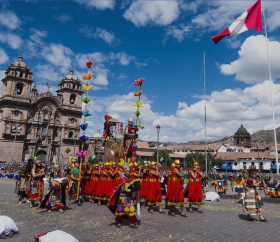
The Imperial City also lives celebration and joy during the first months of each year with its carnival that merges tradition, culture, and gastronomy. It is celebrated since colonial times, the streets of the historic center and the Main Square are crowded with both national and foreign visitors, celebrating with water, foam, flour, and paint to the rhythm of folk music performed by several bands and orchestras.
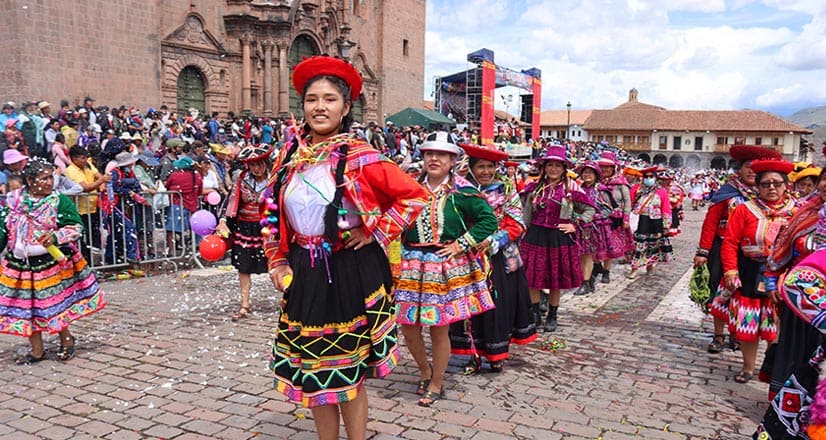
Festivity celebrated since colonial times. Credit: Emufec.
The popular "yunzas" are also part of the Carnival of Cusco. These are trees adorned with gifts, presents, and surprises that locals plant in the center of the festivities, to knock them down later and get the gifts. A typical dish for this celebration is "Puchero" or "Timpu," along with "Frutillada," an ancestral drink of the region.
This celebration can be enjoyed in many towns across the region, the most emblematic are Pisac, Taray, Coya, Calca, Espinar, Checacupe, Cusipata, among others.
Carnival of Juliaca (Puno)
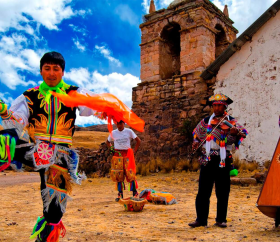
It is a vibrant festival that pays homage to Pachamama, the mother earth. Celebrations begin with the arrival of Ño Carnavalón and the traditional Taripacuy, where the streets are filled with colorful confetti and flowers that adorn houses and businesses. The festive atmosphere comes to life with contests and parades of native dances, accompanied by the contagious rhythm of music bands that entertain locals and visitors alike.
During the Carnival of Juliaca, the presentation of tarkadas and pinquilladas (groups of musicians and dancers) provides a special touch, immersing the city in a unique cultural experience. Contests of native dances and the Grand Folk Parade highlight the richness of local traditions, creating a vibrant scenario where the community comes together to celebrate its cultural heritage and pay homage to Pachamama with joy and devotion.
Carnival of Arequipa
To the rhythm of carnival verses and mojigangos wearing colorful costumes and masks, the White City welcomes hundreds of people every year between February and March to celebrate its traditional carnival. The festivities begin in the district of Cayma with the appearance of the main character: Ño Carnavalón, the king of the festival who represents sarcasm and irony, and takes moments to mock the behaviors of the people around him. On the Sunday following the carnival, the burial of the also-called King Momo takes place amid music and traditional dances.
Other activities that are part of the day include the awarding of the mask contest and the election of the Carnival Queen. As part of the celebration, the Provincial Municipality of Arequipa organizes these activities.
Carnival of Cajamarca
Known as the Capital of the Peruvian Carnival, between February and March, Cajamarca throbs for 5 central days, to the rhythm of music and the colorful parades. Among them, the parade of the King Momo or Ño Carnavalón stands out, who is welcomed with honors and then is mourned and buried. This giant doll represents the "farewell to bad energies," so people celebrate its passage with water and paint.
It is one of the most anticipated, representative, and joyful festivals in Peru, where the entire Cajamarca community participates with a schedule full of cultural, entertainment, and competition activities. During the festive days, contests of verses, patrols, and parades are celebrated; the allegorical parade is enjoyed, and a beauty contest is convened among the women of the city's neighborhoods to choose the Carnival Queen.
Carnival of Catacaos (Piura)
The northern part of Peru is also a carnival hub par excellence. One of the most crowded carnivals in that area is the Carnival of Catacaos, in Piura, where hundreds of people of all ages gather in the Plaza de Armas to enjoy the colorful parade of allegorical floats that includes music bands and dancers.
The celebration begins with the traditional "manguerazo," where a group of firefighters sprays water jets from a platform to the hundreds of attendees who jump and celebrate to the rhythm of percussion. Thanks to the hospitality of the people of Catacaos, you can enjoy and live a great experience in this festival that seeks to establish itself as one of the most important in all of Peru.
Attending Peruvian carnivals offers a unique and vibrant cultural experience. The celebration is not only a visual spectacle full of colorful costumes and folk dances but also an immersion in the rich historical heritage and diversity of the country. The infectious rhythms of traditional music, the overflowing joy of participants, and the delicious local cuisine combine to create an incomparable festive atmosphere.
In addition, carnivals are an opportunity to witness the creativity and devotion of Peruvian communities, who strive to keep their cultural identity alive. Do not hesitate any longer and plan your trip to one of these impressive carnivals.
Follow us on social media
Facebook | Instagram | Twitter | TikTok | YouTube